Newgeography.com - Economic, demographic, and political commentary about places
By Richard Reep
“In hard times, people turn to God or alcohol” jokes Bud Johnson of Constructwire, a database that tracks planning and construction projects nationwide. Johnson, 50, is an industry veteran and has never seen a recession like this in his career. “This is an exceptionally broad-based downturn,” he says, “and Orlando has been hit harder than most in the South, what with your only real industries being housing and tourism.” Both industries have been trapped like mammoths in a glacier as the credit market stays stubbornly frozen in a modern banking Ice Age. read more »
With autocratic states like China and Russia looking poised for economic recovery, it's often hard to make the case for ideals such as democracy and rule of law. To some, like Martin Jacques, author of When China Rules, autocrats seem destined to rule the world economy. read more »
Public companies and their management boards are run with all the democratic coziness of banana republics. The object of the junta is to transfer the wealth of the shareholders into the bonuses and stock options of the management. As they used to say in China, “business is better than working.”
Amidst the outcry over excessive executive pay, it is worth noting that, in the caudillo management culture of many public corporations, there is nothing more annoying than a shareholder with an interest in the company that he or she partly owns. The most dreaded corporate day of the year is that of the annual meeting, when outside consultants are hired to screen bothersome questions and choreograph the happy gathering. read more »
Graffiti is a bane of urban life, a form of vandalism that demoralizes entire neighborhoods and invites worse crime.
Graffiti is an art form and an outlet for expression amid the jumble and obvious strains of urban life.
You’ll hear arguments from both of those viewpoints, depending on who you talk to about graffiti. read more »
To get a better idea why the Obama Administration’s efforts to stem the home foreclosure crisis have failed at both ends of the problem, you need only go back to that great scene in Frank Capra’s classic, “It’s A Wonderful Life,” where protagonist George Bailey (Jimmy Stewart) is on his way out of Bedford Falls with his new bride and high school crush, the former Meg Hatch (Donna Reed). The newlyweds are heading toward the train station to leave on their honeymoon when Meg notices a commotion outside the Bailey Bros. read more »
Currently in the United States about 27% of all homes have some form of a home based business. These businesses can be key to conservation efforts that lower our carbon footprint by reducing transportation needs, eliminating redundant facilities, and consolidating equipment. They provide significant opportunities for two solutions to problems that face today’s growth issues. read more »
The proposed Chicago Transit Authority (CTA) fare increase and service cuts for next year are indicative of transit’s recurring budgetary problems, and not only in Chicago but nationwide. But in the Windy City, these moves have elicited an understandably negative public reaction since the city of Chicago depends on transit about as much as any city besides New York. read more »
Beltway politicians and economists can argue themselves silly about the impact of the Obama administration's stimulus program, but outside the beltway the discussion is largely over. On the local level--particularly outside the heavily politicized big cities--the consensus seems to be that the stimulus has changed little--if anything.
Recently, I met with a couple of dozen mayors and city officials in Kentucky to discuss economic growth. The mayors spoke of their initiatives and ideas, yet hardly anyone mentioned the stimulus. read more »
Among the media, academia and within planning circles, there’s a generally standing answer to the question of what cities are the best, the most progressive and best role models for small and mid-sized cities. The standard list includes Portland, Seattle, Austin, Minneapolis, and Denver. In particular, Portland is held up as a paradigm, with its urban growth boundary, extensive transit system, excellent cycling culture, and a pro-density policy. These cities are frequently contrasted with those of the Rust Belt and South, which are found wanting, often even by locals, as “cool” urban places.
But look closely at these exemplars and a curious fact emerges. If you take away the dominant Tier One cities like New York, Chicago and Los Angeles you will find that the “progressive” cities aren’t red or blue, but another color entirely: white. read more »
Toronto is a nice city.
If that seems like faint praise, then so be it; I'm not a great Toronto fan. Don't get me wrong. It is a wonderful city for the tourist, and temporary residents I know swear by the place. But it's not my kind of town.
I spent much time in Toronto in the 1980s and 90s. My first visit must have been in 1970 or so, and I was last there on a very cold, January day in 2003. read more »
Understanding the potential role of social media such as blogs, twitter, Facebook, You Tube, and all the rest in local government begins with better understanding the democratic source of our mission of community service. The council-manager form of local government arose a century ago in response to the "shame of the cities" — the crisis of local government corruption and gross inefficiency. read more »
Does a City Manager belong on Facebook?
Erasmus, the Dutch theologian and scholar, in 1500 wrote, "In the country of the blind the one-eyed man is king." I feel this way in the land of social media — at least among city and county managers. read more »
A complex agriculture, along with urban culture, is one of the fundamental pillars of human civilization, and one of the fundamental bulkwarks of American prosperity. For families and communities involved in farming and ranching it’s also a way of life that is cherished, oftentimes passed on through generations, taking on reverential if not religious overtones.
At the same time in today’s overwhelmingly urban culture, cooking has become prime time entertainment, dining a social event, and what a person eats is increasingly associated with a healthy body and mind – sometimes a sort of spiritual well being. This elevates agriculture to an important issue even among those who have never spent a day on a farm. read more »
As with other advanced capitalist societies, the US population is aging. About 30 percent of US counties experienced natural decrease – more deaths than births – in the 2000-2007 period.
Nevertheless, the most exceptional feature of the United States remains its unusually high level of natural increase, and significant degree of population growth. read more »
Barack Obama's seemingly inexplicable winning of the Nobel Peace Prize says less about him than about the current mentality of Europe's leadership class. Lacking any strong, compelling voices of their own, the Europeans are now trying to hijack our president as their spokesman.
There's a catch, of course. In their mind, Obama deserves the award because he seems to think, and sound, like a European. In everything from global warming to anti-suburbanism to pacifism, Obama reflects the basic agenda of the continent's leading citizens--in sharp contrast to former President George W. Bush. read more »
A few weeks ago, Eamon Moynihan reviewed economic research on cost of living by state in a newgeography.com article. The results may seem surprising, given that some of the states with the highest median incomes rated far lower once prices were taken into consideration. The dynamic extends to the nation’s 51 metropolitan areas with more than 1,000,000 population (See Table). read more »
Hyde Park, in Chicago, is where President Obama called home before moving to Pennsylvania Avenue.
I once called 5118 S. Dorchester home.
Hyde Park is a college town surrounded by – but not really part of – a big city. The University of Chicago, founded in 1890, is the heart of the community. The campus was built of Indiana limestone, fake Gothic, and made to look old from its very inception. Some people like it. read more »
On almost any night of the week, Churchill's Restaurant is hopping. The 10-year-old hot spot in Rockville Centre, Long Island, is packed with locals drinking beer and eating burgers, with some customers spilling over onto the street. "We have lots of regulars—people who are recognized when they come in," says co-owner Kevin Culhane. In fact, regulars make up more than 80 percent of the restaurant's customers. "People feel comfortable and safe here," Culhane says. "This is their place." read more »
One of the causes of last year’s financial collapse was the adoption of the concept, 'Too Big To Fail'. Washington decided long ago that some firms are so large and so integral to the economy that the failure of one of these firms would put the entire economy at risk. So, the government insures them at no cost. read more »
In mid-September President Barack Obama mounted Theodore Roosevelt’s bully pulpit and railed against market greed to an audience of corporate tycoons. The objects of his derision included, and were limited to, bankers, financiers, and speculators in the 'private' financial community. Notably absent from the enemy bankers list were quasi-government banking corporations and America’s central bankers. read more »
In less than 30 years, Silicon Valley has rocketed to celebrity status. The region serves as the top magnet for innovation, often occupying the coveted #1 position of global hot spot rankings. More of an informal shared experience than a physical place, Silicon Valley capitalizes on being centrally located in the San Francisco Bay Area, a broader regional zone that is an economic powerhouse. read more »
Balding, affable and passionate, Uranio Adolfo Arrendondo may not be a general or political leader, but he stands on the front lines of a critical battle facing Mexico in the coming decade. This struggle is not primarily about the drug wars, which dominate the media coverage--and thus our perceptions--of our southern neighbor. It concerns the economic and political forces stunting the aspirations of its people. read more »
Every day or so a new greenhouse gas emission report crosses my desk. Often these reports are very useful, other times they add little of value to the subject. The problem is separating the “wheat” from the “chaff.”
This dilemma is well illustrated by a paper called “Greenhouse Gas Emissions from Global Cities,” authored by 10 academics. I had received notification of the paper from Science Daily, a useful website that provides notification of new research on a wide range of scientific subjects. read more »
by Anonymous 10/02/2009
Germany likes to brag about its green credentials. It is a source of pride and it is justified to a certain extent. The country, which is located on the same latitude as Canada, had the largest number of installed solar panels as of 2007. read more »
by Anonymous 10/01/2009
During the first ten days of October 2008, the Dow Jones dropped 2,399.47 points, losing trillions of investor equity. The Federal Government pushed TARP, a $700 billion bail-out, through Congress to rescue the beleaguered financial institutions. The collapse of the financial system was likened to an earthquake. In reality, what happened was more like a shift of tectonic plates.
******************************************* read more »
The economy might come back – but will the housing market return? And in what form?
Right now, builders are jumping into the low end of the market because of the $8,000 first time home buyer tax credit. This tax credit cannot survive indefinitely. Compared to homes sold in 2006, today's are bare bones in size, materials and finishes in response to current, temporary market conditions. But the scrimping only makes the homes built in yesterday’s developments more attractive to potential buyers. The next wave of home buyers will have a choice: stay where they are, move to a more recently built (devalued) home, or buy new. read more »
For an advanced capitalist society, the United States has a quite high birth rate, and substantial natural increase. Yet despite this, almost a third experienced natural decrease, an excess of deaths over births, over the recent 2000-2007 period. Some counties with natural decrease still grow in population because of sufficient in-migration, but more typically, natural decrease is associated with high levels of out-migration and with long term population decline. read more »
You don't have to be a genius, or a conservative, to recognize that California's experiment with ultra-progressive politics has gone terribly wrong. Although much of the country has suffered during the recession, California's decline has been particularly precipitous--and may have important political consequences.
Outside Michigan, California now suffers the highest rate of unemployment of all the major states, with a post-World War II record of 12.2%. This statistic does not really touch the depth of the pain being felt, particularly among the middle and working classes, many of whom have become discouraged and are no longer counted in the job market. read more »
It was more than 45 years ago that Dr. Martin Luther King, Jr. enunciated his “Dream” to a huge throng on the Capitol Mall. There is no doubt that substantial progress toward ethnic equality has been achieved since that time, even to the point of having elected a Black US President.
The Minority Home Ownership Gap: But there is some way to go. Home ownership represents the core of the “American Dream” that was certainly a part of Dr. King’s vision. Yet, there remain significant gap in homeownership by ethnicity. read more »
A wide gulf has opened up between mainstream Australian values and the prescriptions of our urban planning academics. So much so that the latter are at risk of degenerating into a cult. While it’s usually unfair to criticise a group in generalised terms, there are ample grounds in this case. Anyone who doubts the existence of an urban planning “establishment” in and around the Australian university system, and that it’s in thrall to ultra-green groupthink, should revisit some recent correspondence to our newspapers. read more »
Everywhere you look – from the White House to Wall Street – they are painting a sunny picture of recovery, free from any gloomy ideas. Bernie Madoff is in jail, Goldman Sachs is repaying their bailout money, and everywhere they look they see “green shoots.”
Yet according to the Congressional Budget Office (CBO), the US economy and federal government are headed for doom. We are on a completely unsustainable path economically and financially. read more »
In the third of a three part New Geography series on Pittsburgh for the G-20 summit, Aaron Renn assesses Pittsburgh’s value as a model region for other cities suffering decline.
As the G-20 leaders prepare to convene in Pittsburgh, expect the recent chorus of praise for that city's transformation to reach a crescendo. Pittsburgh, once the poster child for industrial decline and devastation, is now the media darling as an exemplar of how to turn it around. The New York Times talks about how “Pittsburgh Thrives After Casting Steel Aside” while the New York Post informs us that “Summer in Pittsburgh Rocks”. The Economist named Pittsburgh America's most livable city. This emerging reputation for cracking the code on revitalization is prompting struggling burgs like Cleveland and Detroit to ask what lessons the Steel City holds for them. read more »
by Anonymous 09/23/2009
As host of the G-20 summit, Pittsburgh briefly will sit in the global spotlight. In this second article of a three part series featuring Pittsburgh, rust belt observer Jim Russell digs into migration and education trends and what it may mean for the region.
Chris Briem (the blogger behind Null Space) jokingly called it the “Mystic Order of the Yinzerati”. He would later take the idea about the influence of Pittsburgh expatriates more seriously. I’ve referenced talk about a conspiracy theory involving the diaspora and how the current US President seems to favor the Steel City. How else does one explain the location of the upcoming G-20 economic summit?
Site Selection magazine is the latest conduit for Pittsburgh’s aggressive image makeover. By now, the narrative is polished. As an active consumer of all media about Pittsburgh, I find the story stale. read more »
As host of the G-20 summit, Pittsburgh briefly will sit in the global spotlight. With this article by longtime Pittsburgh resident and columnist Bill Steigerwald, New Geography opens a three part series looking at this intriguing metropolis from the point of view of planning, demography and economic performance.
Pittsburgh didn’t volunteer to host the G-20 Summit that is coming here next week to inflict so much civic pain and disruption. read more »
Barack Obama goes to this week's Pittsburgh G-20 with what seems the weakest hand of any American president since Gerald Ford. In reality, he has a far stronger set of cards to play — he just needs to recognize it.
Our adversaries may like our new president, but they don't fear him. And, on the surface, why should they? The national debt is rising faster than the vig for a compulsive, debt-ridden gambler. And our primary rivals, the Chinese, continue to put the squeeze on American producers by devaluing their currency, subsidizing exports and penalizing imports. read more »
Other than the banking business, is there an industry more dependent on government handouts, sweetheart tax breaks, and accounting gimmicks than major league baseball?
What other than a baseball depletion allowance explains the economics of a team like the New York Yankees, which is paying Alex Rodriguez $275 million over ten years while building a new $1.3 billion stadium and charging front row season tickets holders $800,000 for a box of four seats? read more »
Mathew Taunton opens his review of “The Future of Community – Reports of a Death Greatly Exaggerated” (Note 1) with the observation that:
“Community is one of the most powerful words in the language, and perhaps because of this it is frequently misused. A profoundly emotive word, it is also a coercive one, and a key political buzzword in modern times. That community is being eroded in modern Britain is a matter of cross-party consensus, and it is also widely agreed that one of the state’s roles is to devise means of counteracting the decline of communities.” read more »
It is an old saying, but true as ever: “Time is money.” A company that can produce quality products in less time than its competitors is likely to be more profitable and productive. An urban area where employees travel less time to get to work is likely to be more productive than one where travel times are longer, all things being equal. Productivity is a principal aim of economic policy. Productivity means greater economic growth, greater job creation and less poverty. read more »
California may yet be a civilization that is too young to have produced its Thucydides or Edward Gibbon, but if it has, the leading candidate would be Kevin Starr. His eight-part “Dream” series on the evolution of the Golden State stands alone as the basic comprehensive work on California. Nothing else comes remotely close. read more »
by Anonymous 09/17/2009
Most American cities chose not to bid on the 2016 summer Olympics and with good reason. With the exception of the 1984 Los Angeles games, the Olympics has proved a big time money loser in city after city. More often than not, it has been staged more for the prestige – think of Berlin in 1936 or China in 2008 – it brings to regimes, particularly autocratic ones.
In Chicago, prestige is important, but graft is the real king. In Chicago, one of the most corrupt big cities, the Olympics represents, more than anything, a grand chance for a giant heist. read more »
by Anonymous 09/16/2009
Now that Senators have reconvened from summer hiatus, one of their first tasks will be to contemplate the greenhouse-gas cap-and-trade carbon market that President Obama would like to institute to blunt global warming. Their necks better be limber. Partisans of Keynesian, market-based regulations will undoubtedly point to the Midwest's federally run "acid rain" program to reduce harmful power-plant emissions as proof that giving industry profit incentives in cleaning up their operations can be successful. read more »
Dickson D. Desposmmier, in a recent op-ed in the New York Times, argues that the world, faced with increasing billions of mouths to feed, will soon run out of land. According to Mr. Despommier, “the traditional soil-based farming model developed over the last 12,000 years will no longer be a sustainable option.”
Despommier’s answer to this ‘problem’: “move most farming into cities, and grow crops in tall, specially constructed buildings.” Such vertical farms, argues Despommier, would “revolutionize and improve urban life,” while also addressing issues such as agricultural runoff, air pollution, and carbon emissions.
To sophisticated urbanites with little or no exposure to agriculture, vertical farming may seem to present a sort of utopian panacea. But first one must look at the underlying problem Mr. Despommier claims to address: land shortages. read more »
The High Desert region north and east of Los Angeles sits 3,000 feet above sea level. A rough, often starkly beautiful region of scrubby trees, wide vistas and brooding brown mountains, the region seems like a perfect setting for an old Western shoot 'em up.
Today, it's the stage for a different kind of battle, one that involves a struggle over preserving the American dream. For years, the towns of the High Desert--places like Victorville, Adelanto, Hesperia, Barstow and Apple Valley--have lured thousands of working- and middle-class Californians looking for affordable homes. read more »
For the time being, battles over health care and energy seem likely to occupy the attention of both the Obama administration and its critics. Yet although now barely on the radar, there may be another, equally critical conflict developing over how Americans live and travel.
Right now this potential flash point has been relegated to the back burner, as Congress is likely to put any major transportation spending initiative on hold for at least a year, and perhaps longer. This also may be a symptom of mounting concerns over the deficit. Financing major changes in transportation, for example, would probably require higher federal fuel taxes, which would not fly amid a weak economy. read more »
This week and over the coming weeks the media and the nation will once again focus on healthcare. Before we launch into the next phase of the argument, though, we should first dismiss a couple of “Red Herring” claims that we spend too much on health care. read more »
President Obama’s campaign was indeed a revolution, not one of policy, but rather a dramatic change in how candidates communicate with voters. It is a reality that helped make Barack Obama our chief executive, but now threatens his ascendancy as well.
It all started with Obama’s hiring of Chris Hughes, one of the founders of Facebook, as part of his campaign team. Hughes’ job was to develop an online community for the campaign. He was largely dismissed by seasoned political operatives more comfortable with conventional media and campaign tactics. read more »
Nobody likes the taste of “cookie cutter” development. In the forty years that I’ve been in the land planning industry, at meeting after meeting I hear planning commissioners and city council members complain about the same thing: That developers submit the same recipes to cook up bland subdivisions over and over.
But while the developers are the scapegoat, it’s those who sit on the council and planning commissions that are as much, if not more to blame. They are also the ones with the power to change the status quo. read more »
Not for the first time, reality and politics may be on a collision course. This time it’s in respect to the costs of strategies intended to reduce greenhouse gas emissions. The Waxman-Markey “cap and trade” bill still awaits consideration by the US Senate, interest groups – mainly rapid transit, green groups and urban land owners – epitomized by the “Moving Cooler” coalition but they are already “low-balling” the costs of implementation. read more »
By Richard Reep
Regarding Florida’s new outmigration, “A lot of people are glad the merry-go-round has finally stopped. It was exhausting trying to keep up with 900 new people a day. Really, there is now some breathing room,” stated Carol Westmorland, Executive Director of the Florida Redevelopment Association at the Florida League of Cities. Now that surf and sand are officially unpopular, the urban vs. suburban development debate has caught developers and legislators in a freeze frame of ugly and embarrassing poses at local, regional, and state levels. read more »
Japan's recent election, which overthrew the decades-long hegemony of the Liberal Democratic Party, was remarkable in its own right. But perhaps its most intriguing aspect was not the dawning of a new era but the emergence of the country's low birthrate as a major political concern.
Many Japanese recognize that their birth dearth contributes to the country's long-standing economic torpor. The kid issue was prominent in the campaign of newly elected Democratic Party Prime Minister Yukio Hatoyama, who promised to increase the current $100 a month subsidy per child to $280 and make public high school free. The Liberal Democrats also proposed their own pro-natalist program with a scheme for free child day care. read more »
When the United States was in the money, the Congress grudgingly voted Amtrak a $1 billion subsidy every year, and then engaged in histrionics about how it might be cheaper to send most passengers to their destinations on private jets.
Then oil went to $140 a barrel, the United States dropped into recession, and one of the answers was to vote $12.9 billion in stimulus money, over the next five years, to Amtrak, the railroads, and state-supported transportation agencies. read more »
The title of this essay is taken from a book by Jim McManus about his adventures as a poker player. The lingo for Texas Hold ‘Em mirrors Vegas geography: three cards are placed face up – together called "the flop" – and betting ensues. Then comes the "turn" card, otherwise known as Fourth Street. Finally one gets to "The River", or Fifth Street, after which it is payday for somebody. read more »
Earlier this month the Alaska state legislature, in a special session, voted 44-14 to accept $28.6 million in stimulus funds that Sarah Palin had rejected in May. Sean Parnell, Alaska’s governor since Palin's resignation, says the money will be used primarily for energy efficiency improvements in public buildings.
The tale of the showdown between Palin, the state legislature, and the federal Department of Energy may ultimately reveal as much about state sovereignty under the current administration in Washington as it does about Alaska's internal politics. read more »
Changsha, Hunan (China): Over the past 30 years, China has eradicated more poverty than any nation in the world’s history. The reforms instituted by Deng Xiaopeng have not only created a large, new middle class in China, but have also produced some of the largest and architecturally most impressive urban areas in the world. There is still poverty in China, but the most extreme poverty is in the rural areas. The expansive shanty-town poverty found in Manila, Jakarta, Mexico City, Sao Paulo or Mumbai is absent in the large Chinese urban areas. read more »
For most of those which were great once are small today; And those that used to be small were great in my own time. Knowing, therefore, that human prosperity never abides long in the same place, I shall pay attention to both alike
–Herodotus, Fifth Century B.C.
If the great Greek chronicler and "father of history" Herodotus were alive today, he would have whiplash. In less than a lifetime, we have seen the rapid rise of a host of dynamic new global cities – and the relative decline of many others. With a majority of the world's population now living in cities, what these places do with their new wealth ultimately will shape this first truly urban century. read more »
1. Young people think and behave the same at all times. One generation is just like the one before it and the one that follows. False: Each generation is different from the one before it and the one that follows. Today’s young people, the Millennials (born 1982-2003), are a “civic” generation. They were revered and protected by their parents and are becoming group-oriented, egalitarian institution builders as they emerge into adulthood. Millennials are sharply distinctive from the divided, moralistic Baby Boomers (born 1946-1964) and the cynical, individualistic Gen-Xers (born 1965-1981), the two generations that preceded them and who are their parents. read more »
“What the Western fantasy of a China undergoing identity erasure reveals is a deep identity crisis within the Western world when confronted by this huge, closed, red alien rising. There is a sense that world order is sliding away from what has been, since the outset of industrialization, an essentially Anglo-Saxon hegemony, and a terrible anxiety gathers as it goes.” – Adrian Hornsby, “The Chinese Dream: A Society Under Construction”. read more »
Late this spring, when voters in California emphatically rejected tax increases to close the state budget gap, they sent a clear message to state policymakers. They were tired of California’s high taxes, which according to the non-partisan Tax Foundation, consumed 10.5 percent of state per capita income last year. This compared with a national average of 9.7 percent, making California the sixth most heavily taxed state in the nation.
But if Californians were tired of paying an additional 0.8 percent of their income in state and local taxes, what would they make of research by economists at the federal Bureau of Economic Analysis that estimated that the cost of living in California, based on 2006 data, was a whopping 29.1 percent above the national average? read more »
The search for ways to feed the hungry is as old as recorded history. Can an issue this long-standing and complex be adequately addressed on small, local level? A unique California program is trying, with surprising success. read more »
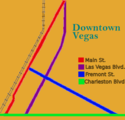
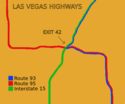
For most visitors, Las Vegas is a one-dimensional town. One either walks up the Strip, or down (though for compass-challenged tourists, even that can be confusing). An adventurous minority will go downtown to Fremont Street, a few short blocks of casinos and souvenir shops that I liked better before they roofed it.
It turns out that naïve tourists have stumbled onto the truth: there are no east-west highways in Las Vegas. And therein lies the tale. read more »
Big cities will eventually get through the recession.
How much help they’ll get from the design-obsessed bloggers who are so anxious to shape urban life is open to question.
Consider the blogosphere in Los Angeles, which bubbled with reports of decapitated chickens turning up all around town earlier this year.
Some bloggers speculated that chickens were being killed in rituals of the Santeria cult, which has roots in Latin America. The speculation seemed on the way to becoming an urban legend. read more »
In mid August, as we were beginning to feel a pulse in the nation’s housing market, an academician and housing expert from the University of Pennsylvania named Thomas J. Sugrue wrote an article in the Wall Street Journal proposing that, for many people, the new American Dream should be renting. read more »
At a time when many cities are struggling to spur civic vitality, places that are home to major colleges or universities are percolating along robustly, often with healthy job growth, low costs of living and rising property values. Fueling this rise is the massive influence academic institutions have on their regions in terms of economic impact, civic connections, and innovative mindsets. Diverse spots — Columbia, Missouri; College Park, Pennsylvania; Raleigh-Durham, North Carolina and Chico, California, just to name a few — attract families, retirees, and the academically-minded. read more »
It is a rare spectacle when broadly respected national organizations and analysts condemn an initiative by some of the most influential players in the Washington establishment. Yet that is exactly what has happened to the Moving Cooler report, authored by the consulting firm Cambridge Systematics, published by the Urban Land Institute and sponsored by the American Public Transportation Association (APTA), the Environmental Defense Fund, Natural Resources Defense Council, the Environmental Protection Agency and others. read more »
Urban politicians have widely embraced the current concentration of power in Washington, but they may soon regret the trend they now so actively champion. The great protean tradition of American urbanism – with scores of competing economic centers – is giving way to a new Romanism, in which all power and decisions devolve down to the imperial core.
This is big stuff, perhaps even more important than the health care debate. The consequence could be a loss of local control, weakening the ability of cities to respond to new challenges in the coming decades. read more »
By Richard Reep
Regions have a bad habit of getting into ruts. This is true of any place that focuses exclusively on one industry – with the possible exception of the federal government, which keeps expanding no matter what. This reality is most evident in places like Detroit, but it also applies to one like Orlando, whose tourist-based economy has been held up as a post-industrial model. read more »
With the home building industry in peril, you would think that legislators would come up with immediate solutions to help foster new home construction. And there are now two well known Federal programs regarding housing: one is the $8,000 tax credit for first time home buyers, and the other is the 30% energy tax credit for a select few components of home remodeling. read more »
In these hard times the New Zealand public is somewhat excited about the travel costs incurred by our Government Ministers and MPs. Overseas travel attracts particular rage and fury.
A particularly galling example is a proposal by Christchurch City Mayor Bob Parker, his CEO Tony Marryat, and an urban planner, to visit the US to investigate the performance of light rail in Los Angeles, San Francisco Bay Area, Seattle and Vancouver. read more »
Last summer, Sharon Owens had a problem. The Burlington, VT mother of three was trying to satisfy the wishes of her soon-to-be 14-year old daughter who wanted to celebrate her birthday with a canoe outing with friends. The problem was that renting the necessary canoes would have cost hundreds of dollars. Interestingly, it seemed that nearly ever other house in Sharon’s neighborhood had a canoe in the backyard, or parked under a tarp next to a garage. But Sharon, like many of us, did not know her neighbors, and felt uncomfortable asking them. read more »
by Anonymous 08/20/2009
When the British troops laid down their arms at Yorktown, Virginia, a colonial band played "The World Turned Upside Down," a popular air marking the absurdity of the occasion. Now the American economy is turned upside down, and the small businesses that once fortified it have exchanged places with Asian manufacturers that America once sought to protect. No man’s enlightenment is complete without the deepening amazement that comes with having seen such a reversal. read more »
The 230 Miles per Gallon Claim: The General Motors (GM) announcement last week that the Chevrolet Volt would achieve 230 miles per gallon in city driving and a rating of more than 100 miles per gallon with combined city and highway driving sadly contains more hype than reality. The Chevrolet Volt is a plug-in hybrid vehicle that GM intends to begin marketing in 2010. GM has indicated that the car will be able without gasoline for 40 miles, on its rechargeable battery. After the battery is depleted, the car would begin to use gasoline. The 230 mile per gallon figure, according to GM, was calculated using a proposed but yet not revealed Environmental Protection Agency fuel economy testing procedure. Similarly, the details of the GM calculation were not revealed. read more »
Frequent news stories tell of folks who protest and rant about “socialism” and government handouts, especially recently in the “debate” over health care reform, but who turn out to live on social security and depend on Medicare, and sometimes don’t even know they are public programs! This likely tells us about the astounding power of the religious right and of the economic illiteracy of much of the population. read more »
America's ''kumbaya'' moment has come and gone. The nation's brief feel-good era initiated by Barack Obama's stirring post-partisan rhetoric--and fortified by John McCain's classy concession speech--has dissolved into sectarian bickering more appropriate to dysfunctional Iraq than the world's greatest democratic republic.
Yet little of the shouting concerns the fundamental economic issue facing the U.S. today: the decline of upward mobility and income growth for the working and middle classes. Instead we have politicos battling over two versions of ''trickle down'' economics. read more »
California has been exporting people to Oregon for many years, even amid the recession in both states.
Indeed, the 2005 American Community Survey report shows that California-to-Oregon migration was 56,379 in 2005, the sixth-largest interstate flow in the United States. The 2000 census showed a five-year flow of 138,836 people, the eighth-largest over that time period. Until two years ago, Oregon was managing to absorb this population with mixed results, but generally as part of an expanding and diversifying economy. But that pattern has ended, at least for now. read more »
Most American urban economic development and revitalization initiatives seek to position communities to attract high wage jobs in the knowledge economy. This usually involves programs to attract and retain the college educated, and efforts to lure corporate headquarters or target industries such as life sciences, high tech, or cutting edge green industries. Almost everything, whether it be recreational trails, public art programs, stadiums and convention centers, or corporate incentives, is justified by reference to this goal, often with phrases like “stopping brain drain” and “luring the creative class”.
The future vision underpinning this is a decidedly post-industrial one. This city of tomorrow is made up of people living upscale in town condos, riding a light rail line to work at a smartly designed modern office, and spending enormous sums – with the requisite sales tax benefits – entertaining themselves in cafes, restaurants, swanky shops, or artistic events. read more »
During the long hot summer of the expenses scandal in British politics, one of the most bizarre stories concerned a Conservative MP who claimed from the public purse for a second home: a place for his ducks. It wasn’t any old duck house, however, but a ‘Stockholm’ floating model, valued at over £1,500. It is over 5 feet high. read more »
There be dragons!
That's what they used to say at the edges of the map, where the known world became Terra Incognita.
I find map edges intriguing - I want to turn the page, find out what is on the other side, see what is just over the horizon. read more »
Los Angeles Police Department (LAPD) Chief William Bratton’s pending departure makes now a good time to give him credit for a habit that draws scant attention amid talk of his traveling ways and unapologetic ego: The guy works very hard at every aspect of his duties. read more »
by Anonymous 08/13/2009
California’s favorable climate makes it a haven for outdoor activity. Enlightened and forward-looking planning has largely preserved the waterfronts for public access and set aside a lot of space for public use and activity. Yet despite this, there are few great urban gathering spaces. This is most obvious in the two largest population centers – Los Angeles and San Francisco. read more »
Both the world and the nation remain in the midst of the greatest economic downturn since the Great Depression. But with all the talk of “green shoots” and a recovery housing market, we may in fact be about to witness another devastating bubble.
As we well know, the Great Recession was set off the by the bursting of the housing bubble in the United States. The results have been devastating. The value of the US housing stock has fallen 9 quarters in a row, which compares to the previous modern record of one (Note). This decline has been a driving force in a 25 percent or a $145,000 average decline (inflation adjusted) in net worth per household in less than two years (Figure 1). The Great Recession has fallen particularly hard on middle-income households, through the erosion of both house prices and pension fund values. read more »
by Anonymous 08/11/2009
Debate about immigration and the more than 38 million foreign born residents who have arrived since 1980 has become something of a national pastime. Although the positive impact of this population on the economy has been questioned in many quarters, self-employment and new labor growth statistics illustrate the increasingly important role immigrants play in our national economy. read more »
Few topics stir more controversy between urbanists and civic boosters than city rankings. What truly makes a city "great," or even "livable"? The answers, and how these surveys determine them, are often subjective, narrow or even misguided. What makes a "great" city on one list can serve as a detriment on another.
Recent rankings of the "best" cities around the world by the Economist Intelligence Unit, Monocle magazine and the Mercer quality of life surveys settled on a remarkably similar list. For the most part, the top ranks are dominated by well-manicured older European cities such as Zurich, Geneva, Vienna, Copenhagen, Helsinki and Munich, as well as New World metropolises like Vancouver and Toronto; Auckland, New Zealand; and Perth and Melbourne in Australia. read more »
In my first foray into political life in the 1970s, I worked during college on the staff of a liberal Democrat in the Texas state Senate. Only a few years earlier, Patty Hearst had been kidnapped and brainwashed by the Symbionese Liberation Army, and a moral panic about cults seducing college kids was sweeping the nation. One result was the rise of a new, thankfully ephemeral profession: "deprogrammers" who for pay would kidnap a young person from a cult and break the spell, by means of isolation, interrogation and maybe reruns of "The Waltons." read more »
by Anonymous 08/10/2009
Barack Obama ran for President with his headquarters in downtown Chicago. Obama's election night victory speech was just blocks away in Chicago's Grant Park. To historians of organized crime both locations are located in a significant place: Chicago's old First Ward. This valuable plot of land is where Chicago's Democratic Machine and Al Capone's criminal organization both began. The connection between the two is of great historical significance. Why? Because the Chicago Mob is nothing but an outgrowth of Chicago's old First Ward Democratic Organization. read more »
The “cash for clunkers” (or CARS) program that was widely predicted to be extended by the Congress has been, if nothing else, a clear public relations win for the Obama Administration. It may also be, at least for the short-term, a shot in the arm for the beleaguered American auto industry (including domestic dealerships of foreign car companies, like Honda and Toyota). But the program’s extension may also be bad news for anyone who was hoping that candidate Obama’s campaign promises to fix our domestic energy policy would translate into something resembling a robust make-over. read more »
By Richard Reep
Street art has been around since ancient times, with the triple theme of craft, sabotage, and branding. Paris’ “Blec le rat” and New York’s Taki 183 were early pioneers in street art. Today, street art has spread into nearly every city with artists, media, and collectors. Skateboards, tattoos, stickers, and spray paint are but a few examples of the craft of the street. The adrenalin rush an artist feels in executing his work is augmented by the urban thrill of working at night, rushing to leave behind a signature before the police come. The chief aim of most street art is branding, as the artist’s main form of expression is to create a recognizable personal logotype. read more »
Mayor Michael Bloomberg owes 200,000 small business owners an apology.
When Michael Bloomberg was first elected Mayor of New York City in 2001, the city’s small business owners were hopeful and confident that finally a successful businessman would be creating the city’s economic policy. They hoped to see an end to powerful special interests that, through political donations, had gained control over the economic policy of the city. read more »
Senators Jay Rockefeller (D-West Virginia) and Frank Lautenberg (D-New Jersey) have introduced legislation that would require annual per capita reductions in driving each year. Another bill, the National Transportation Objectives Act, introduced by Representative Rush Holt (D-Indiana), Representative Russ Carnahan (D-Missouri) and Representative Jay Inslee (D-Washington.) would require a 16 percent reduction in driving in 20 years. read more »
The term “sustainable” relates to a concept called the "Triple Bottom Line” (TBL): People, Planet, and Profit (the three P’s), endorsed by the United Nations in 2007 for urban and community accounting.
American suburban land planning is about the SBL (Single Bottom Line): Profit. In city after city, mindless cookie cutter subdivisions, with characterless architecture, serve cars more than people. This dysfunction is caused by the boiler-plate regulations; engineers adhere to the minimum dimensions mandated by city ordinances to gain density, which maximizes developer’s profits. read more »
Nothing is perhaps more pathetic than the exertions of economic developers and politicians grasping at straws, particularly during hard times. Over the past decade, we have turned from one panacea to another, from the onset of the information age to the creative class to the boom in biotech, nanotech and now the "green economy." read more »
There's been a torrent of spirited banter lately about the reemergence of downtown central-cities. Much of this raucous debate is between advocates of urban revitalization, who offer an assortment of anti-sprawl messages as justification for this movement, and those who see suburban growth options as essential to quality of life in America. Adding to the fray are environmentalists who see housing density and alternative forms of transportation as the panacea for confronting our carbon-choked world. read more »
My father owned and operated a junkyard in Tucson for a number of years, and I learned a lot about the auto recycling industry helping around the office and as a delivery driver. So as a junkyard enthusiast, the “Cash For Clunkers” program naturally caught my interest lately. Though it looks to be the product of good intentions, I don’t think the legislation understands that junkyards already comprise an efficient, well developed recycling system for salvaging vehicles, with a beneficial result for the environment overall. read more »
I went to Hollywood one night last week to watch my favorite film of all time, Koyaanisqatsi (released in 1983). It was being shown on a big screen at the Hollywood Bowl, accompanied by orchestra playing the original score, conducted by its composer, Philip Glass. Oh, I didn't go to the Bowl; I watched it at my daughter's apartment about half a mile away (hi def DVD and digital sound system turned way up, thank you). read more »
As the American economy slowly heals, the Obama administration will no doubt claim some credit for its $787 billion stimulus — and perhaps even suggest doubling down for a second stage. Republicans, for their part, will place their emphasis on the “slow” part of the equation and persistent high unemployment, blaming the very same stimulus program.
Whatever the politics, no new stimulus should be considered unless it deals with the fundamental illness undermining the country’s long-term economic prospects. Such a stimulus would address the country’s essential problem: persistent overconsumption amid underproduction. read more »
The phrase, “Think Globally, Act Locally” has often been used by environmentalists to sum up a strategy devoted to conserving the earth's scarce natural resources at the local level. More recently, business executives borrowed the idea to emphasize the need for building capabilities at the country or regional level even as they pursue global growth. But now the Millennial Generation, Americans born between 1982 and 2003, are giving the phrase an entirely new meaning as they pursue their efforts to change the world – one local community at a time. read more »
American metropolitan areas have been the subject of considerable derision. Often characterized as inferior to those of Australia, Canada, Europe and even of Japan by planners and politicians who travel abroad, there has long been a desire to reshape American cities along the lines of foreign models. Yet, despite this, American metropolitan areas generally provide a standard of living to their residents unmatched anywhere in the world. This is based upon the latest comparative economic data for the world’s most affluent metropolitan areas. read more »
Yesterday a group of environmental advocacy groups, foundations and other organizations released a report, Moving Cooler, amid much fanfare, seeking to have us believe that it is a serious study of GHG reduction options in the transportation sector. It is immensely disappointing. The world could use a dispassionate, objective and broad-based assessment of petroleum reduction options as well as their positive and negative consequences. This is not it. read more »
From a distance, a crisis often takes on ideological colorings. This is true in California, where the ongoing fiscal meltdown has devolved into a struggle between anti-tax conservatives and free-spending green leftist liberals.
Yet more nuances surface when you approach a crisis from the context of a specific place. Over the past two years my North Dakota-based consulting partner, Delore Zimmerman, and I have been working in Salinas, a farm community of 150,000, 10 miles inland from the Monterey coast and an hour's drive south of San Jose. read more »
During the recent financial crisis, I didn’t meet anyone else who was invested in stocks and bonds. I guess I was the only one. Everyone else was holding “cash,” as they often quietly boasted. But even if your money is kept under a mattress, cash is best understood as a zero-coupon bond, in most cases drawn against an overdrawn nation-state.
Cash may be king, but the sovereign looks more temporary than a Romanov heir living in a rented villa in the south of France. read more »
The First Secretary of State, Secretary of State for Business, Innovation and Skills, and Lord President of the Council, Peter Mandelson, together with Ed Miliband, the Secretary of State for Energy and Climate Change, have published The UK Low Carbon Industrial Strategy. They are claiming it promises an "economic revolution” but is in fact an environmentalist retreat from industrial production It is a disastrous strategy that will result in further de-industrialisation, supposedly with the aim of addressing a rather vague threat of climate change. read more »
"Cleveland’s leadership has no apparent theory of change. Overwhelmingly, the strategy is now driven by individual projects. These projects, pushed by the real estate interests that dominate the board of the Greater Cleveland Partnership, confuse real estate development with economic development. This leads to the 'Big Thing Theory' of economic development: Prosperity results from building one more big thing." read more »
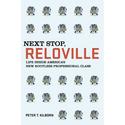
Peter T. Kilborn’s Next Stop, Reloville: Life Inside America's New Rootless Professional Class documents an important piece of social history: the lives of relocating corporate executives. These modern-day nomads—overwhelming white, well-educated and middle-class—maintain the business machine of large companies. They include the technicians, marketing executives and professional managers who accept a rootless life in exchange for handsome remuneration. read more » documents an important piece of social history: the lives of relocating corporate executives. These modern-day nomads—overwhelming white, well-educated and middle-class—maintain the business machine of large companies. They include the technicians, marketing executives and professional managers who accept a rootless life in exchange for handsome remuneration. read more »
The House Committee on Oversight and Government Reform held a critically important hearing on July 21 titled "Following the Money: Report of the Special Inspector General for the Troubled Asset Relief Program (SIGTARP)." Sadly the mainstream media under reported the meeting. read more »
On the surface this should be the moment the Blue Man basks in glory. The most urbane president since John Kennedy sits in the White House. A San Francisco liberal runs the House of Representatives while the key committees are controlled by representatives of Boston, Manhattan, Beverly Hills, and the Bay Area—bastions of the gentry. read more »
Have your home on the range, access to a few thousand acres …without paying for it all!
By Candace Evans
Mark Lowham was raised on a ranch in Casper, Wyoming. He got away from roping steers and repairing fences to study at Stanford Business School. Lowham thought he might return to ranching one day, but he never dreamed that instead of roping steers, he’d be marketing ways to rope adults into a herd of conservation-minded land-owners. read more »
The culture war over religion and values that dominated much of the last quarter of the 20th century has ended, mostly in a rout of the right-wing zealots who waged it.
Yet even as this old conflict has receded , a new culture war may be beginning. This one is being launched largely by the religious right's long-time secularist enemies who are now enjoying unprecedented influence over our national politics. read more »
If the predictions are accurate, America will have to house some 100 million more people by 2040 to mid-century than is now the case. Despite the current round of foreclosures and rising apartment vacancy, over the long term the demand for humane, affordable, sustainable housing is going to escalate dramatically in the coming years.
In this recessionary time, it may be tempting to ignore the coming boost in housing demand. Yet eventually growth will pick up and the housing market will become re-invigorated. Nonetheless, the problem of meeting the demand for affordable housing will remain. read more »
By Richard Reep
Wendell Cox recently reported on the state of so-called “urban infill” efforts, and analyzed which cities are experiencing an increase in their density. This report shows some surprising trends. Cities such as Pittsburgh, which claim to be successful at “infilling”, are actually dropping in density, in part because of low birth rates and lack of in-migration. read more »
Australia is a continent sized country with total urbanized area of only 0.3%. As is the case with the USA, the population is increasing as a result of natural growth and immigration. The country is blessed with a sunny climate and enough space to enable its inhabitants to enjoy a relaxed, free lifestyle.
Given this, one would expect there would be little support for the higher density housing ideology of the Smart Growth advocates. Yet since the early 1990s the Australian Federal Department of Housing has been pushing exactly this approach. read more »
At a recent Senate Banking Committee hearing, Senator Robert Menendez of New Jersey, responding to comments about large transit subsidies, remarked that the last federal highway bill included $200 billion in subsidies for highways.
The Senator should know better. The federal highway bill builds highways with fees paid by highway users, not by subsidies. read more »
The living room of my electrician friend Harry Gres was filled with solar panels which were destined for his roof to demonstrate the advantages of his new eco-business venture. In the spirit of Herbert Hoover's campaign pledge of a car in every garage, Harry envisions solar panels on every roof (including garages). read more »
The cloud of the global financial meltdown has not even cleared, yet another crisis of massive proportions looms on the horizon: global sovereign (public) debt.
This crisis, like so many others, has its root in the free flow of credit from the preceding economic boom years. The market prices of assets were rising steadily. Rising valuations, especially where they were based on improving revenues from robust economic activity, led to rising income streams for governments. This encouraged governments to borrow more, perhaps often to expand services – and the bureaucracy required to offer services – although sometimes to improve infrastructure. read more »
Media coverage of America's best jobs usually focuses on blue-collar sectors, like manufacturing, or elite ones, such as finance or technology. But if you're seeking high-wage employment, your best bet lies in the massive "business and professional services" sector.
This unsung division of the economy is basically a mirror of any and all productive industry. It includes everything from human resources and administration to technical and scientific positions, as well as accounting, legal and architectural firms. read more »
by Anonymous 07/12/2009
No matter how far the economy falters, there is always a winner. And no city does better when the nation is at the brink of disaster than Washington, DC. Since December 2007, when the current recession formally began, the nation has lost approximately 6 million jobs. Only two states, Alaska and North Dakota, have lost a smaller percentage of jobs than Washington, DC, which has seen a job loss of 0.6%, or 4,400. Simply put, Washington has done better in this recession than 48 of the fifty states when it comes to job performance. read more »
No one knows this answer for sure, but the data show some interesting trends for what's possible. This analysis takes two approaches to answer this question, including:
- Total employment: suggests recovery in 2012
- Employment growth rates: suggests recovery in mid-2010 ... but ...
This is a work in progress. Tomorrow the future will change.
Current status read more »
Thomas Paine was born in Thetford, Norfolk, in 1737. He understood that history is made. Aged 39, writing his Common Sense, he noted that Britain is constituted of '...the base remains of two ancient tyrannies, compounded with some new republican materials.' These were:
'First. - The remains of monarchical tyranny in the person of the king
Secondly. - The remains of aristocratical tyranny in the persons of the peers.
Thirdly. - The new republican materials, in the persons of the commons, on whose virtue depends the freedom of England.' (1) read more »
So far, 2009 has not been a banner year for greens in Los Angeles. As the area's mainstream enviros buddy up with self-described green politicians and deep-pocketed land speculators and unions who have seemingly joined the “sustainability” cause, an odd thing is happening: Environmentalists are turning into servants for more powerful, politically-connected masters. read more »
by Anonymous 07/08/2009
Innovation in urban transportation is the only long-term correction for expensive environmental losses and energy waste. Why, then, isn’t there a US plan for more vigorous exploration and demonstration of new systems using advanced technologies, particularly automation? Where is the Personal Rapid Transit — PRT — in US transportation policy? read more »
by Anonymous 07/07/2009
The internet has become part of our nation’s mass transit system: It is a vehicle many people can use, all at once, to get to work, medical appointments, schools, libraries and elsewhere.
Telecommuting is one means of travel the country can no longer afford to sideline. The nation’s next transportation funding legislation must promote the telecommuting option...aggressively. read more »
Right now California's economy is moribund, and the prospects for a quick turnaround are not good. Unable to pay its bills, the state is issuing IOUs; its once strong credit rating has collapsed. The state that once boasted the seventh-largest gross domestic product in the world is looking less like a celebrated global innovator and more like a fiscal basket case along the lines of Argentina or Latvia.
It took some amazing incompetence to toss this best-endowed of places down into the dustbin of history. Yet conventional wisdom views the crisis largely as a legacy of Proposition 13, which in effect capped only taxes.
This lets too many malefactors off the hook. I covered the Proposition 13 campaign for the Washington Post and examined its aftermath up close. It passed because California was running huge surpluses at the time, even as soaring property taxes were driving people from their homes. read more »
For decades, those who know best have been chronicling the death of the suburbs. In every new announcement of demographic data, they find evidence that people are “moving back” to the core cities, even though they never moved away. The coverage of the latest Bureau of the Census city population estimates set a new standard. “Cities Grow at Suburb’s Expense During Recession” was the headline in The Wall Street Journal. read more »
by Anonymous 07/03/2009
American progressives long have looked upon Britain’s Labour Party as an exemplar of how to prioritize social welfare without entirely alienating business. Unlike their European counterparts, whose overly suspicious view of wealth and overly generous view of social welfare spending make poor role models for America, the British Labour Party has brokered a “partnership” between wealth and welfare over the years more suitable to the American psyche. read more »
Contrary to popular notions held even here in southern California, Santa Monica was never really a beach town or bedroom community. It was a blue-collar industrial town, home to the famed Douglas Aircraft from before World War II until the 1970s.
When I first lived there in the early ’70s, the city was pretty dilapidated, decaying and declining (except for the attractive neighborhoods of large expensive homes in the city’s northern sections). I remember a lot of retirees, students, and like me and my wife, renters of small apartments in old buildings. The tiredness of the place was incongruous with its great location and weather. But then the first of several spectacular rises in real estate values took off. read more »
By Richard Reep
Carmen Ruest, Director of Cirque de Soleil, recently revealed her start as a street performer, or busker, in Canada. The interviewer did not hesitate to contrast this with the current state of Downtown Orlando, which forbids street performers. Eliminating this ban will improve Orlando's urban consciousness, both downtown and elsewhere, and improve the city in general. read more »
An article in the London Daily Telegraph suggesting that President Obama might back a major program of bulldozing parts of cities in the Rust Belt has put so-called “shrinking cities” back in the spotlight. Many cities around the country, especially in the Rust Belt have experienced major population loss in their urban cores which has sometimes spilled into their entire metro area. They have thousands of abandoned homes, decayed infrastructure, environmental challenges, and no growth to justify a belief that many districts will ever be repopulated. read more »
The person who caused the current world recession can be found not on Wall Street or the city of London, but instead could be you, and your next-door neighbor--the people who put so much of their savings and credit to buy a house.
Increasingly, conventional wisdom places the fundamental blame for the worldwide downturn on people's desire--particularly in places like the U.K., the U.S. and Spain--to own their own home. Acceptance of the long-term serfdom of renting, the logic increasingly goes, could help restore order and the rightful balance of nature. read more »
Treasury Secretary Ken Henry’s recent address to business economists was an apt prism through which to survey Sydney’s immediate past and distant future. According to reports, he said ‘the [Chinese] resources boom had produced a “two-speed” economy, with unemployment rising in the south-eastern states but falling in the west and north’. Dr Henry is reported to have told his Sydney audience, ‘I don’t think everybody in this room should be moving to Perth. read more »
To visit banks in Hong Kong and Kuala Lumpur, I recently flew into Shanghai and out from Singapore. In two weeks, I rode a lot of trains and met a lot of bankers. When I got home to Europe, it felt like I had traversed a Greater Economic Co-Prosperity Sphere, although I was never sure if it was one that belonged to China, Japan, or the international banking system. Here's a highly personal, thumbnail report on the region's development and some of the local rail network: read more »
The Obama administration has been, so far, hierarchical and even conservative in its thinking. Following and even surpassing the Bush administration’s reliance on an M.B.A.-trained elite, which drove the country nearly to ruin, the Obama approach seems to boil down to finding the smartest guy in the room, rather than utilizing people with hands-on experience or acquired wisdom. read more »
by Anonymous 06/25/2009
During the first ten days of October 2008, the Dow Jones dropped 2,399.47 points, losing 22.11% of its value and trillions of investor equity. The Federal Government pushed a $700 billion bail-out through Congress to rescue the beleaguered financial institutions. The collapse of the financial system in the fall of 2008 was likened to an earthquake. In reality, what happened was more like a shift of tectonic plates. read more »
In what are tough times for most states, conditions for business remain surprisingly good in Nebraska. Like other states in the “zone of sanity” Nebraska is especially supportive of small businesses.
Nebraska is one of a series out of mid-American outliers. In 2008 – a year of a severe national contraction – the state experienced a 3.6 percent growth in gross domestic product. Its current unemployment rate of just 4.4 percent stands at less than half the U.S. rate of 9.4 percent read more »
Much has been made by the national media and the markets about the emergence from our desiccated economic soil of what President Obama has called "green shoots." But although the economy may already be slowly regenerating (largely due to its natural resiliency), we need to question whether these fledglings will grow into healthy plants or a crop of crabgrass.
The political right has made many negative assessments of the president's approach, decrying the administration's huge jump in deficit spending and penchant for ever more expansive regulatory control of the economy. Polling data by both The New York Times and the Wall Street Journal shows some growing unease about both the expanding federal role in the economy and the growing mountain of debt. read more »
I have heard Paul Krugman say that ‘the end is nigh’ so many times that it seemed like the only sensible way to think about the housing market. It was identified as a bubble, and that could only mean that it would eventually burst. A steady diet of NYT editorials and Economist charts leave you with one conclusion — this is not going to end well.
This certainly seems to be true in Phoenix. Even though I’ve lectured for years about ‘the growth machine’, how the economy in a city like Phoenix depends on building more homes, I did not expect the whole thing to collapse quite so precipitately, and with so many repercussions. read more »
At its peak, General Motors employed 350,000 people and operated 150 assembly plants. It defined “big business” for America and the world.
But GM was not always big. It grew through the acquisitions that it made in the early decades of the twentieth century. In those days, the automotive industry was populated by entrepreneurial small businesses led by people like Ransom Olds and Henry Ford. There were more than 200 automobile companies in the United States in 1920. By 1940, only 17 had survived. read more »
It is no wonder that architect Richard Rogers is feeling a bit peeved at Prince Charles. This month, the heir to the British throne scuppered plans for a £1 billion development putting 552 apartments on the 12.8-acre site of the old Chelsea Barracks. Rogers was most offended that the Prince used his Royalty to by-pass the usual planning law consultation, by speaking direct to the Qatari royalty who owned the site. read more »
The Economist magazine's "Economic Intelligence Unit" (EIU) has published its most recent survey of the most livable cities in the world.
Vancouver, Canada, ranks number one, Vienna, Austria number two, Perth, Australia number five, Geneva number 8, Zurich, number 9, (both in Switzerland) and Auckland, New Zealand, number twelve. read more »
Localism, a longstanding agenda of the Green Party in the context of the UK economy, is gaining ground in the current economic crisis. In a recent edition of the London-based Daily Telegraph, a striking contrast is made between Chester in north-west England – which is suffering from the decline of its relatively narrow economic base and Totnes in south-west England, which with its longstanding interest in alternative living, and more localised economy, seems to be weathering the situation much better. The underlying message from the article is that small is good – particularly for businesses not overextended in their borrowing, and familiar enough with their immediate context to be able to adapt to a changing economy. read more »
Most readers may not be initially very interested in the detailed geography of “class” in Seattle, but it actually matters not only for our area but for the whole debate over the shape of the urban future. Academics, perhaps Americans in general, are loath to admit to class differences, yet they remain very crucial to the understanding of how cities and regions evolve.
Seattle is a great example of the transformation of a 20th century model of the American metropolis to a 21st century-cum-19th century “old World” model of metropolis. It is often held up as one of the role models for other cities, so its experiences should be considered seriously not only for American cities but for regions throughout the advanced world. read more »
For decades many in the American political and policy establishment--including close supporters of President Obama--have looked enviously at the bureaucratic powerhouse of the European Union. In everything from climate change to civil liberties to land use regulation, Europe long has charmed those visionaries, particularly on the left, who wish to remake America in its image. read more »
One of the favored strategies of current urban planning is “infill” development. This is development that occurs within the existing urban footprint, as opposed that taking place on the fringe of the urban footprint (suburbanization). For the first time, the United States Bureau of the Census is producing data that readily reveals infill, as measured by population growth, in the nation’s urban areas.
2000 Urban Footprint Populations read more »
Many have by now heard or read the story of the plucky group of Hawaiians on the island of Kauai who, when faced with the loss of their businesses due to the state government’s inability to open park roads to a popular beach and camping area, took care of it themselves for a fraction of the cost and in a fraction of the time. How very Tocquevellian. Or, better, how very American. read more »
News Flash: The Federal Highway Trust Fund will go broke in August.
It went broke last year, and Congress needed an emergency transfer of $8 billion to keep it solvent. There was very little concern last year, but this year we find ourselves in a post-modernist political environment where managing a crisis is good politics, although actually all we do is talk about it. read more »
Summer in Minnesota – land of 10,000 lakes — is, for many families, about boating, with the Harley the preferred mode of ground transportation. In winter, snow mobiles are popular. Hunting and fishing replace the corner coffee shops as hangouts. Three car garages are considered a minimum – four even better!
So how did it come to pass that out-of-control land prices would destroy the economics of housing in this small-town region? And why was the pattern repeated in markets like Las Vegas and Phoenix? read more »
By Richard Reep
More employment sectors are increasingly migratory and less fixated on a particular place. Many of us are instead working from home, or from places where we prefer – it might be a coffeeshop, or it might be a vacation condo. Housing’s rigid systems belong to the Old Economy. read more »
by Anonymous 06/09/2009
During the first ten days of October 2008, the Dow Jones dropped 2,399.47 points, losing 22.11% of its value and trillions of investor equity. The Federal Government pushed a $700 billion bail-out through Congress to rescue the beleaguered financial institutions. The collapse of the financial system in the fall of 2008 was likened to an earthquake. In reality, what happened was more like a shift of tectonic plates.
History will record that the tectonic plates of our financial world began to drift apart in the fall of 2008. The scale of this change may be most evident in housing.
PART TWO – THE HOME BUILDERS read more »
Nobel Prize-winning economist Paul Krugman was quoted widely for saying that the official recession will end this summer. Before you get overly excited, keep in mind that the recession he’s calling the end of started officially in December 2007. Now ask yourself this: when did you notice that the economy was in recession? Six months after it started? One year? read more »
LONDON - The thrashing of Britain's New Labour Party – which came in a weak third in local and European Parliament elections this week – may seem a minor event compared to Barack Obama's triumphal overseas tour. Yet in many ways the humiliation of New Labour should send some potential warning shots across the bow of the good ship Obama. read more »
by Anonymous 06/07/2009
Could oil price manipulation have created the rerun of the Great Depression that we are currently enduring?
Think about it. The doubling of gas prices had a profound effect on disposable income and the affordability of housing, whose subsequent downturn set the stage for economic collapse.
We now know that Wall Street speculation drove oil from $69 a barrel to nearly $150. But this article purports to explain why. read more »
by Anonymous 06/07/2009
Long before Chicago sold off its assets, made plastic cows parade and outlawed goose guts, there was Michael Cassius McDonald, Big Mike. Where the Chicago Machine now grinds the citizen with Progressive idiocies, Mike McDonald and other Machine Mavericks like the Lords of the Levee appeared to actually help people. Vice and Government have gone hand-in-hand since Solon tried to reason with Croesus – Hesiod tells us that political corruption sparks political thought. The life of Michael Cassius McDonald was active and thought-provoking. read more »
“Paint the world white to fight global warming” was the astonishing headline from The Times of London. The paper was referring to a presentation made by United States Secretary of Energy, Dr. Stephen Chu at the St. James Palace Nobel Laureate Symposium last week. Chu was reported as saying that that this approach could have a vast impact. read more »
by Anonymous 06/04/2009
Most Americans living outside the Chicago area identify the city with Oprah, Obama, or Michael Jordan. When the subject of who really runs Chicago comes up, most people would say Mayor Daley. Chicago's lack of term limits and persistent political machine have kept Mayor Daley in office for over 20 years.
Those who know Chicago politics know there's one man who's more powerful than Mayor Daley, Alderman Ed Burke. Mayor Daley may be the identifiable public face of Chicago's political system and act as a lightning rod for criticism, but the lower profile Alderman Burke wields the real power. read more »
“Man is the only kind of varmint who sets his own trap, baits it, then steps in it.” — John Steinbeck
Though probably not intended as a political commentary, Steinbeck’s utterance perfectly describes the current California budget crisis. And, given the revenue and service delivery relationship between cities and the state, traps can be set and baited in Sacramento, leaving mayors, city councils and city managers to step in them. read more »
Almost ten-years ago, the Milken Institute first released America’s High-Tech Economy which cataloged technology’s central role in propelling economic growth in high-wage jobs and value-added economic activity. Shortly thereafter, the dot-com and high-tech bubbles popped, leading many to conclude that the era of tech-driven economic development was over. read more »
A decade ago, the path to a successful future seemed sure. Secure a foothold in the emerging information economy, and your city or region was destined to boom.
That belief, as it turned out, was misguided.
In the decade between 1997 and 2007, the information sector--which includes jobs in fields from media, publishing and broadcasting to computer programming, data processing, telecommunications and Internet publishing--has barely created a single new net job, while some 16,000,000 were created in other fields. read more »
Dionne Warwick posed the question more than 40 years ago, yet most Americans still don’t know ‘The way to San Jose’. Possessing neither the international cachet of San Francisco nor the notoriety of Oakland, San Jose continues to fly under the national radar in comparison to its Bay Area compatriots. Even with its self-proclaimed status as the ‘Heart of Silicon Valley’, many would be hard pressed to locate San Jose on a map of California. read more »
The hundreds of millions of dollars in federal stimulus money are working their way through various systems, en route to a city near you.
Give President Barack Obama credit for acting boldly to pump the funds into the economy – or take him to task for printing up money on the cuff.
Either way, the time has come to shift your focus from Washington, D.C., and onto State Houses and City Halls throughout our land. read more »
The site plan logically should be the key to approval of a development project. Yet in reality, the plan is secondary to the presentation. My conclusions are based upon experience with well over a thousand developments over four decades, most in the mainland USA. And what I’ve observed is that the best site plan is only as good as the presentation that will convince the council or planning commission to vote “Yes” on it. No “yes” vote, no deal, no development. read more »
by Anonymous 05/28/2009
INTRODUCTION
During the first ten days of October 2008, the Dow Jones dropped 2399.47 points, losing 22.11% of its value and trillions of investor equity. The Federal Government pushed a $700 billion bail-out through Congress to rescue the beleaguered financial institutions. The collapse of the financial system in the fall of 2008 was likened to an earthquake. In reality, what happened was more like a shift of tectonic plates.
In 1912 a German scientist, Alfred Wegener, proposed that the continents were once joined together as one giant land mass called Pangea. read more »
United States Secretary of Transportation Ray LaHood and Washington Post columnist George Will have been locked in debate over transit. Will called LaHood the “Secretary of Behavior Modification” for his policies intended to reduce car use, citing Portland’s strong transit and land use planning measures as a model for the nation. read more »
by Anonymous 05/26/2009
This month, the Obama administration moved to regulate the so-called ‘invisible’ financial instruments that have come to rule the world of finance. Variations of the ‘shadow’ banking system — or, in the preferred language of financiers, market ‘risk management tools’ — have increasingly taken the spotlight during the current crises. read more »
These are times that thrill some easterners' souls. However bad things might be on Wall Street or Beacon Hill, there's nothing more pleasing to Atlantic America than the whiff of devastation on the other coast.
And to be sure, you can make a strong case that the California dream is all but dead. The state is effectively bankrupt, its political leadership discredited and the economy, with some exceptions, doing considerably worse than most anyplace outside Michigan. By next year, suggests forecaster Bill Watkins, unemployment could nudge up towards an almost Depression-like 15%. read more »
By Nima Sanandaji and Robert Gidehag
Sweden is a nation with extraordinary high tax rates. The average worker not only pays 30 percent of her or his income in visible taxes, but, additionally, close to 30 percent in hidden taxes. The defenders of the punishing tax burden argue that it is needed to maintain Sweden’s generous welfare system. While this claim may seem reasonable on its surface, a deeper look suggests that it is based on flawed analysis. read more »
With their tails between their legs, Central Florida’s leaders returned from Tallahassee in early May without funding from the Florida Senate for Sunrail, the region’s proposed commuter rail system. This failure to convince the state Senate to fund Sunrail is a major political defeat for the 1.8 million people who were said to be served by this train. read more »
The Midwest has a deserved reputation as a place that has largely failed to adapt to the globalized world. For example, no Midwestern city would qualify as a boomtown but still there remain a diversity of outcomes in how the region’s cities have dealt with their shared heritage and challenges. Some places are faring surprisingly well, outpacing even the national average in many measures, while others bring up the bottom of the league tables in multiple civics measures. read more »
It is well known that the largest percentage losses in house prices occurred early in the housing bubble in inland California, Sacramento and Riverside-San Bernardino, Las Vegas and Phoenix. These were the very southwestern areas that housing refugees fled to in search of less unaffordable housing in California’s coastal metropolitan areas (Los Angeles, San Francisco, San Diego and San Jose). read more »
By rejecting the complex Sacramento budget settlement, Californians have brought about an earthquake of national significance as has not been seen since the passage of Proposition 13 over thirty years ago. Once again, California voters handed politicians something they fear more than anything else, constraints on the ability to raise taxes and raid revenues for their pet interests.
Some, like long time Los Angeles Times statehouse reporter George Skelton thinks it’s the voters’ fault, as he suggested in his recent op-ed. The problem, we are told, lies with voters. The state’s massive fiscal crisis, which I and others warned was coming, was apparently unforecastable to California politicians and their enablers, like Skelton. read more »
Snook, Texas, a town of less than 600 souls, is best known for being the home of Sodalak's Country Inn, the originator of country fried bacon. It may seem an odd place to launch a return to financial health, but that's exactly what Dean Bass has in mind.
Bass, a veteran banking entrepreneur from Houston, in November bought the tiny First Bank of Snook as part of his plan to build a new financial powerhouse amid the worst economic downturn in a generation. The old bank, which also had a branch 15 miles away in College Station, home to Texas A&M, provided Bass with his charter, as well as access to a strong market on the far periphery of his home town. read more »
The sustainable city of the future will rest on the revival of traditional institutions that have faded in many of today’s cities.
Ellen Moncure and Joe Wong first met in school and then fell in love while living in the same dorm at the College of William and Mary. After graduation, they got married and, in 1999, moved to Washington, D.C., where they worked amid a large community of single and childless people. read more »
Much has been written about how suburbs have taken people away from the city and that now suburbanites need to return back to where they came. But in reality most suburbs of large cities have grown not from the migration of local city-dwellers but from migration from small towns and the countryside. read more »
Special interest groups are the scourge of the common interest, are they not? The Founding Fathers, in The Federalist Papers, recognized the danger posed by “factions,” but assumed that competing groups would keep the balance. They could not have foreseen our current Special Interest State, wherein tens of thousands of special interest groups exert such profound influence on politics, policies and life in the United States. read more »
I always do my best to make time for Lenny Mills because he’s earned that sort of consideration.
Mills is the fellow who wrote several pieces under the banner of his trademark “7 Rules” outline, where he applies the tricks he learned as a telemarketer to analyses of real estate development, politics, and other matters. read more »
Smart Growth and New Urbanism have increasingly merged into a loosely aligned set of ideas. The benefits of this high-density housing viewpoint are fast becoming a ‘given’ to planners and city governments, but studies that promote the advantages often omit the obvious disadvantages. Here are some downsides that show a much different story:
Smart Growth or Dumb Idea? read more »
by Anonymous 05/12/2009
General Motors, the venerable American auto manufacturer is sitting on the cliff’s edge in North America with a recent 3-month loss of $6 billion. However, GM watched its sales in China skyrocket 50% for the month of April, 2009. Ironically, Toyota, the company many Americans now cheer for, has posted a $7.7 billion loss for the first quarter.
This now proves, without a doubt, that the auto industry – not just in the US – is going through a massive crisis. But it’s clear that American manufacturing has reached a critical, historical turning point. read more »
With the possible exception of health care reform, no major issue presents more political opportunities and potential pitfalls for President Barack Obama than energy. A misstep over energy policy could cause serious economic, social and political consequences that could continue over the next decade. read more »
Few places have received more accolades in recent years than Austin, the city that ranked first on our list of the best big cities for jobs. Understanding what makes this attractive, fast-growing city tick can tell us much about what urban growth will look like in the coming decades.
Austin's success is not surprising since, in many ways, it starts on third base. Two of its greatest assets result from the luck of the draw; it's both a state capital and home to a major research university. read more »
President Obama recently announced his plan for environmental protection and Congress took up the debate. Called “Cap and Trade” Obama explained it simply in several public appearances. The government puts a limit on the total amount of carbon emissions that are acceptable in the United States. Carbon emissions come, basically, from burning carbon-based fuels – natural gas, petroleum and coal – in the production and use of energy. read more »
Canaries were used in early coal mines to detect deadly gases, such as methane and carbon monoxide. If the bird was happy and singing, the miners were safe. If the bird died, the air was not safe, and the miners left. The bird served as an early warning system.
Domestic migration trends play a similar early warning system for states. California’s dynamism was always reflected by its ability to attract newcomers to the state. But today California’s canary is dead. read more »
When it comes to transit, as like many things in the United States, there is no place like New York City. The subways and buses of the New York City Transit Authority (NYCTA) carry more than 40 percent of the nation’s transit rides (unlinked trips). To account for 40 percent of the nation’s ridership is quite an accomplishment inasmuch as the city represents less than 3 percent of the nation’s population. read more »
Economists and accountants could very likely have told us six months ago that Chrysler was doomed as a business and that the likely best course of action would be Chapter 11 bankruptcy and restructuring. Doing this in a timely manner would have saved the taxpayers billions of dollars.
But the politics were not right to permit this to happen at that time. So instead we invested billions of tax dollars to save it, only to find ourselves right back were we started. Except now the clock is striking twelve and it is the right time to reorganize the automaker – politically speaking. read more »
Cities today have more political clout than at any time in a half century. Not only does an urbanite blessed by the Chicago machine sit in the White House, but Congress is now dominated by Democratic politicians hailing from either cities or inner-ring suburbs.
Perhaps because of this representation, some are calling for the administration and Congress to "bail out" urban America. Yet there's grave danger in heeding this call. Hope that "the urban president" will solve inner-city problems could end up diverting cities from the kind of radical reforms necessary to thrive in the coming decades.
Demographics and economics make self-help a necessity. read more »
Austin has enjoyed healthy growth during its 150-year history. As a rule of thumb, its population doubles every 20 years, and has done so since it was founded. It continues to grow at a healthy clip: from a population of 345,000 in 1980 to 656,000 in 2000; the Census Bureau estimates it had nearly 750,000 residents in 2008.
But if the city of Austin has grown briskly, its suburbs have exploded. Williamson County to its north was the sixth fastest-growing county in the United States between July 1, 2007 and July 1, 2008. Hays County to the south was the tenth. read more »
Back in the 1950s when I was growing up, pundits worried a lot about automation and the problem of leisure in a post-industrial society. What were the American people going to do once machinery had relieved them of the daily burden of routine labor? Would they paint pictures and write poetry? Armchair intellectuals found it hard to imagine.
It was the age of Ozzie and Harriet, when ordinary working and middle-class families could aspire to a house in the suburbs and a full-time Mom who stays at home with the kids. Today, of course, that popular version of the American dream is a thing of the past, especially the part about a full-time Mom who stays at home with the kids. read more »
In recent centuries, the principal migration of the world’s population has been from rural areas to urban areas. As late as 1900, less than 20 percent of the world’s population lived in urban areas. That figure has now risen to more than 50 percent. Urbanization occurred earliest in the first world, as the increased wealth produced by the industrial revolution attracted people from the countryside. In 1900, 40 percent of the US population was urban, a figure that had risen to 80 percent by 2005. Trends in Europe, Japan and other first world nations are similar. read more »
Senator Arlen Specter switched parties. A five term Senator switching parties is certainly news, but it also represents a far greater statement about the challenges facing the Republican Party in Pennsylvania going forward.
Pennsylvania has been a dependable “Blue State” in presidential races since 1988. Currently, Democrats have a 1.2 million voter registration advantage. Less than a decade ago the margin was less than 500,000. What changed over the past decade? read more »
by Anonymous 05/01/2009
Like many on Main Street Paul Goodpaster is angry. Paul is my banker friend in Morehead, a retail, medical and education hub on the edge of eastern Kentucky. He observed that his bank was doing quite well – albeit hurt now by rising unemployment and an economy starting to have an impact even on those unglamorous places that had minded their business well. read more »
Back in the 1980s, Citibank CEO John S. Reed looked at the bank’s earnings and said, more or less: This is really a credit card company with six other lines of business. That is, the card portfolio was making lots of dough, and carrying the rest. Commercial lending, real estate lending, clearing, foreign exchange, branch banking — all of them were flat or losing money, while the card business was cooking. read more »
Once upon a time, not so long ago, in a city at the heart of the American continent, General Motors produced cars, like Pontiac’s “Little GTO,” celebrated in Beach Boys songs that captured the thrill of driving Detroit’s latest creations. Today, as GM struggles to appease the government’s auditors just to stay alive, Kris Kristofferson, with a little help from Mickey Rourke, curses the financial wizards from Wall Street that are “Shutting Detroit Down” while “livin’ it up in that New York town.” read more »
One of the saddest tasks in the annual survey of the best places to do business I conduct with Pepperdine University's Michael Shires is examining the cities at the bottom of the list. Yet even in these nether regions there exists considerable diversity: Some places are likely to come back soon, while others have little immediate hope of moving up. (Please also see "Best Cities For Job Growth" for further analysis.)
The study is based on job growth in 336 regions – called Metropolitan Statistical Areas by the Bureau of Labor Statistics, which provided the data – across the U.S. Our analysis looked not only at job growth in the last year but also at how employment figures have changed since 1996. This is because we are wary of overemphasizing recent data and strive to give a more complete picture of the potential a region has for job-seekers. (For the complete methodology, click here.)
by Anonymous 04/26/2009
The world looks to Germany to be a leader in Green Energy. There’s been a great deal of hype surrounding Chancellor Angela Merkel’s very ambitious goals of dramatically reducing the county’s emissions by 2020.
Yet the German experience should also provide some pause to President Obama and others proposing such changes in the United States. It turns out that goals are potentially unrealistic, perhaps even dangerous, for numerous reasons. read more »
When it comes to the state of the economy, is the worst behind us or still to come? Informed opinion is all over the map. The optimists are citing such factors as accommodative Federal Reserve Bank policy (massively increased liquidity), bank profitability (and yes, banks are lending, but only quality loans), money velocity (trending up), a positive yield curve (long-term vs. short-term rates), housing starts (surging), favorable financial rule changes (abandonment of mark-to-market accounting, reinstatement of the short uptick rule to prevent naked short-selling), retail sales (recovering), commodity prices (rising due to increased industrial demand), used car prices (firming), and new vehicle sales (rising off their sickening lows). read more »
The role of politicians in the corruption of our civic spirit – a national problem that has led us to the current economic mess – has me thinking a lot about Joe Cloghessy.
Mr. Cloghessy lived in my childhood neighborhood. He was big and strong and worked hard for a living, like most of the men in the neighborhood. He might have had more money than his neighbors, but that never came up. He did have a pool in his backyard – he built it himself – and that made his house a rarity in those parts. read more »
The Obama administration appears to have established the development of high speed rail (HSR) as the most important plank of its transportation strategy. The effort may be popular with the media and planners, but it’s being promoted largely on the basis of overstatement and even misinformation. read more »
by Anonymous 04/23/2009
Every downturn comes to an end. Recovery has followed every recession including the Great Depression. In 1932, John D. Rockefeller said, "These are days when many are discouraged. In the 93 years of my life, depressions have come and gone. Prosperity has always returned and will again." The question is not ”IF”, rather it is “WHEN” recovery will begin. The age-old question remains: what can government do to get the nation out of recession?
Government can act wisely. In the past, it used tax legislation (the mortgage interest deduction) to create the highest home ownership rate in the industrialized world. It can also act stupidly by promoting “Sub-Prime” mortgages, “105%” financing and the “No-Doc” loan that got us into this financial mess. As many as 4.4 million more Americans could lose their homes – unless drastic action is taken to stop the process. read more »
Economic forecasts today reflect a remarkable variation. Some economists are predicting a rapid increase in economic activity within just a few months. Some are forecasting an economic decline that persists for years.
At the root of the debate lies the question: where is the heart of darkness? Primarily, forecasters are focusing on the impact of the fiscal stimulus and the efficacy of monetary policy. Yet they have been less forthcoming to center on the real problem, which is fixing the banks. read more »
As most recently spelled out in The Economist , one of America’s most potent advantages – even in the current economic crisis – lies in its entrepreneurialism. America’s entrepreneurs are the proverbial wellspring of innovation and creators of most of the country’s new economic opportunities. Entrepreneurs, or global heroes as The Economist calls them, are not only important here in this country but are the best hope for creating the innovations that will get sufficient traction to resuscitate the world economy. read more »
General Motors' reorganization and contemplated bankruptcy represents one possible – and dismal – future trajectory for American manufacturing.
Unlike highly favored Wall Street, which now employs fancy financial footwork to report a return to profitability, the nation's industrial core is increasingly marginalized by an administration that appears anxious to embrace a decidedly post-industrial future. read more »
In a year when modest – if not negligible – growth could nudge a city toward the top of the Best Cities for Jobs rankings you would suspect there to be little opportunity for big leaps up the scale. On the other hand, one could easily expect that there would be some places whose economic fortunes would resemble a vertigo-inducing fall.
A look at the 2009 rankings confirms that there are many cities whose job-creating engines have sputtered. read more »
Much of the debate about ways to create a landscape of green homes today has focused on the new tax credits for residential energy efficient windows, solar panels and geothermal options. Passive solar and other design methods which make more sense have yet to qualify for tax credits. If history is any guide, this is an error that may take us down the wrong path.
Yesterday And Today read more »
Americans have their “American Dream” of home ownership. Australians go one step further. They have a “Great Australian Dream” of home ownership. This was all part of a culture that celebrated its egalitarian ethos. Yet, to an even greater degree than in the United States, the “Dream” is in the process of being extinguished. It all started and is the worst in Sydney.
Sydney is Australia’s largest urban area, having passed Melbourne in the last half of the 19th century. With an urban area population of approximately 3.6 million, Sydney leads Melbourne by nearly 300,000. read more »
More than a century ago, Rudyard Kipling, in his American Notes, shared his views on the character of the US. Along with remarks about the American penchant for tobacco spitting, Kipling recounted the near heroic ability of Americans to govern themselves, especially in small cities and towns. Traveling through the town he called “Musquash” (a pseudonym for Beaver, Pennsylvania) in 1889, Kipling described “good citizens” who participated in “settling its own road-making, local cesses [taxes], town-lot arbitrations, and internal government.” read more »
In remarks on Friday following a meeting with Fed Chairman Ben Bernanke and Sheila Bair, Chair of the Federal Deposit Insurance Corporation, President Obama pointed to some “glimmers of hope” in the economy, and indeed a few green shoots – rising mortgage refinancings and a slight uptick in durable goods orders – have appeared in recent weeks. read more »
There have been four great growth waves in American history. In each case, there was an attractive new frontier, which not only drew migrating waves of people seeking new opportunity, but also developed large new bases of industry, wealth, and power. These waves have also created top-tier world cities in their wake. The first three of these waves were: read more »
Over the past five years, Michael Shires, associate professor in public policy at Pepperdine University, and I have been compiling a list of the best places to do business. The list, based on job growth in regions across the U.S. over the long, middle and short term, has changed over the years--but the employment landscape has never looked like this.
In past iterations, we saw many fast-growing economies--some adding jobs at annual rates of 3% to 5%. Meanwhile, some grew more slowly, and others actually lost jobs. This year, however, you can barely find a fast-growing economy anywhere in this vast, diverse country. In 2008, 2% growth made a city a veritable boom town, and anything approaching 1% growth is, oddly, better than merely respectable. read more »
By Michael Shires
This year's rankings continue the methodology used last year, which emphasizes the robustness of a region's growth and allows the rankings to include all of the metropolitan statistical areas for which the Bureau of Labor Statistics reports monthly employment data. They are derived from three-month rolling averages of U.S. Bureau of Labor Statistics "state and area" unadjusted employment data reported from November 1998 to January 2009. read more »
Each generation has been affected differently by the deepening global recession. Baby boomers have witnessed their retirement savings evaporate into oblivion. Generation X families who finally saved enough for a down payment on their first house find themselves deep underwater without SCUBA gear. And earnest Millennials fresh out of college are wondering where all those high-paying jobs promised by duplicitous corporate recruiters went. read more »
The 2010 Census makes a convenient political target since its findings define so much of where federal aid – now the country’s one true growth industry – is apportioned as well as legislative seats in states and nationally. Yet after an abortive attempt to hijack the Census by narrowly focused Democratic groups, cooler heads have now prevailed in the White House. read more »
My wife and I attended a wedding on a recent past weekend. It was a beautiful event in a beautiful setting: city of Atascadero, county of San Luis Obispo, on California’s central coast. We drove through spectacularly beautiful wine country to get there. The weather was beautiful. A beautiful young couple exchanged vows in the backyard of the groom’s childhood home, where his mom still lives.
Beautiful setting, wonderful people read more »
What does urban success look like? Ask people around the country and they’ll probably say it looks something like Chicago.
Arguably no American city over the past decade has experienced a greater urban core renaissance than Chicago. It is a city totally transformed. The skyline has been radically enhanced as dozens of skyscrapers were added to the greater downtown area. Millennium Park opened as a $475 million community showplace full of cutting edge contemporary architecture and art. There has been an explosion in upscale dining and shopping options, as well as large numbers of new art galleries, hotels, clubs and restaurants. read more »
By Richard Reep
During most business downturns, nimble private business owners search for countercyclical industries to which they adapt. During this business downturn, the construction industry finds itself frantically looking for anything countercyclical. Private construction, almost completely driven by the credit market, has stopped, and public construction, driven by tax revenue, has also stalled. Religious institutions, however, seem to be continuing incremental growth and building programs, giving evidence to some people’s answers to spiritual questions being asked today. read more »
In the quest to sufficiently reduce greenhouse gas (GHG) emissions, it is crucial to “get the numbers right.” Failure to do so would, in all probability, mean that the desired reductions will not be achieved. Regrettably, much of what is being proposed is not based upon any comprehensive quantitative analysis, but is rather rooted in anti-suburban dogma. read more »
The U.S. Treasury took enormous powers for itself last fall by telling Congress they would use it to “ensure the economic well-being of Americans.” Six months after passage of the Emergency Economic Stabilization Act of 2008 Americans are worse off. Since it was signed into law on October 3, 2008, here are the changes in a few measures of our economic well-being: read more »
From the very inception of the current downturn, sprawling places like southeast California's Inland Empire have been widely portrayed as the heart of darkness. Located on the vast flatlands east of Los Angeles, the region of roughly 3 million people has suffered one of the highest rates of foreclosures and surges in unemployment in the nation. read more »
by Anonymous 04/06/2009
The stealth Oscar winner Slumdog Millionaire, the Indian fable of love, heartbreak and overcoming the odds set against the backdrop of one of the world’s biggest urban slums has won fans all over the advanced industrial world – but may be less popular in India. read more »
For years, economic and social observers have taken to redrawing our borders to better define our situation and to attempt to predict the future. Maybe you thought the global financial meltdown has raised anxiety levels in the United States quite enough. But a Russian professor’s decade old prediction of national disintegration suggests much worse on the way. read more »
by Anonymous 04/04/2009
Tom Brokaw named our parents The Greatest Generation. They came of age during The Great Depression and defeated Fascism, Nazism and Communism. They built the Interstate Highway System and landed a man on the moon. They built the great American middle class with safe communities and public schools that were the envy of the world. They deserve the title of The Greatest Generation. One of their few criticisms is that they spoiled us boomers, adhering to the teaching of Dr. Benjamin Spock. read more »
Race may be the thing that most obviously distinguishes President Barack Obama from his predecessors, but his biggest impact may be in transforming the nature of class relations — and economic life — in the United States.
In basic terms, the president is overseeing a profound shift from cowboy to what may be best described as collusive capitalism. This form of capitalism rejects the essential free-market theology embraced by the cowboys, supplanting it with a more managed, highly centralized form of cohabitation between the government apparat and the economic elite. read more »
Despite the assertions of some planners and urban boosters, urban core population loss has been the rule since mid-century throughout the metropolitan areas of Western Europe (see note below). For example, the ville de Paris lost a quarter of its population from 1954 to 1999, Copenhagen shrank 39 percent from 1950 to 1991, inner London (This includes the 13 inner boroughs and the “city” of London, which are roughly the former London County Council area) declined by a third from 1951 to 1991 while Milan‘s population declined by a quarter from 1971 to 2001. read more »
With the clock finally running out for Chrysler, I was reminded of a theme that has run through most of my corporate work, namely that corporate culture is the element of any organization most resistant to change. As I have read (and written) many times, senior management and new management schemes come and go, but the prevalent attitude among the permanent work force is “this too shall pass.” The senior managers move on, and the culture reverts. It takes a “burning platform” to effect real change. read more »
There will be much talk in London about global financial regulation, particularly from the Europeans. But don’t count on it ever coming into existence.
At a House Financial Services Committee on March 26 Treasury Secretary Geithner testified that this particular subject “will be at the center of the agenda at the upcoming Leaders’ Summit of the G-20 in London on April 2.” read more »
by Anonymous 03/31/2009
The demand for housing in London has outstripped supply since the post-war period, making housing unaffordable to a majority of the city’s low and middle-income families. And although the house price growth of the last two decades has reversed itself recently, it is far from clear that London’s housing problems are in any way diminished. The opportunities for first-time buyers to get into the game may be worse than at any time in recent decades. read more »
Over the past year, coverage of the economy appears like a soap opera written by a manic-depressive. Yet once you get away from the coasts – where unemployment is skyrocketing and economies collapsing – you enter what may be best to call the zone of sanity.
The zone starts somewhere in Texas and goes through much of the Great Plains all the way to the Mexican border. It covers a vast region where unemployment is relatively low, foreclosures still rare and much of the economy centers on the production of basic goods like foodstuffs, specialized equipment and energy. read more »
Last week I wrote about the first part of my talk to the Bellevue Kiwanis Club on why our economy is in the position it is today. It is a story about good intentioned policies – like modifying credit scoring for Americans working in a cash-economy – that were bastardized in the execution – like some Americans using modified credit scoring to lie about their income. Just like there were superstar firms among the original “junk bond” companies, there were also firms like Enron and WorldCom.
In the first part of my story: banks wrote mortgages, their broker-arms sold them to the public in the form of bonds, they paid fees to Standard & Poor’s and Moody’s to get triple-A credit ratings, and they devised crazy default protection schemes which they also sold in the public capital markets. On top of all that, they screwed up the paper work so there was no relationship between houses and the ultimate financial paper that could be used to cover potential losses. read more »
When I was in elementary school, I remember reading about the remarkable transformations that the future would bring: Flying cars, manned colonies on the moon, humanoid robotic servants. Almost half a century later, none of these promises of the future – and many, many more – have come to pass. Yet, in many respects, these visions from the future served their purpose in allowing us to imagine a world far more wondrous than the one we were in at the time, to aspire to something greater. read more »
I was thoroughly enjoying the broadcast of the March 23 final game of the recent World Baseball Classic at Dodger Stadium when I thought about steroids and sub-prime mortgages.
A seemingly odd leap, I’ll grant you – but hang in there on this one. read more »
By Richard Reep
The current economic crisis has many mixed impacts, including the shift of grocery customers to low-cost companies like Wal-mart. Yet at the same time we see a shift to local, community markets in an effort to cope with the new economy. While the global players deliver discounts due to their enormous volume, local community markets offer low-priced produce, goods, and services due to their microscopic volume. This common ground between individual efforts and enormous buying machines yields an interesting treasure trove of passion and hope. read more »
by Anonymous 03/26/2009
Everyone knows that subprime mortgages lie at the root of our current financial crisis. Lenders originated too many of them, they were securitized amidst an increasingly complex credit market, and the bubble popped. The rest is painful history. read more »
by Anonymous 03/25/2009
What kind of migration patterns will emerge as a result of the current economic downturn? The recession is uneven; some places are much worse off than others. Those differences can give labor cause to move. Economic geographer Edward Glaeser thinks cities with marginal manufacturing legacies should attract a lot of people because the well-educated, living in dense urban environments, should get through the crisis relatively unscathed. If Glaeser is correct, then shrinking Rust Belt cities can expect more of the same even after the recovery begins in earnest. Pittsburgh brains should continue to drain. read more »
Returning to Normalcy
The Bureau of the Census has just released metropolitan and county population estimates for 2008, with estimates of the components of population change, including domestic migration. Consistent with the “mantra” of a perceived return to cities from the suburbs, some analysts have virtually declared the new data as indicating the trend that has been forecast for more than one-half a century. In fact, the new population and domestic migration data merely indicates the end of a domestic migration bubble, coinciding with the end of the housing bubble. read more »
As the financial bailout fiasco worsens, President Obama may want to consider a do-over of his whole approach towards economic stimulus. Instead of lurching haphazardly in search of a "new" New Deal symphony, perhaps he should adapt parts of the original score.
Nothing makes more sense, for example, than reviving programs like the Works Progress Administration (WPA), started in the 1935, as well as the Civilian Conservation Corps (CCC), begun in 1933. These programs, focused on employing young people whose families were on relief, completed many important projects – many still in use today – while providing practical training to and instilling discipline in an entire generation. read more »
My wife and I spent last Saturday afternoon with our three children exploring the famous and exotic art works on display at the LA County Museum of Art. Yet what caught the attention of our twin 10-year-old girls was a grainy oversized poster of two youths on a Berlin street heaving rocks at Russian tanks.
Why, Lucia and Antonia wanted to know, were they throwing stones? Wouldn’t the tanks fire on them? What happened to the young men in the photo? read more »
More than fifty years ago, Frances Montgomery and Philip O’Bryan Williams bought a 500-acre stretch of prairie north of Dallas as a horse farm. It was designed to be a place for their children to run wild on weekends, ride horses, a family escape light years from the Frette-linen, Viking-kitchen and fully staffed second and third home palaces enjoyed by today’s junior high net worth set. The main residence was a recycled World War II barracks; the one bathroom was the only luxury. read more »
by Anonymous 03/22/2009
Urban planners and anti-sprawl advocates point to Germany as a wonderland of appropriate land use. It is true that Germany has been better at preserving open space between former villages; the non-stop development that seems continuous throughout most of the United States cannot be found here. read more »
The notion of a populist outburst raises an archaic vision of soot-covered industrial workers waving placards. Yet populism is far from dead, and represents a force that could shape our political future in unpredictable ways.
People have reasons to be mad, from declining real incomes to mythic levels of greed and excess among the financial elite. Confidence in political and economic institutions remains at low levels, as does belief in the future. read more »
The world has embarked upon a campaign to reduce greenhouse gas (GHG) emissions. This is a serious challenge that will require focused policies rooted in reality. Regrettably, the political process sometimes falls far short of that objective. This is particularly so in the states of California and Washington, where ideology has crowded out rational analysis and the adoption of what can only be seen as reckless “cowboy” policies. read more »
A website that focuses on land use, and on urban and suburban design is a particularly appropriate forum in which to discuss country clubs – those large occupiers of choice real estate – and how the social structure of country club membership fosters, institutionalizes and perpetuates racial attitudes that are decades behind the attitudes reflected in all other elite American institutions. read more »
Compared with most businessmen, 41-year-old Charlie Wilson has some reason to like the economic downturn. President of Salvex, a Houston-based salvage firm he founded in 2002, Wilson has seen huge growth in the bankruptcy business over the past year. It is keeping his 10-person staff, and his 55 agents around the world, busy. read more »
The salary of the chief executive of a large corporation is not
a market award for achievement. It is frequently in the nature of a warm personal gesture by the individual to himself.
John Kenneth Galbraith
What would Galbraith have said about the AIG bonuses? read more »
by Anonymous 03/17/2009
Like so many others, I have long been a visitor to New Orleans. In my case, the first visit was 1979, when we studied the city to influence the design of the new town of Seaside. I have been back often – for New Orleans is one of the best places to learn architecture and urbanism in the United States. My emphasis on design might seem unusual, but it shouldn't be, for the design of New Orleans possesses a unique quality and character comparable to the music and the cuisine that receives most of the attention.
During those visits, sadly, I did not get to know the people – not really. The New Orleanians I met were doing their jobs but not necessarily being themselves. Such is the experience of the tourist. read more »
The great Central Valley of California has never been an easy place. Dry and almost uninhabitable by nature, the state's engineering marvels brought water down from the north and the high Sierra, turning semi-desert into some of the richest farmland in the world. read more »
Warren Buffett was on CNBC for three hours on March 9, 2009, dishing out his wisdom. All this fanfare despite having lost $24 billion in value last year, and handing the title of Richest Man in the World over to Bill Gates. Buffett made multiple references to “war” in describing the current financial crisis. read more »
In the past few years, as my millennial generation has entered college, global and international studies have started to creep onto the list of the ten most popular majors, a list that historically hasn’t changed much. I’m a High School senior, and at a couple of the universities I’ve looked into, Admissions Officers have mentioned that it’s become a top choice – if not the top choice – among applicants as a major field of study. read more »
My father was a career enlisted man in the United States Air Force. I was in the third or fourth grade when he graduated from high school. My mother graduated from high school after I was married. My dad worked for several companies after his Air Force career. He was working for Disney when he died. My mother worked part time in child care from time to time. read more »
Last month marked the 15th anniversary of the settlement of Plotkin vs. General Electric, the landmark “greenwashing” lawsuit I filed in 1993. At the time, GE was misleading consumers by selling phony lookalike energy efficient light bulbs that were in fact just old fashioned incandescent wolves in green packaging.
I took no money from the case. But I required G.E. to make labeling changes and to pony up $3.25 million dollars in consumer refunds and donations to environmental and public service groups. The labeling changes made it easier for the manufacturers of real energy efficient light bulbs, which were just then entering the marketplace, to distinguish their products on the shelves. read more »
By Richard Reep
As in many places, the poor economy is forcing many families in affluent Winter Park, Florida to make some necessary adjustments. One of the most basic adjustments relates to shopping for food and staples. In better times, Winter Park was ruled by two Publix supermarkets and a Whole Foods. Grocery-cart conversation among friends became a common event; now this smooth, middle-class lifestyle pattern has been disrupted. read more »
I arrived in Paris on March 1 for my annual visiting professor assignment at the Conservatoire National des Arts et Metiers. Again, I have taken a flat (apartment) in the 1st arrondissement (district) in the heart of the ville de Paris, one of the world’s great pedestrian expanses. It is also one of the great virtual experiences – a place oddly disembodied from its setting.
The flat is just a couple of doors to the right on the first perpendicular street in the picture below, which was taken at the entrance of the Chatalet-Les Halles Metro-RER station, less than 200 yards away. read more »
In the past year or so, traveling the various geographies of this country has become increasingly depressing. From the baked Sun Belt suburbs to the green Valhallas of Oregon and the once luxurious precincts of Manhattan, it is hard to find much cheer--at least from entrepreneurs--about the prospects for the economy.
Until recently Texas, and particularly Houston, has been one of the last bastions of that great traditional American optimism--and for good reason. Over the past few years, Houston has outperformed every major metropolitan area on virtually every key economic indicator. read more »
To much of the media, Barack Obama is the ultimate dream president, a sophisticated urbanite whose roots lie in top-tier academia and big-city politics. This asset could also become a glaring weakness, blinding him to the fundamental aspirations for smaller places and self-government that have long animated the American experience. read more »
America’s demography tells not one story, but many. People concerned with looking at long-term trends need to familiarize themselves with these realities – and also consider whether these will continue in the coming decades.
Losers and Winners read more »
2009 marks the 20th anniversary of the reunification of East and West Germany into one country. Germany was divided into two separate nations with competing economic and political ideologies. Now it’s time to reassess the results of this melding of two very different systems and the impact on the urban environment.
Emerging from the ashes as one of the world’s most powerful economies, Germany may be the quintessential example of the triumph of capitalism over communism. Yet now with Frankfurt’s powerful banking sector reeling from the global economic meltdown, reticent Marxists may well be coming out of the woods to proclaim the death of capitalism. read more »
My only post-graduate employment lasted 3 months. I worked for a small political consulting firm drafting online strategy for a well-funded land-use initiative. After the success of the measure, the firm’s founder sat me down, told me he loved my work but that the firm was not interested in continuing its web-based consulting. He had to let me go. It was in that same meeting that I decided to start – and pitched to my boss – my own business. read more »
Ben Bernanke made the following statement as he attempted to justify bailing out bad borrowers:
“…from a policy point of view, the large amount of foreclosures are detrimental not just to the borrower and lender but to the broader system. In many of these situations we have to trade off the moral hazard issue against the greater good.” – Ben Bernanke, February 25, 2009
I think he is wrong on this, and the moral hazard issue is only a small part of my objections. read more »
For decades, the overwhelming majority of population and economic growth has occurred in the Sun Belt – the nation’s South and West as defined by the United States Bureau of the Census. This broadly-defined area stretches south from the Washington-Baltimore area to the entire West, including anything but sunny Seattle and Portland. Any list of population growth or employment growth among the major metropolitan areas will tend to show the Sun Belt metropolitan areas bunched at the top and the Frost Belt areas (the Northeast and Midwest regions) bunched at the bottom. read more »
The announcement last week that Congressional Black Caucus members plan to press President Obama to keep the 2010 census under White House supervision, even if the former Democratic Governor of Washington, Gary Locke, is confirmed as Commerce Secretary, brought back memories of a movie I’d seen before — a bad movie. read more »
President Obama's stated objective to reduce inequality, as laid out in public addresses and budget plans, is a noble one. The growing income gap – not only between rich and poor, but also between the ultra-affluent and the middle class – poses a threat both to the economy and the long-term viability of our republic.
But ironically, what seems to be the administration's core proposal, ratcheting up the burden on "rich" taxpayers earning over $250,000, could have unintended consequences. For one thing, it would place undue stress on the very places that have been Obama's strongest supports, while providing an unintended boost to those regions that most oppose him. read more »
You could say that Ventura County, just north of Los Angeles, represents what is best about California. Some people believe that its amenities – beaches, gorgeous interior valleys and parks – assure perpetual economic growth for Ventura County and California. They are wrong. There is trouble in paradise.
Ventura County has changed, and not for the better. It is aging, losing its demographic as well as economic vitality. This represents a relatively new phenomenon, the slow decline of even formerly healthy suburban areas. read more »
This is the Democratic Party's moment, its power now greater than any time since the mid-1960s. But do not expect smooth sailing. The party is a fractious group divided by competing interests, factions and constituencies that could explode into a civil war, especially when it comes to energy and the environment.
Broadly speaking, there is a long-standing conflict inside the Democratic Party between gentry liberals and populists. This division is not the same as in the 1960s, when the major conflicts revolved around culture and race as well as on foreign policy. Today the emerging fault-lines follow mostly regional, geographical and, most importantly, class differences. read more »
By Susanne Trimbath and Juan Montoya
There’s something about “Housing Affordability” that makes it very popular: Presidents past and present set goals around it. The popularity of this perennial policy goal rests on the feel-good idea that everyone would live in a home that they own if only they could afford it. Owning your own home is declared near and far to be the American Dream.
Recently, however, it seems that Americans’ aren’t all having the same dream. Despite improving conditions of affordability, home sales continue to decline. read more »
On the 200th anniversary of the birth of Abraham Lincoln, C-SPAN watchers nationwide saw an especially poignant symbolic moment. Assembled on the floor of the Capitol Rotunda, along with House and Senate members, were hundreds of guests. Behind every speaker stood the marble statue of Abraham Lincoln, bending benignly, holding in his outstretched hand a folded Emancipation Proclamation. read more »
Just how bad is the current economic downturn? It is frequently claimed that the crash of 2008 is the worst economic downturn since the Great Depression. There is plenty of reason to accept this characterization, though we clearly are not suffering the widespread hardship of the Depression era. Looking principally at historical household wealth data from the Federal Reserve Board’s Flow of Funds Accounts of the United States, summarized in our Value of Household Residences, Stocks & Mutual Funds: 1952-2008, we can conclude it’s pretty bad, but nothing yet like the early 1930s. read more »
Next week, Antonio Villaraigosa will be overwhelmingly re-elected mayor of Los Angeles. Do not, however, take the size of his margin – he faces no significant opposition – as evidence that all is well in the city of angels.
Whatever His Honor says to the media, the sad reality remains that Los Angeles has fallen into a serious secular decline. This constitutes one of the most rapid – and largely unnecessary – municipal reversals in fortune in American urban history. read more »
by Anonymous 02/22/2009
It was during the inaugural days that an article appeared in The Washington Post about the predominantly black Mississippi Delta going for Obama – no surprise! But juxtaposed in the same time period there appeared in a Kentucky newspaper the story of predominantly white Menifee County, my birthplace – deep in the heart of Appalachia – defying the red sea of Kentucky all around it and also going for Obama. read more »
For decades, California has epitomized America's economic strengths: technological excellence, artistic creativity, agricultural fecundity and an intrepid entrepreneurial spirit. Yet lately California has projected a grimmer vision of a politically divided, economically stagnant state. Last week its legislature cut a deal to close its $42 billion budget deficit, but its larger problems remain. read more »
I was laying in bed this morning, listening to discussions of the Homeowner Affordability and Stability Plan, the 2009 version of a Homeowner Bailout. (The 2008 version was spent on the banks.) I listened closely because I had to decide if it was worth getting out of bed to earn the money to pay my mortgage or not. Like all those bankers that got a bailout, I was wondering if it might be worth more to me to default on my mortgage than to pay it. read more »
This month, a new report from The Center For An Urban Future, Reviving The City of Aspiration, examines the squeeze on middle class New Yorkers.
The struggle to afford life’s basics—and a few indulgences, too—is nothing new to urbanites of modest means. A 1907 New York Times piece headlined 'Very Soon New York Will Be A City Without Resident Citizens' reported, “Life in the big city is becoming impossible to the average householder, living on an average income.” ‘Average’ necessities were identified as rent, home-cooked meals, servants wages, ice, and coal. Occasional luxuries included theater and restaurant visits. read more »
The great housing turndown, which started as early as 2007, has entered a second and more difficult phase. We can trace this to Monday, September 15, 2008 just as October 29, 1929 – “Black Tuesday” – marked the start of the Great Depression. September 15 does not yet have a name and the name “Black Monday” has already been taken by the 1987 stock market crash. The 1987 crash looks in historical perspective like a slight downturn compared to what the world faces today.
On September 15 – let’s call it “Meltdown Monday” – the housing downturn ended its Phase I and burst into financial markets leading to the most serious global recession since the Great Depression. Indeed, International Monetary Fund head Dominique Strauss-Kahn now classifies it a depression. read more »
There is something about Oregon that ignites something close to poetic inspiration, even among the most level-headed types. When I asked Hank Hoell recently about the state, he waxed on about hiking the spectacular Cascades, the dreamy coastal towns and the rich farmlands of the green Willamette Valley.
"Oregon," enthused Hoell, president of LibertyBank, the state's largest privately owned bank, from his office in Eugene, "is America's best-kept secret. If quality of life matters at all, Oregon has it in spades. It is as good as it gets. It's just superb." read more »
I keep hearing how the current recession will end in 2010 because the average United States recession from 1854 to 2001 has been 17 months. This is silly for a variety of reasons.
One reason is that there is no average recession. Post-World War II recessions have lasted from a minimum of six months to a maximum of only 16 months. If we were to apply the “average recession” logic to post World War II recessions, the current recession, which the NBER — the National Bureau of Economic Research — says started December 2007, would have ended 10 months later, last October. read more »
by Anonymous 02/15/2009
The assonant phrase “Dubai, Mumbai, Shanghai or Goodbye” was credited to Andrew Ross Sorkin of the New York Times in late 2007 at the beginning of the financial crisis on Wall Street. For years, New York, London and Tokyo held sway as the world’s financial capitals. Then the tectonic plates of the financial world began to move and these new cities were going to be the prime beneficiaries. read more »
by Anonymous 02/15/2009
What drives industry to locate in one region and not in the next?
Economic geography – the distribution of economic activity over physical space – has always been central to economic development. Policy-makers trying to encourage economic activity to locate in under-developed regions want answers: Is it infrastructure? Fiscal incentives? Good business environment? Or could it be agglomeration – the compounding effect of industry clustering in a particular location? read more »
January 1979 saw one of the worst blizzards in city history hit Chicago, dumping 20 inches of snow, closing O'Hare airport for 46 hours, and paralyzing traffic in the city for days. Despite the record snowfall, the city's ineffectual response was widely credited for the defeat of Mayor Michael Bilandic in his re-election bid, leading to Jane Bryne becoming the city's first female mayor.
In January 1978, a similar blizzard had struck the city of Indianapolis, also burying the city in a record 20 inches of snow. Mayor Bill Hudnut stayed awake nearly two days straight, coordinating the response and frequently updating the city on the snow fighting efforts through numerous media appearances. read more »
The recent decision by the Obama Administation to place the Census under the control of the White House represents a danger – not only to the integrity of the process but to the underlying assumptions that drive policy in a representative democracy. It is something that smacks of the worst anti-scientific views of the far right, or the casual political manipulation of the facts one expects in places like Russia or Iran. read more »
Treasury Secretary Timothy Geithner revealed the new “Financial Stability Plan” on February 10, 2009. It’s thick with “why we need it” and thin on “exactly what it is.” He told Congress that he would open a website to disclose where all the bailout money was going. When asked if he would reveal where the first $350 billion went, he was a little vague on the details. read more »
A recent widely-read piece in the Washington Post, “The Height of Power,” noted the great prospects of Washington's rise to the top, not only in politics but in publishing, media, business and the arts. In this way, it said, Washington's evolution will follow the pattern of other great capitals like London, New York, Paris or Tokyo. read more »
In a letter to The Wall Street Journal (February 6) defending California’s greenhouse gas (GHG) emissions policies, Governor Arnold Shwarzenegger’s Senior Economic Advisor David Crane noted that California’s high unemployment is the result of “a bust of the housing bubble fueled by easy money.” He is, at best, half right.
The “bust of the housing bubble” occurred not only because of “easy money,” but also because of the very policies California has implemented for decades and is extending in its battle against GHG emissions. read more »
Executives from banks including Goldman Sachs, JP Morgan Chase, and Bank of America (who bought Merrill Lynch) have been called to Capitol Hill to explain what they did with their shares of the $750 billion bailout. (You can watch it live or read transcripts here.)
Here’s a good question to put to those executives: how much did you spend on whores? read more »
Call it the Paulson Principle, Part Deux.
Under the now thankfully-departed Treasury secretary, we got the first bailout for the undeserving – essentially, members of his own Wall Street class.
Now comes the Democratic codicil to the P. Principle. It's a massive bailout and expansion of the public-sector workforce as well as quasi-government workers in fields like health and education. read more »
Do many of us truly understand the scale of one trillion dollars? The following executives have been called to Capitol Hill to explain what they did with their shares of the $750 billion bailout:
- Mr. Lloyd C. Blankfein, Chief Executive Officer and Chairman, Goldman Sachs & Co.
- Mr. James Dimon, Chief Executive Officer, JPMorgan Chase & Co.
- Mr. Robert P. Kelly, Chairman and Chief Executive Officer, Bank of New York Mellon
- Mr. Ken Lewis, Chairman and Chief Executive Officer, Bank of America
- Mr. Ronald E. Logue, Chairman and Chief Executive Officer, State Street Corporation read more »
by Anonymous 02/07/2009
Our Central Wisconsin delegation journeyed to Finland in October, 2008. We definitely learned a few lessons that we’ll apply here at home, with the hope of moving our ability to compete globally to a much higher level.
“Finland is not a country, it is a club” stated one of the many presenters we heard during our study tour. This perspective of how Finns see themselves says something valuable about what they believe it will take for them to compete in the changing global economy: a whole lot of cooperation, strong relationships and inter-connectedness! read more »
At the time of the election, less than 3 months ago, Seattle seemed to be riding above the fray, escaping the worst features of the recession, such as mass layoffs, even despite weakness in the housing market. Seattle area voters even approved a series of huge tax measures, including $30 billion for rail rapid transit, befitting what folks here like to consider a world-class city.
The story recently is much more somber, reeling somewhat from a series of high-level hits to the economy. read more »
It’s clear we need a new lexicon for emerging urban forms that are neither urban nor suburban in character. Yet when you raise that issue, you elicit some strongly held views — most of them negative — about whether anything other than a “real city” with its bad sections, panhandlers, and industrial areas can qualify as urban.
I feel it is increasingly difficult to make such distinctions. This is particularly true as we observe the rapidly changing character of inner-ring suburbs in particular, as well as the innumerable “new towns” that have sprouted up in what would otherwise clearly be suburban or even exurban locales. read more »
by Anonymous 02/05/2009
We have watched with trepidation as the stock market declines and along with it the value of our retirement accounts. Yet with our personal accounts, it’s our own problem. When it comes to public pensions, it’s the taxpayer’s problem. Underfunded pensions could cut two ways, leading to much higher taxes and/or cuts in government spending. read more »
For much of its history, New York City has thrived as a place that both sustained a large middle class and elevated countless people from poorer backgrounds into the ranks of the middle class. The city was never cheap and parts of Manhattan always remained out of reach, but working people of modest means—from forklift operators and bus drivers to paralegals and museum guides—could enjoy realistic hopes of home ownership and a measure of economic security as they raised their families across the other four boroughs. read more »
With the exception of African-Americans, the group perhaps most energized by the Barack Obama presidency has been the environmentalists. Yet if most Americans can celebrate along with their black fellow citizens the tremendous achievement of Obama’s accession, the rise of green power may have consequences less widely appreciated.
The new power of the green lobby — including a growing number of investment and venture capital firms — introduces something new to national politics, although already familiar in places such as California and Oregon. Even if you welcome the departure of the Bush team, with its slavish fealty to Big Oil and the Saudis, the new power waged by environmental ideologues could impede the president’s primary goal of restarting our battered economy. read more »
The latest house price data indicates no respite in the continuing price declines, especially where the declines have been the most severe. But no place has seen the devastation that has occurred in California. As median house prices climbed to an unheard-of level – 10 or more times median household incomes – a sense of euphoria developed among many purchasers, analysts and business reporters who deluded themselves into believing that metaphysics or some such cause would propel prices into a more remote orbit. read more »
Over the past two years, I have had many opportunities to visit my ancestral home, New York, as part of a study out later this week by the Center for an Urban Future about the city's middle class. Often enough, when my co-author, Jonathan Bowles, and I asked about this dwindling species, the first response was "What middle class?"
Well, here is the good news. Despite Mayor Bloomberg's celebration of "the luxury city," there's still a middle class in New York, although not in the zip codes close to hizzoner's townhouse. These middle-class enclaves are as diverse as the city. Some are heavily ethnic, others packed with arty types, many of them more like suburbia than traditionally urban. read more »
Yesterday, in Part I, I talked about how, despite the Cleveland region’s significant assets, the Greater Cleveland Partnership’s strategy is failing to transform its economy. Today I’ll focus on the strategy’s five weaknesses, and how to fix them.
First: The Wrong Approach To Achieving Scale read more »
The Cleveland comeback has stalled. Once hailed as a shining example of rebirth in our industrial heartland, Cleveland now sits rudderless and drifting backward. Between 2000 and 2007, Cleveland suffered one of the largest proportional population losses in the country: the city shrank by 8%. Per capita income growth in Cleveland also lags behind cities like Cincinnati, Milwaukee, and Pittsburgh. Since the early 1990s, the gap between Cleveland and these other cities has widened. As a regional economy deteriorates, the pressure for social services goes up. read more »
These are unsettling times for almost all geographies. As the global recession deepens, there are signs of economic contraction that extend from the great financial centers of New York and London to the emerging market capitals of China, India and the Middle East. Within the United States as well, pain has been spreading from exurbs and suburbs to the heart of major cities, some of which just months ago saw themselves as immune to the economic contagion.
Without question, the damage to the economies of suburban regions such as the Inland Empire has been severe. read more »
Personal experience made me a skeptic about racial progress. When I was 8, I was upset when our Japanese neighbors in Los Angeles were sent off to internment. In 1963, I traveled across the Deep South, awed by the totality of poverty, segregation and discrimination.
But the election of Barack Obama restored a degree of faith in the American experiment, and hope for an economic and social turnaround. I was inspired by the inauguration and am encouraged by initial and intended actions. I’m reasonably sure that significant reforms will occur. read more »
Remember those innocent days last summer, when the biggest worry was high gas prices? Florida already felt the pinch as tourism dropped dramatically. Then, as the financial markets collapsed last fall, Florida’s leaders woke up and began talking about diversification. Like deer caught in the crosshairs of a rifle scope, economic boosters darted around looking for new safe places in the knowledge economy, ways to revitalize agriculture, and even exploring private space development to supplement the stuttering NASA program. read more »
The coverage of President Barack Obama’s first days in office has been intense, to say the least. Yet it has still managed to overlook an historical comparison that is worthy of our consideration.
Obama took office just a few months after a stock market crash that left no doubt about the rugged shape of our economy. The ensuing decline has been swift and scary, leading some to talk about a possible fall into an outright depression. read more »
If you were paralyzed with shock at the October $700 billion dollar Congressional bailout, you may have missed the inclusion of a $478 million-fine-print allotment to Hollywood for tax incentives. A month later, in the midst of California’s on-going fiscal crisis, Governor Arnold Schwarzenegger proposed something called ‘the runaway production provision’, to utilize the bailout incentives to keep entertainment production in California and stimulate investment in motion pictures here. read more »
The men huddle outside the trailer, eyeing the passing traffic. Handmade signs stapled to telephone posts speak for them: “Hire a Day Worker!” The site, a fenced-in lot at Northeast MLK and Everett Street, was launched in 2007, a testament both to Oregon’s recent immigration boom and lack of federal reform. read more »
These are not boom times for optimists. But I believe that – combined with knowledge of what has worked in the past – there are numerous signs that the economy may turn around faster than many think. read more »
by Anonymous 01/28/2009
John Updike, the bard of the suburbs, died this week. He was one of the first great American writers to revel in the opportunity, beauty and convenience that the suburbs have long reflected. His voice, first found in the sixties, acted as a reasonable anchor in the tempest of radicalism that swept through the country. He empathized with the American dream rising in the raw suburbs being carved from agricultural land. read more »
The 5th Annual Demographia International Housing Affordability Survey covers 265 metropolitan markets in six nations (US, UK, Canada, Australia, Ireland and New Zealand), up from 88 in 4 nations in the first edition (see note below). This year’s edition includes a preface by Dr. Shlomo Angel of Princeton University and New York University, one of the world’s leading urban planning experts. Needless to say, there have been significant developments in housing affordability and house prices over the past year. read more »
In his remarkable rise to power, President Barack Obama has overcome some of the country's most formidable politicians – from the Bushes and the Clintons to John McCain. But he may have more trouble coping with a colleague he professes to admire: former Vice President Al Gore. read more »
For more than two centuries, it has been a wannabe among the great world capitals. But now, Washington is finally ready for its close-up.
No longer a jumped-up Canberra or, worse, Sacramento, it seems about to emerge as Pyongyang on the Potomac, the undisputed center of national power and influence. read more »
In his 2005 book Infrastructure: A Field Guide to the Industrial Landscape , Brian Hayes surveys the built environment with an undaunted appreciation of the vast networks of infrastructure systems in America. Hayes, a writer for American Scientist, argues that common understanding of infrastructure is just as important as an understanding of nature itself. Without the ubiquitous power lines, the oft disparaged garbage dumps, or the controversial mining industry, the United States would not have been able to achieve status as the paragon of 20th Century modernization – a pattern now emulated by the likes of China and India. , Brian Hayes surveys the built environment with an undaunted appreciation of the vast networks of infrastructure systems in America. Hayes, a writer for American Scientist, argues that common understanding of infrastructure is just as important as an understanding of nature itself. Without the ubiquitous power lines, the oft disparaged garbage dumps, or the controversial mining industry, the United States would not have been able to achieve status as the paragon of 20th Century modernization – a pattern now emulated by the likes of China and India.
Yet it seems that ‘infrastructure’ has lost its fabled status in America. read more »
Any moment now I expect to see the familiar face of our former President, George W. Bush, in the parking lot of our local grocery store. Maybe I’ll run into Laura Bush on the treadmill at the Cooper Aerobics Center where both worked out on trips to Dallas. Once they are settled into 10141 Daria Place, I expect her mailbox to runneth over with invitations from countless charitable organizations, asking her as a former First Lady to be honorary chair and spearhead fundraising. And if only I attended Highland Park United Methodist Church, I may even have the benefit of praying with both the former President and his wife in that venerable Dallas institution: Bible Study.
But the Bush family’s return to Dallas may not be as spectacular as they are hoping. read more »
As a result of the economic crisis, there is a broad consensus in favor of large-scale public investment in infrastructure in the U.S., both as part of a temporary stimulus program and to promote long-term modernization of America’s transportation, energy, telecom and water utility grids. But this momentary consensus masks the continuing disagreement on whether the U.S. government can legitimately promote American industries, and, if so, which industries. This is a problem for infrastructure policy, because different national infrastructures correspond to different national economic strategies. read more »
This morning the Senate Finance Committee approved the nomination for treasury secretary of Timothy F. Geithner, head of the Federal Reserve Bank of New York. Geithner is a Wall Street darling, but taxpayers may have a different take. Senator Jim Bunning (R-KY) reminded us at the Senate confirmation Hearing January 20 that Geithner was part of every bailout and every failed policy put forth by the current Treasury secretary. After you read this, you should begin to see why I’m so opposed to Geithner’s appointment – I don’t want the fox any closer to the hen house than he already is. read more »
by Anonymous 01/21/2009
An article published in the Chicago Tribune on June 29, 1992 is entitled “The Great Society’s Great Failure.” It profiles the Inez, Kentucky family that appeared in the famous front porch photo that launched LBJ’s War on Poverty in 1964. Suffice it to say without revealing the particular gory details of their thwarted lives, the family’s fate was as dismal as the outcome of the War on Poverty. Mike Duncan, an Inez banker and now chairman of the Republican National Committee – battling to retain his position – put it mildly: “The War on Poverty did not succeed.” read more »
For a generation, conservatives have held a lock on the so-called "values" issue. But Barack Obama is slowly picking that lock, breaking into one of the GOP's last remaining electoral treasures.
The change starts with the powerful imagery of the new First Family. The Obamas seem to have it all: charming children; the supremely competent yet also consistently supportive wife, and the dynamo grandma, Marian Robinson, who serves as matriarch, moral arbiter and babysitter in chief. read more »
If this were the 1950s, a buzz would be going through the African American community right about now because, come Tuesday, another small milestone would be reached in our progression from involuntary to voluntary servitude. The milestone? A black man is going to appear on television.
Sightings of black people on the tube back then were rare. Hence, there was always some excitement when it occurred. You had Beulah and Amos and Andy on regularly – singer Hazel Scott once had her own show as did singer Billy Daniels. Nat King Cole had a very popular show for a while but lack of national sponsorship and the fact that they didn’t give him any money to pay his guests forced him to fold it. But you’ll notice these people were all entertainers. Real black people, those who couldn’t sing, dance, play an instrument or tell jokes, were never seen on television. read more »
California’s 32nd congressional district, stretching from East Los Angeles to the eastern San Gabriel Valley, would seem like friendly territory for a Hispanic candidate. Labor Secretary-designate Hilda Solis’s district is more than 60 percent Latino, and there is no shortage of Hispanic local and state lawmakers eager to replace her in Congress. read more »
Barack Obama's ascension to the presidency won't end racism, but it does mean race is no longer the dominant issue in American politics. Instead, over the coming decades, class will likely constitute the major dividing line in our society—and the greatest threat to America's historic aspirations. This is a fundamental shift from the last century. Writing in the early 1900s, W.E.B. DuBois observed, "The problem of the 20th century is the problem of the color line." Developments in the ensuing years bore out this assertion. read more »
The election of Barack Obama signaled the beginning of a "civic" realignment, produced by the political emergence of America's most recent civic generation, Millennials (born 1982-2003). Civic generations, like the Millennials, react against the efforts of divided idealist generations, like the Baby Boomers (born 1946-1964) to advance their own moral causes. read more »
When presented with complex ideas about complicated events, the human tendency is to think in terms of Jungian archetypes: good guys and bad guys, heroes and villains. The more complicated the events, the more the human mind seeks to limit the number of variables it considers in unison in order to make sense of what it sees. The result is a tendency to describe events in the simplest black and white terms, ignoring the spectrum of colors in between.
This principle can be seen in the current explanation of the financial crisis. read more »
There’s a little girl – maybe 10 or 12 years old – whose family owns a store just a couple of miles from Downtown Los Angeles. She spends a lot of time at the place after her nearby school lets out for the day, sort of helping out but mostly just hanging around where her older relatives can see her.
I call her “Little Genius” because she’s always reading a book or busy at a computer or making paper dolls or working on some other challenge. read more »
The idea that Citigroup could support the family by gambling didn’t begin with Robert Rubin. It’s part of a long tradition. What was different in the most recent go-round is that, this time, Citi didn’t invent the game. Of course, once it got to the casino it characteristically placed larger bets than anyone else.
Word that Citigroup is teetering on the brink of break up brings a certain wistfulness to this former Citibank speechwriter. Not because intensive care is something new for the old bank — it isn’t — but because it ended up on life support by following the crowd instead of leading it. read more »
What will happen to the dog bakeries? I ask this question, because this line of business (and perhaps many others) escaped my attention for so long. I saw my first one years ago in suburban St. Louis. As one interested in economics, poverty and history, it struck me that dog bakeries represented a perfect symbol for the many “discretionary” business lines that have been established in recent decades in what has been called the consumer economy.
This discretionary economy consists of businesses for which do not exist in societies with little discretionary income. It includes in its ranks a host of businesses that did not even exist before the last couple of decades, from dog bakeries, to Starbucks, tony cafes, specialized clothing stores and personal fitness centers. While these businesses might have been attractive to the households of the 1940s, 1950s, 1960s, or 1970s, people just didn’t have enough discretionary income to support them. read more »
The recent call by the porn industry – a big employer where I live, in the San Fernando Valley – for a $5 billion bailout elicited outrage in other places. Around here, it sparked something more akin to nervous laughter. Yet lending a helping hand to Pornopolis is far from the most absurd approach being discussed to stimulate the economy.
Some influentials close to the administration may even find the porn industry a bit too tangible for their tastes. After all, the pornsters make a product that sells internationally, appeals to the masses and employs a lot of people whose skills are, well, more practical than ideational. read more »
For the last quarter century there has been a growing tendency among policy makers and corporate executives to downplay, and even ignore, the primary importance of the ‘real,’ or tangible, economy. It is now widely believed that the primary engine of wealth creation is the manipulation of symbols and images — ‘the new economy’ of the ‘information/creative age’ — as opposed to the manufacture of tangible products and services. read more »
The most anticipated tourist attraction in the city where I live, The Golden Gate Bridge, is a testament to the lasting utility of a well executed infrastructure project. The world’s most famous suspension bridge still serves as the critical artery connecting San Francisco to the bedroom communities of Marin County to the north, where much of the city’s workforce resides. Remarkably, this marvel of engineering was completed in the late 1930s – a time when the U.S. was coming out of the Great Depression.
The New Deal brought about an expansion of infrastructure that should inspire us. Yet nearly 70 years after its completion, the sobering reality remains: it’s difficult to imagine a project of that moxie being constructed today. read more »
Our economy is going to get better some day, step by step. But it’s bad right now, with a full recovery likely a matter of years rather than months away. Public officials should plan accordingly, keeping in mind how the vicious cycle of a bad economy turns typical decision making on its head. read more »
by Anonymous 01/10/2009
China has an interesting urban development strategy. The government bypasses those areas that it considers backward and plagued by poverty and entrenched political corruption. Instead, the investment goes into those areas it presumes to be new boomtowns.
Now imagine if that Darwinian approach was used here in the United States. A report (“City Beautiful”) authored by two economists at the Federal Reserve Bank of Philadelphia advocates pushing federal infrastructure dollars – which could soon be flowing in the hundreds of billions – not towards our tired, hard-pressed urban areas but those that have experienced the greatest extent of gentrification. read more »
Tom Daschle appears before the Senate this week for confirmation as Secretary of Health and Human Services. While Daschle knows his stuff on health care (see his book, Critical: What We Can Do About the Health-Care Crisis ), the discussion is likely to be sidetracked by those who champion a reliance on insurance companies, or on piecemeal reform starting with children. Or, as I’ll discuss here, on a wrong-headed impulse to depend on the states to create new health care models. read more » ), the discussion is likely to be sidetracked by those who champion a reliance on insurance companies, or on piecemeal reform starting with children. Or, as I’ll discuss here, on a wrong-headed impulse to depend on the states to create new health care models. read more »
You always hurt the one you love
The one you shouldn’t hurt at all
You always take the sweetest rose
And crush it till the petals fall
You always break the kindest heart
With a hasty word you can’t recall
— Allan Roberts and Doris Fisher
Like the 1944 pop standard says, President George W. Bush has hurt the most all those he professed to love the most — from the conservative ideologues and born-again Christians to the free-market enthusiasts, energy producers and red state political class. Perhaps no politician in recent memory has done more damage to his political base. read more »
As the international financial crisis and the US economy have worsened, there have been various reports about more people “staying put,” not moving from one part of the country to another. There is some truth in this, but the latest US Bureau of the Census estimates indicate the people are still moving, and in big numbers. read more »
These are tough times for Michael Bloomberg's free-spending "luxury city." High-end condominium speculators – long considered impervious to the mortgage crisis – are shivering in the bitter cold this winter. Four billion dollars in building projects have been postponed or canceled outright, in large part because Wall Street's bonus babies are getting a tad less than they are accustomed to.
Despite this, I would suspect most of America thinks Wall Street, and New York's financial community, has not suffered enough. Industry bonuses are still expected to total well over $20 billion – small compared to last year's stupendous $33.2 billion, but not an insignificant New Year's present for the very people who have played a crucial role in wrecking the world economy. read more »
The current debate over whether to save our domestic auto industry has revealed some starkly different views about the future of manufacturing in America among economists, elected officials, and corporate executives. There are many disagreements about solutions to the Big Three’s current financial difficulties, but the more fundamental debate lies in whether the industry should be bent to the will of the government’s environmental priorities or if it should serve only the needs of the companies’ customers and their shareholders.
But there’s something more at stake: the long-term credibility of Detroit among the rising generation of Millennials. These young people, after all, are the future consumers for the auto industry and winning them – or at least a significant portion of them – over is critical to the industry’s long-term prospects in the marketplace and in the halls of Congress. read more »
San Francisco: A Chevron employee is forced to move his family of four into their Mitsubishi Gallant after being laid off…
Atlanta: Jeniece Richards moved from Michigan to Atlanta a year ago, but despite her best efforts, and two college degrees, remains homeless. She is living in temporary housing with her two children and younger brother…
Denver: As Carrie Hinkle’s hours dwindled, she was forced to choose between paying rent or buying food for her daughter. The two are now working with local agencies towards permanent housing, again…
These stories, plucked from the headlines of the past months are more than the typical holiday coverage. They show faces of the newly homeless, growing as the economy crumbles and opportunities fade. read more »
by Anonymous 01/04/2009
Economic segregation may be a foregone conclusion, as studies have long suggested. For one thing, our first tendency is to buy the best place we can afford, intentionally locating to those parts of a region that appeal to others with similar buying power. Secondly, we tend to buy something most suitable to our tastes, which steers us into areas populated by those with similar viewpoints.
The implications for contemporary planning processes are profound, especially since current best practices revolve so much around form and style and take so little measure of economics, choice, and consequence. read more »
Crisis offers opportunity. With real estate in a freefall, there is an opportunity to lay the foundation for a more prosperous and sustainable American landscape.
If only there is the vision and political will.
What is the single most significant change that can be made in every town and city in America? One that would aid economic development, reduce greenhouse gas emissions, foster healthier lifestyles, reduce dependence on foreign oil, protect open space and wildlife habitats, and reduce wasteful government spending?
Scrapping zoning codes. read more »
By Richard Reep
“I had two rules for Christmas this year:
1. Under 13 years old only;
and
2. Internet only.”
–overheard at Stardust Video and Coffee in Orlando, Florida.
One of the most distinctive benchmarks of contemporary American life, the classic indoor shopping mall, is now gasping for survival. The two rules expressed above were commonly heard during this shopping season, calling into question whether the 20th century indoor shopping mall will survive in its present form. read more »
As store earnings plunged last week, the National Retail Federation proposed that the country create the mother of all sales by suspending taxes on all purchases. These tax holidays would occur in March, July and October and be national in scope.
The bill, they suggested, should be picked up by – who else? – the federal taxpayer, who would make up for the lost local revenues even for the five states without sales taxes. The rationale, suggests the Federation's chairman, J.C. Penney Chief Executive Myron Ullman III, in a letter to President-elect Barack Obama, would be "to help stimulate consumer spending as one of the first priorities of your new administration." read more »
For years, transit funding advocates have claimed that national policy favors highways over transit. Consistent with that view, Congressman James Oberstar, chairman of the powerful House Transportation and Infrastructure Committee, wants to change the funding mix. He is looking for 40 percent of the transportation funding from the proposed stimulus package to be spent on transit, which is a substantial increase from present levels.
This raises two important questions: The first question is that of “equity” – “what would be the appropriate level to spend on transit?” The second question relates to “productivity” – “what would be the effect of spending more on transit?” read more »
By Susanne Trimbath and Juan Montoya
We just passed an era when the “American Dream” of home ownership was diminished as the growth of home prices outpaced income. From 2001 through 2006, home prices grew at an annual average of 6.85%, more than three times the growth rate for income.
This divergence between income and housing costs has turned out to be a disaster, particularly for buyers at the lower end of the spectrum. In contrast, affluent buyers – those making over $120,000 – the bubble may still have been a boom, even if not quite as large as many had hoped for. read more »
Once the bastion of a thriving rural middle class, Oregon’s rural communities are now barely scraping by. The state’s timber industry employed 81,400 residents at its peak in 1978. At the time, the industry made up 49% of all manufacturing jobs in the state according to the Oregon Employment Department.
Since then, the recessions of the early eighties and nineties, increased land-use restriction, decreased timber supply, global competition and automation of the timber industry have devastated rural communities that relied on once-plentiful timber jobs. read more »
Shortly after my piece on Phantom Bonds, Blame Wall Street's Phantom Bonds For The Credit Crisis, posted here on NewGeography.com in November, a friend called from New York to ask if I’d seen the latest news. Bloomberg News reported on December 10 that “…The three-year note auction drew a yield of 1.245 percent, the lowest on record... The three-month bill rate [fell] to minus 0.01 percent yesterday.” The US Treasury is seeing interest rates on its notes that are “the lowest since it started auctioning them in 1929.”
My friend is an intelligent person, a lawyer who managed to accumulate more than $1 million working a 9-to-5 job in a not-for-profit firm and retire in her 50s. Some of her portfolio is in Treasury bonds, so she had a lot of questions. In the course of our conversation, it became clear that I wasn’t going to be able to explain all she needed to know on the phone, despite her background. I decided to write this short owner’s manual. read more »
It’s been a tough winter for those concerned about dynastic politics.
One-time First Daughter Caroline Kennedy is angling for a Senate appointment from the governor of New York. In Delaware Vice President-elect Joe Biden tapped a longtime aide as a placeholder for the Senate seat he will soon vacate, so his son, state Attorney General Beau Biden, will have a leg up in the 2010 special election. And an oft-mentioned Colorado Senate replacement for Interior Secretary-Designate Ken Salazar is his brother, Rep. John Salazar. read more »
The proposed investiture of Caroline Kennedy as the replacement senator for Hillary Clinton has inspired a surprising degree of opposition – at least from other claimants to the throne, such as the Cuomos, and from those obstreperous parvenues, the Clintons.
Perhaps less obvious may be a wider disdain expressed by even liberal New Yorkers who feel Kennedy's elevation may be one celebrity rising too many. Although the big New York editorial boards are expected to line up, like so many obedient lap dogs, grassroots dissent seethes. read more »
Aspen is a great town. Its uniqueness extends beyond its spectacular geography to its amenities, people and community spirit. It’s a world-class, year-round Rocky Mountain resort offering great food, music, skiing, shopping – great everything – right in the middle of a real, functioning, small American community.
It’s no surprise people like it, want to keep it going. And not just the good, smart people who live in Aspen full-time and those who own second homes there (including some of the wealthiest people on Earth), but the thousands of good, smart people who visit every year to address big issues at the Aspen Institute and numerous other forums. These include elites of American arts, sciences, politics and economics with amazing amounts of brainpower and money at their disposal.
But geographic realities plus inexorable economic, demographic, and social trends are conspiring against the best of intentions. The future of Aspen – playground to the smart, rich and famous – may soon become untenable. read more »
by Anonymous 12/20/2008
In the discussions of the stimulus and infrastructure problem, little attention has yet been paid to addressing brain drain. Yet for many regions – particularly in the old industrial heartland – no issue could be more critical.
Perhaps the most important investment in regional human capital occurs at local schools. Enterprise looks to the secondary and post-secondary institutions within the area for labor. In this regard, it makes sense to fund better learning with local and state taxes as long as that talent remains within that geography. read more »
With his foreign policy team now in place, President-elect Barack Obama certainly will be urged to make his first forays into high profile places like Pakistan, Israel and Palestine, as well as to greet his devoted fan base in Europe.
But before heading off on the diplomatic grand tour, he might do well to turn his attention first to the country with which we have the closest political, economic and environmental ties: Canada. Although not as momentous or sexy a locale as Paris or Jerusalem, Ottawa could well hold the key to developing a bold new strategy for America in an increasingly incoherent and multi-polar world. read more »
by Anonymous 12/19/2008
Among potential titles for this article about the Hyde Park neighborhood of St. Louis, I played with The Archaeology of Stasis. My husband suggested It’s Not Happening Here. But neither seemed right. Both were too depressing to describe a place where people are working hard for change. I wanted a title that suggested a lot of hard work, but hope nonetheless. read more »
You would think an economic development official in Michigan these days would be contemplating either early retirement or seppuku. Yet the feisty Ron Kitchens, who runs Southwest Michigan First out of Kalamazoo, sounds almost giddy with the future prospects for his region.
How can that be? Where most of America sees a dysfunctional state tied down by a dismal industry, Kitchens points to the growth of jobs in his region in a host of fields, from business services to engineering and medical manufacturing. Indeed, as most Michigan communities have lost jobs this decade, the Kalamazoo region, with roughly 300,000 residents, has posted modest but consistent gains. read more »
If many of the nation’s governors have their way, the next agenda item for the spendthrift federal government could be a bailout of state budgets. According to a report issued on December 10 by the Center on Budget and Policy Priorities, 37 states face mid-year 2009 budget deficits, totaling $31.7 billion. As would be expected from its size, California leads the pack at $8.4 billion. read more »
by Anonymous 12/16/2008
My father, who was from eastern Kentucky, headed with millions of other Appalachian people for the “promised land” after the great depression. The promised land in that day consisted of cities such as Dayton, Detroit, Gary, and Cincinnati, out of which rose great factories that employed thousands on giant “campuses.” They thrived through the vigor of this transplanted workforce – uneducated like my father but full of gumption, tenacity and work ethic. read more »
by Anonymous 12/15/2008
The continual Illinois corruption scandals have created not only ignominy to the Land of Lincoln, but have now placed a negative ranking from Standard and Poor on its credit. If Illinois vies with other states for the title of most corrupt, it has plenty of company when it comes to financial disaster.
Although building for years, the impending collapse of state and municipal finance has been hastened by the growing financial crisis. read more »
The current recession provides a new opportunity for Pittsburgh's elite to feel good about itself. With other boom economies from Phoenix to Miami on the skids – and other old Rust Belt cities like Detroit, Cleveland and Buffalo even more down on their luck – the slow-growth achievements of the Pittsburgh region may seem rather impressive.
Yet at the same time, the downturn also poses longer-term challenges for which the local leadership is likely to have no answers. read more »
It's the new buzzword: infrastructure.
President-elect Barack Obama has promised billions in infrastructure spending as part of a public works program bigger than any since the interstate highway system was built in the 1950s. Though it was greeted with hosannas, his proposal is only tapping into a clamor for such spending that's been rising ever since Hurricane Katrina hit New Orleans in 2005 and a major bridge collapsed in Minneapolis last year. With the economy now officially in recession, the rage for new brick and mortar is reaching a fever pitch.
But before we commit hundreds of billions to new construction projects, we should focus on just what kind of infrastructure investment we should – and shouldn't – be making. read more »
In Pennsylvania, public and private funds mainly are directed into areas where people live and where people vote. As a result urban Pennsylvania has significant advantages over rural communities in securing public funds and private investment. read more »
By Richard Reep
Noted architect Daniel Liebeskind, teaching at Yale in the early 1990s, proclaimed “Public space is dead”. A provocative notion at the time, he was simply observing American cultural phenomena, and our evolution away from Main Street into the mall, away from the downtown church to the suburban megachurch, and away from common space into private space. While all this is true, it misses a countercyclical element in our cities, and in the Orlando area, public space is very much alive and assuming a new role in the neighborhoods. read more »
For centuries, the West sent missionaries around the world to spread various gospels. It is no different now, though the clerics tend to hold degrees from planning schools rather than those overtly specializing in theology.
This could also create tragic results as ideologies created in one context are imported into a totally foreign one. read more »
Part Two. Yesterday, in Part One, Critser discussed scientific advances in understanding air pollution. Today, he addresses the social implications.
The new science of air pollution, with its emphasis on dose-response mechanisms, may remake the traditional advocacy realm of social and environmental justice. In the past, that world has been focused on class, race and ethnicity, classic markers of inequality and vulnerability. Today, the focus is more “exposure driven.” “Dosage… may be something people who have ignored environmental justice can get their heads around,” one researcher at last month’s Environmental Epidemiology conference in Pasadena noted. “It may get people’s attention on something that affects us all.” read more »
It has been widely accepted that geographic areas with more unconventional forms of family formation – cohabitation; children born to cohabitors; postponement of partnership, marriage and parenthood to much later ages; acceptance of interference with fertility through abortion and efficient contraception – would vote for Democrats. Conversely, those geographic areas that retain classic forms of family formation – early marriage and parenthood – and more conventional gender roles would display a preference for Republicans. read more »
Part One of A Two-Part Series
Not long ago, Michael Woo, a former Los Angeles city councilman and current member of the Los Angeles City Planning Commission, took up a case pending approval by that body: a mixed housing-retail development near the intersection of Cahuenga Boulevard and Riverside Drive. Like many of the remaining buildable sites in the city, the property is right next to a roaring motorway; the windows of some apartments would look right out onto the 134 Freeway. To Angelinos, who have grown up in a car culture, it was hardly a remarkable proposal. But Woo, perhaps one of the brainier members of the city’s political elite—after losing a mayoral race to Richard Riordan in the early 1990s he became a professor of public policy at University of Southern California—had a problem with it, and he couldn’t quite let it go. read more »
Last month I visited a small town in southern Mexico. It is a quiet and modestly prosperous place. Outside some of the homes are older Suburbans, Jeeps and Explorers; the license plates show that their owners have recently returned from the US, driven out by the collapsing economy and heightened nativist anxieties. Almost every family, it seems, has some member who has spent time up north; only a very few of them are still hanging on through the recession. read more »
by Anonymous 12/08/2008
In all the many (how many) years I worked as an engineer in and around the auto industry, I got to compare conditions in Europe, Japan and America. Yet in many ways the American situation was perhaps the most tragic – the most potential, most eagerly squandered. It’s not Americans who are flawed, but the business model imposed from the top.
For example, I do not believe American engineers are inferior to those working elsewhere. It’s just the way their inputs are handled. Toyota and Honda have long-term viable plans that forecast many years down the road. This gives engineers a clear direction. read more »
by Anonymous 12/07/2008
The image of the European city as a tourist’s paradise of charming inner-city neighborhoods interconnected by high-speed rail networks is not entirely false, but it does not give the full picture of how most Europeans live. Contrary to the mythology embraced by romantics among planners and ‘green’ politicians, urban areas of Europe sprawl just as much as any American or Western city. read more »
The Castro District of San Francisco has found itself thrust into the national spotlight by recent events. With the premiere of Gus Van Sant’s “Milk” across the country and the continuing controversy over Proposition 8, the neighborhood so instrumental in the gay rights movement is receiving a new surge of attention – and more importantly respect – for its rich history. Yet the Castro is not a museum district; it is a living, breathing neighborhood that is changing and facing significant challenges in a down economy. read more »
During the Presidential campaign, then-Democratic candidate Barack Obama inartfully described his proposed federal income tax cuts for the middle class as “sharing the wealth.” His more strident right-wing opponents – including Vice Presidential candidate Sarah Palin – almost immediately labeled Obama “a socialist,” adding to a litany of alleged infirmities as a presidential candidate that included lacking executive experience; being a closet Muslim; and “someone who pals around with terrorists.” read more »
We should be getting used to the depressing spectacle of once-great corporations begging for assistance from Washington. Yet perhaps nothing is more painful than to see General Motors and other big U.S.-based car companies – once exemplars of both American economic supremacy and middle-class aspirations – fall to such an appalling state.
Yet if GM represents all that is bad about the American economy, particularly manufacturing, it does not represent the breadth of our industrial landscape. Indeed, even as the dull-witted leviathan sinks, many nimble companies have shown remarkable resiliency. read more »
City officials and private business owners recently gathered to celebrate the extended holiday hours of the Metropolitan Transportation Authority (MTA) Metro Red Line train service between Hollywood and Downtown. Private businesses put up $50,000 or so to pay for the Red Line to run an extra two hours — until 3 a.m. — on weekends through December 27. The local business community also came up with private funds for free service on city-operated DASH buses that will offer connections to late-night Red Line riders and others. read more »
Many of the nation’s youth (and a few of their elders) are expecting a magical turnaround of America’s economic fortunes as soon as their candidate for President, Barack Obama, is sworn in on January 20th 2009. But the Millennial Generation, born between 1982 and 2003, may be more the source of the country’s economic salvation as any initiative the new President might propose.
Millennials are the largest generation in American history, more than 91 million strong. They are coming of age just in time to join the workforce, enter the housing market, stabilize home prices, and buy the nation's expanding inventory of durable goods to furnish their new homes. read more »
Much of the commentary on the current economic crisis has focused on symptoms. Sub-prime mortgages, credit default swaps and the loosening of financial regulations are not the root cause of the financial crisis. They are symptoms of what has recently become a surprisingly widespread belief that individuals, families and even entire nations could live indefinitely beyond their means.
The crisis has reminded everyone that, in the end, market fundamentals like supply and demand still matter and that ignoring traditional virtues like thrift and long-term planning can lead to grief. But what does this have to do with boomers? read more »
With Barack Obama’s historic presidential win there has been much celebratory talk about redrawing the electoral map. Obama himself boasted that he was the only Democratic candidate who could accomplish this feat.
However, actual voting results suggest the map only shifted slightly at the margins from the 2000 and 2004 elections and that our geographic voting patterns may be more durable than we think. Here is a comparison of the famous red-blue divide: read more »
By Richard Reep
For the last decade the City of Orlando has been concentrating form, trying somehow to displace its image as the ultimate plastic city. Although tourism helped insulate Central Florida from the slowdowns of the 1970s and 1980s, the last three recessions hit Orlando harder than the national average. This metropolitan area has now been taking on a more essential task of morphing slowly away from its status as ephemeral support city for the theme parks. read more »
Rhetoric always seems to trump reality in the headline department. This has been evident as a fawning press and commentators have made the most of the decline in driving from high gas prices and the related increase in transit ridership. As gas prices rose to their above $4.00 peak, driving in the nation’s urban areas had declined 2.0 percent over a year. At the same time, transit ridership rose 3.3 percent, leading to the impression that transit ridership increases had accounted for most, if not more than the loss in driving. read more »
Reason magazine’s Jesse Walker opens his commentary on the New Zealand election by saying: “At least one country is responding to the financial crisis by moving to the right, not left.” This is factually correct but may overstate the case. read more »
“Architectural publication, criticism and even education are now focused relentlessly on the enticing visual image. The longing for singular, memorable imagery subordinates other aspects of buildings, isolating architecture in disembodied vision.” – Finnish architect Juhani Pallasmaa, from his essay “Toward an Architecture of Humility”
Anyone paying even remote attention to the domain of high architectural design in the past decade will surely recognize the name Frank Gehry. The celebrity architect (or if you prefer to use the portmanteau word used to describe such practitioners: starchitect) is best known for his unconventional creations-buildings that billow, swoop and shimmer. read more »
by Anonymous 11/27/2008
Toyota is careful in its ways; it didn’t get where it is today by idly locating manufacturing plants. And, so it chose Georgetown, Ky. – 12 miles north of Lexington on I-75 – for the location of its first and largest U.S. plant. It was followed in the ensuing years by numerous other foreign auto plants locating in the South – BMW, Mercedes, Saturn, Hyundai and yet another Toyota (in Mississippi).
Why, you may ask, did they come to the South? read more »
This is one tough Thanksgiving coming up for a lot of folks in Los Angeles, where so many have been left vulnerable by the economic downturn.
This place of ours, this city, looked good for the ride just a few months ago.
Now it looks different.
There are different faces on our streets. Some are new, out of place, in a daze over where they have landed. read more »
The “credit crisis” is largely a Wall Street disaster of its own making. From the sale of stocks and bonds that are never delivered, to the purchase of default insurance worth more than the buyer’s assets, we no longer have investment strategies, but rather investment schemes. As long as everyone was making money, no one complained. But like any Ponzi Scheme, eventually the pyramid begins to collapse.
For the last couple of months trillions of dollars worth of US Treasury bonds have been sold but undelivered. Trades that go unsettled have become an event so common that the industry has an acronym for it: FTD, or fail to deliver. read more »
But instead of a nice birthday card, my home town of Pittsburgh could use a sympathy card. It’s been a tough last 100 years for a once great and powerful city.
The first 150 years were not so bad. On Nov. 25, 1758 British Gen. John Forbes named the city for prime minister William Pitt after chasing the French from the militarily and economically strategic triangle of land where the Allegheny and Monongahela rivers meet to form the Ohio. read more »
by Anonymous 11/24/2008
Pertaining to brain drain hype, Michigan has no equal. So profound is the out-migration that a local broadcasting network coined a term: Michigration. This was in January of 2008. I did a little digging and discovered the fuel for the story was a United Van Lines study about Michigan’s net loss of residents.
Net population loss is often confused with emigration. Upstate New York, another brain drain case for a future article, is no exception. The Federal Reserve Bank branch in Buffalo issued a report that tried to clear up the confusion, explicitly stating the challenge is attracting more people instead of the assumed issue of retention. read more »
When Mayor Bloomberg deployed his vast personal and political power to overturn the term limits law, he began to demystify the public relations image he had purchased at considerable expense.
It was only then that New Yorkers began to recognize the danger of making Gotham's wealthiest man its chief executive. That recognition is the reason his approval rating slipped by nine points in the latest Marist poll. The public chose a mayor; they didn't expect an elected monarch. read more »
Scholars as well as pundits and politicians will study this remarkable election exhaustively. Many, including me, will use county data, because they are convenient and available. From a statistical point of view, counties are lousy units, because of huge variation in size and excess internal variability. But we can’t resist, so here are some at least suggestive findings. read more »
Few areas in America have experienced a more dramatic change in fortunes as extreme as Southern California’s Inland Empire. From 1990-2008, the Inland Empire (Riverside & San Bernardino counties) has been California’s strongest job generator creating 20.1% of its employment growth. The area also consistently ranked among the nation’s fastest growing large metropolitan areas. However in 2008, the mortgage debacle has sent this area, which had not seen year-over-year job losses in over four decades, into a steep downturn. read more »
By Richard Reep
Urban infill in cities of the Southeast follows typical patterns: assemblage of several blocks of older building stock at a low price; careful navigation through the zoning and public process to mix uses and increase density; and finally design and construction of parking, office, residential, and retail uses. The next phase is often marked by alienation and departure of the existing surrounding residents, concerns of safety and security within the development, and a socioeconomic wall between new and old. read more »
Dr. Alethea Hsu has a strange-seeming prescription for terrible times: She is opening a new shopping center on Saturday. In addition, more amazingly, the 114,000 square foot Irvine, Calif., retail complex, the third for the Taiwan native's Diamond Development Group, is just about fully leased.
How can this be in the midst of a consumer crack-up, with credit card defaults and big players like General Growth struggling for their existence? The answer is simple: Hsu's mostly Asian customers – Korean, Chinese, Taiwanese, Japanese – still have cash. read more »
A The New York Times editorial wonders why foreclosure rates are so high in the two Long Island counties it rightly calls the “birthplace of the suburban American Dream.” After all, the area has “a relative lack of room to sprawl.” which in Times-speak should be a good thing, since “sprawl” is by definition both bad and doomed.
Yet it is precisely the constraints on new housing that has served as a principal cause for Long Island problems. read more »
By Nima Sanandaji, Johnny Munkhammar, and Peter Egardt
The American academic Richard Florida has gained international attention for his theories about the “creative class”. According to Florida, the key to urban success lies in attracting certain groups of people, such as artists, scientists and twenty-something singles. Florida insists that this can be accomplished through nursing a specific type of culture within a city: hip cafes, art galleries and other manifestations of indigenous street-level culture. read more »
By Joel Kotkin and Mark Schill
It’s time to throw away red, blue and purple, left and right, and get to the real and traditional crux of American politics: the battle for resources between the country’s many diverse regions. How President-elect Barack Obama balances these divergent geographic interests may have more to do with his long-term success than his ideological stance or media image. Personal charm is transitory; the struggle for money and jobs has a more permanent character. read more »
With the prospect of a long, deep recession staring us in the face, are there any reasons for optimism?
You betcha!
The central characteristic of the American economy – resiliency – is now being severely tested. But there are ample reasons to believe it will pass that test. Simply put, even after this crisis the US will still have the world's largest, most dynamic, most productive, most innovative, most technologically advanced, most competitive and most venturesome economy. read more »
The presidential campaign is over and the global financial crisis remains. President-elect Barack Obama offers hope for a fresh start even as he prepares to face a backlog of enormous problems. I believe that our nation is up to any and all challenges, able to achieve a new unity and purpose in these trying times.
Yes We Can, indeed.
You’ll hear some others say that these challenging times leave no room for finger-pointing over the origins of the financial mess we face. read more »
by Anonymous 11/17/2008
Last month, Congress gave the treasury secretary $700 billion, which he said he urgently needed to buy toxic securities from the balance sheets of some of our largest financial institutions that were in financial trouble.
The secretary said that the economy was in danger, and the bailout funds were necessary to prevent a collapse.
I agree the economy is in trouble. And I am anxious to support emergency measures that will give our economy a lift. read more »
By Richard Reep
To date, luminaries of the New Urbanist movement such as Andres Duany and Peter Calthorpe have done little to change Orlando. The central Florida city remains balkanized, market-driven, and vaguely cosmopolitan in nature. Orlando’s vitality does not depend on the physical form of the city, but rather the spiritual involvement of its citizens, the safety and security that they gain from their urban choice as well as the unique mix of jobs created by the employment of Orlando. These three intangible factors drive the form, and a healthy city planning process will not ignore this in favor of a rigid dress code. read more »
What could prove to be the worst economic decline since 1929 may also have the unintended consequence of creating a booming real estate market for the Washington, D.C. metropolitan area over the next few years. Ironically this has been brought on not, as one might expect, by Democrats – traditionally the party of Washington – but by the often fervently anti-DC Republicans. read more »
No brief outline can do justice to weaving together the potentially convergent strands that compose the key elements of the remaking of the American economy. None of the policy prescriptions here are original, but it is important to see them as complimentary parts of a larger whole: read more »
by Anonymous 11/15/2008
You get mean-spirited when you feel left out of joy. Somebody else’s joy raises envy when you haven’t had any yourself. Cities are like that, jealously eyeing other cities as if there were more fun and delight and oh, “buzz,” to be had elsewhere.
In fact it’s an illusion that the party is going on somewhere else. The action is where you make it, and in a city you have lots of help doing it. In fact that’s what justifies city life – the signature of any great city. Self-rejoicing. It’s something more than plain pride, or confidence or superiority, or a call for “buzz,” excitement, or (yech) prosperity. read more »
Will this historic election alter the American physical landscape as well as the electoral one? Much will depend on whether the Obama Administration will focus on trying to revive the economy or move to reshape it.
Bold leadership sounds great in the abstract, but embarking on profound changes in the economy is both politically risky and economically daunting. Government, especially the one the new president will inherit, is severely limited in its competence and capacity to reshape the American share of the global economy. read more »
Back in 2002, I compared housing to gold. The surge in home buying in the 2000s looked like the 1970s rush to buy gold. Like the current times, the 1970s were a time of great economic uncertainty, followed by the rapid inflation of prices in the 1980s. Regardless of the actual return on investment, many people bought gold as a hedge against financial and economic turmoil. When Americans bought houses in the 2000s, they believed homes would provide some of that same protection, in addition to being a place to live. read more »
by Anonymous 11/14/2008
Stimulus fever is in the air, and with the election of Sen. Barack Obama to become the 44th US president, it’s now reaching a fever pitch. US automakers have already made the rounds on Washington DC, meeting with Congressional leadership to generate political support for another $25 billion in government subsidy to avoid bankruptcy. Now, congressional leaders and some economists are clamoring for $150 billion to $300 billion in additional stimulus to goose the national economy – all this on top of the $700 billion financial services “rescue package” passed in October. read more »
Twenty-five years ago, along with another young journalist, I coauthored a book called California, Inc. about our adopted home state. The book described “California’s rise to economic, political, and cultural ascendancy.”
As relative newcomers at the time, we saw California as a place of limitless possibility. And over most of the next two decades, my coauthor, Paul Grabowicz, and I could feel comfortable that we were indeed predicting the future. read more »
by Anonymous 11/12/2008
Rust Belt communities are obsessed with brain drain. The demographic losers of economic restructuring, cities are employing a variety of strategies to stop the bleeding and keep the talent from leaving the region. Akron, OH recently voted down a proposal to lease the city’s sewer system in order to fund a scholarship program designed to plug the holes of out-migration. The voters balked at the initiative partly as a result of the 30-year residential commitment necessary to reap the full benefits of the funding for post-secondary education in Akron schools. read more »
Nothing made Barack Obama's victory potentially more historically significant than his overwhelming support from millennial voters, members of the generation born in or after 1982. Obama won voters under 30 by roughly two-to-one, compared with barely half for John Kerry, making some Democrats positively giddy with the prospect of long-term domination of American politics. Most of these voters also stayed with the Democrats down ticket, enhancing the mass slaughter of GOP lambs across the country.
Whether the Democrats keep this edge, however, depends not so much on the new president's personal appeal, but on whether he and his party can deliver economically for workers entering a very tough economy. read more »
As an old radical Democrat, I remained fearful that this fall would see another 2000 and 2004. But instead there was a massive shift of perhaps 10 million votes, or about 7 percent to the Democratic side. read more »
As I sit here in Beijing Capital International Airport waiting for a flight to Taiyuan, I realize something universal about people. Whether in the suburbs of Shanghai, Beijing, Wuhan, Xi’an, Shenyang, Shenzhen, Guangzhou, Nanjing or even in the historical accident of Hong Kong, some of the most beautiful single-family detached housing in the world is here. It is not extensive, because it is not affordable to the great majority of Chinese. read more »
Barack Obama won a mandate among younger voters so large that it literally defies comparison, and with it, we're told, a mandate to retire tired old fights of little concern to this new generation. Yet in the long run, it may well be that his victory has only put on hold some enduring political conflicts and may even ignite new ones.
Obama’s 34-point, 66-32 percent win among the group that made up about 20 percent of voters and 60 percent of new voters was nearly four times the margin of John F. Kennedy in 1960 and Clinton in 1992. read more »
by Anonymous 11/09/2008
Telecommuting — or telework — is a critical tool that can help employees, businesses and communities weather the current financial crisis, and thrive afterward. However, right now, the nation is burdened with a powerful threat to the growth of telework: the telecommuter tax. This tax is a state penalty imposed on Americans who work for employers outside their home states and sometimes telecommute. read more »
by Anonymous 11/07/2008
The night of the election, my husband and I greeted with elation the news that the presidency would go to Barack Obama. Then, seconds later, we hunkered down on the sofa with anxious expressions and asked the talking heads: “What about Missouri?” read more »
There is going to be a lot of debate on the impact of Barack Obama’s election on the future of affirmative action.
There has been speculation for months among all sides of the debate about whether Obama’s ascension to the Presidency would provide proof positive that affirmative action is no longer necessary, or at least, has run its course.
Ward Connerly, a black Republican who has led the fight to ban affirmative action in California and other states, told the San Francisco Chronicle today that Obama’s election decimates “victimhood“. read more »
by Anonymous 11/06/2008
President-Elect Obama has promised us a new day but early signals show that if change is on the way, it might follow the course most expect. Just look at his choice of Chief of Staff, Rahm Emanuel. It appears Mr. Obama has picked a very partisan Democrat from Chicago's Democratic Machine. Rahm Emanuel's closeness to Mayor Daley and William Daley should raise eyebrows. read more »
Barack Obama is now set to become the first genuine urbanite to occupy the White House in more than 100 years.
It will be tempting for many politicians and activists to envision a new era for big cities, with federal money flowing freely toward plans for high-density housing, transit projects, and any number of other dreams and schemes held dear by urban folk. read more »
by Anonymous 11/05/2008
In the end Appalachia remained out of sync with much of America this year. West Virginia, Kentucky, Tennessee and much of the hill country went for John McCain. Senator’s Obama’s message of “hope” did not play as well here as elsewhere.
This may seem a bit odd. The major targets of the election were Joe six-pack, Joe the plumber; Joe the ordinary man. Joe represented the disaffected males, the lost ones yearning for a simpler time and a better time. Enough Joes in other states voted for Obama to get him a spectacular victory in places like Ohio, Florida and Michigan. read more »
The keystone of the McCain campaign’s victory scenario during the final weeks was a surprise victory in Pennsylvania despite that fact that polls (Real Clear Politics had the gap at 7 points on Election Day) clearly showed Obama comfortably ahead. Why?
Pennsylvania has a Democratic Governor from Philadelphia who was elected twice with sizable margins. Democrats have gotten a big boost over the past two years in voter registration. The political shift from Republican to Democratic in the Philadelphia suburbs is nearly complete – at least when it comes to statewide and federal offices. read more »
Barack Obama rode to his resounding victory on the enthusiasm of two constituencies, the young and African Americans, whose support has driven his candidacy since the spring. Yet arguably the biggest winners of the Nov. 4 vote are located at the highest levels of the nation's ascendant post-industrial business community.
Obama's triumph reflects a decisive shift in the economic center of gravity away from military contractors, manufacturers, agribusiness, pharmaceuticals, suburban real estate developers, energy companies, old-line remnants on Wall Street and other traditional backers of the GOP. In their place, we can see the rise of a different set of players, predominately drawn from the so-called "creative class" read more »
By Morley Winograd and Michael D. Hais
Senator Barack Obama’s success in the 2008 presidential campaign marks more than an historical turning point in American politics. It also signals the beginning of a new era for American society, one dominated by the attitudes and behaviors of the largest generation in American history.
Millennials, born between 1982 and 2003, now comprise almost one-third of the U.S. population and without their overwhelming support for his candidacy, Barack Obama would not have been able to win his party’s nomination, let alone been elected President of the United States. This new, “civic” generation is dramatically different than the boomers who have dominated our society since the 1960s and understanding this shift is critical to comprehending the changes that America will experience over the next forty years. read more »
by Anonymous 11/03/2008
There are two definitive differences between St. Louis and Los Angeles: Autumn is better in St. Louis, and more people speak Spanish in Los Angeles. And, yeah, there’s the Mississippi River and the humidity and the beach and the film industry and the palm trees, but in terms of my own private geography and topophilia, autumn and Spanish are the differences that matter. I long for LA in every season but fall, and a part of my longing is, inevitably, a longing for Spanish. read more »
by Anonymous 11/02/2008
With Barack Obama possibly becoming the next President, it’s time to look at the Senator’s hometown. The Senator may have talked a great deal about change as a candidate, but to a large extent he has worked closely with what may be one of the most corrupt political cultures in America. read more »
by Anonymous 11/02/2008
For the past week an irritating little tune has bounced into my head unexpectedly every time I turned to news about the financial collapse. The melody would then remain at the edge of my consciousness for hours at a time like a buzz or a hum in my ear. Though I couldn’t make out the lyrics, I could distinguish the distinct nasal whine that Rex Harrison affected in the musical My Fair Lady. Still, I couldn’t pin down which song was playing on an endless loop in my head. Instead, as I made my way through the Kotokuraba Market in Cape Coast, Ghana, this past week, I found myself absentmindedly substituting my own lyrics to the Frederick Loewe score. At first I sang the line “If only Lehman Brothers was more like the Man! Know Thyself Pharmacy,” and then “If only AIG could be more like Is Not By Might Alone Construction.” Though my feeble attempt did not come close to scanning, I knew immediately that I was onto something. read more »
It’s interesting to look at 2000 presidential election results from some extreme counties, contrasting the most Republican and the Democratic areas, and compare them to some areas that voted 50:50 in 2004. I’ll look at 7 counties of each kind, illustrating the peculiar geography of American partisanship. The Republican and the Democratic areas will not change much, but it will be fascinating to see what happens to the even split areas of 2004. Do look them up in your road atlas and on the web for more detail! read more »
Initially San Francisco and the Bay Area market seemed to be immune to the financial meltdown resulting from the mortgage crisis. After all, the City and its accompanying affluent suburbs had not suffered drastic drops in home prices as seen in many other regions of the country. Yet as the mortgage crisis has snowballed into a complete meltdown of the worldwide financial system, the poster child of the ‘new economy’ now appears less and less immune from the turmoil dominating our news headlines.
The region that consists of the City by the Bay and the adjacent Silicon Valley is no stranger to drastic market corrections. read more »
Just months ago, urban revivalists could see the rosy dawn of a new era for America's cities. With rising gas prices and soaring foreclosures hitting the long-despised hinterland, urban boosters and their media claque were proclaiming suburbia home to, as the Atlantic put it, "the next slums." Time magazine, the Financial Times, CNN and, of course, The New York Times all embraced the notion of a new urban epoch.
Yet in one of those ironies that markets play on hypesters, the mortgage crisis is now puncturing the urbanists' bubble. The mortgage meltdown that first singed the suburbs and exurbs, after all, was largely financed by Wall Street, the hedge funds, the investment banks, insurers and the rest of the highly city-centric top of the paper food chain. read more »
By Richard Reep
Whether one believes that form follows function or that function can follow form, a town or a city needs three key elements to be healthy. Firstly, a sense of place that includes the sacred is important to people to provide a basis for spiritual involvement. The city must then be able to reliably deliver safety and security to its inhabitants in order to grow and mature. And lastly, a city must provide the means of employment for its inhabitants. read more »
It is not yet clear whether we stand at the start of a long fiscal crisis or one that will pass relatively quickly, like most other post-World War II recessions. The full extent will only become obvious in the years to come. But if we want to avoid future deep financial meltdowns of this or even greater magnitude, we must address the root causes.
In my estimation two critical and related factors created the current crisis. First, profligate lending which allowed many people to buy overpriced properties that they could not, in reality, afford. Second, the existence of excessive land use regulation which helped drive prices up in many of the most impacted markets. read more »
The financial collapse dominates the news, but its unregulated rise is not unrelated to the relative decline of manufacturing over the last quarter century, and the outsourcing of much of industrial production. One consequence of this de-industrialization and financialization of everything has been an astounding increase in inequality, a massive concentration of wealth at the very top and the squeezing of the middle classes.
Places that remained strong in manufacturing tend to have had and still have lower inequality than places more dependent on services, lowly to professional, and experienced a smaller change in inequality. read more »
There’s another presidential election just around the corner here in Ghana. Current President John Kufuor is stepping down after eight years in office that has seen the gold- and cocoa-exporting West African country expand its economy and solidify its democratic credentials. Another economic stride forward is expected when Ghana begins to pump oil in 2010 or 2011. read more »
At a time when national unemployment is rising, Nebraska is working overtime to attract labor. At the inaugural Sarpy County Economic Summit, Governor David Heinemann (R) talked about the need to “market the state to 16- to 20-year-olds.” Nebraska, apparently, has more jobs requiring college degrees than it has college graduates. (Interested college students can call the Director of the Nebraska Department of Economic Development, Richard Baier, at 402-471-3746.) read more »
by Anonymous 10/26/2008
When I think of the energy crisis, I cannot help but think of the poignant story of Martin Toler. A victim of the Sago Mine disaster, he was found sitting alongside his 12 fellow miners in darkness. Deep in the heart of the earth he wrote a note to his family as air and time was running out: “Tell all that I’ll see them on the other side,” read the note found lying beside his body. “It wasn’t bad. I just went to sleep. I love you.” read more »
In the dark early-morning hours of September 13th, Hurricane Ike scored a direct hit on the Houston region with 110mph winds, a 13ft storm surge, and a gigantic eye 80 miles across. While Texas gets its fair share of Gulf hurricanes, this was the first direct hit on Houston since Alicia in 1983, 25 years ago. read more »
It seems very likely that a national greenhouse gas (GHG) emission reduction standard will be established by legislation in the next year. Interest groups are lining up with various proposals, some fairly benign and others potentially devastating.
One of the most frequently mentioned strategies – mandatory vehicle miles reductions – is also among the most destructive. It is predictably supported by the same interests that have pushed the anti-automobile (and anti-suburban) agenda for years, often under the moniker of “smart growth.” read more »
By Morley Winograd and Michael D. Hais
In less than two weeks, when Barack Obama’s lead in all the polls is likely to be confirmed in the voting booth by the American electorate, millions of words will be written about why he won and how John McCain managed to lose. Unfortunately, marketing executives and corporate leaders have ignored some of the most important lessons from the campaign.
Obama's success to date lies in his ability to blend his own persona as a messenger with a unifying and uplifting message that reaches the newest generation of Americans, Millennials, born between 1982 and 2003. read more »
“Joe the Plumber” has gotten a lot of media attention over the past week. Depending on which side of the political fence you’re on, he is either a phony who is not even a registered plumber or a symbol for the unintended consequences of wealth redistribution policies. A Rasmussen survey taken on October 19th showed “Sixty-nine percent (69%) of Democrats think [Obama] is right on [spreading the wealth], but 78% of Republicans disagree.” read more »
Unless something completely unexpected occurs, the presidential election has been settled, with Barack Obama the clear winner. Yet, except for the Republican Party’s demise, the most important issue of this era — the future of the middle class — remains largely unaddressed.
Indeed, even as social polarization has diminished — a change that is reflected in Obama’s electoral success — economic polarization has intensified. Globalization and the securitization of almost everything have created arguably the greatest concentration of wealth since before the Great Depression. read more »
What are your favorite cities in the US and abroad? Chances are you like cities for their vibrancy, diversity, people, foods, smells, sights, sounds, and opportunities for work, learning, play and life.
These cities can only exist with vibrant middle classes to do the work, pay the taxes, and sustain life (including birthing the kids that are the city’s future). read more »
by Anonymous 10/20/2008
As I drive to work here in Wisconsin Rapids, I cross the bridge where the view of the river is stunningly peaceful, with the mystical morning mist rising off the calm water reflecting the warm early morning sunlight as it surrounds the pristine wooded islands. It takes me all of five minutes by car to make my journey to work – one of the beauties of living in a smaller community. I can get to most places in town within five minutes. read more »
by Anonymous 10/19/2008
In the dark days following the Sept. 11, 2001, terrorist attacks on New York City and Washington, D.C., when traveler anxiety hit previously unknown levels, there developed among tourism marketers a new emphasis on targeting what was then called the “drive” market. read more »
As the financial crisis takes down Wall Street, the regular folks on Main Street are biting their nails, watching the toxic tsunami head their way. But for all our nightmares of drowning in a sea of bad mortgages, foreclosed homes and shrunken retirement plans, the truth is that the effects of this meltdown won't be all bad in the long run. In one regard, it could offer our society a net positive: Forced into belt-tightening, Americans are likely to strengthen our family and community ties and to center our lives more closely on the places where we live. read more »
This is a story of heartbreak and hope – and neither end of the tale made the news.
A curious combination of factors recently led me to these events on a street in South Los Angeles, where worn houses and skinny palm trees can sometimes trick you into seeing nothing much.
Then a crumpled baby bottle near a truck’s tire caught my eye and kicked me in the gut.
The bottle belonged to a toddler who had just been crushed to death.
The mother lost track of the baby. The baby crawled behind the wheel of a neighbor’s truck. The neighbor didn’t notice the child there. read more »
by Anonymous 10/18/2008
It has been ten years since The Not So Big House became a surprise best seller, elevating a successful but unknown Minneapolis-based architect, Sarah Susanka, to the couch of Oprah Winfrey. Shortly after its release, the book became number one on Amazon.com, the force of which wasn’t fully understood or appreciated back in 1998. Since then she’s published five more books in the Not So Big series, but none have benefited as much from pitch-perfect timing. read more »
The Emergency Economic Stabilization Act of 2008 (we’ll call it the “Bail Out”) was signed into law on October 3rd. This, combined with the new reality in capital markets and current economic conditions, will result in some major shifts in the outlook for housing over the next few years. It is always possible that the federal government will try to do even more to fix what will be an agonizing housing problem over the next few years, but seems unlikely even Bernake, Paulson or their appointed successors will be able to change the basic story line. read more »
The global financial crisis has drawn greater attention to the world of the super rich and to the astounding increases in inequality since 1980, returning the country to a degree of inequality last seen in 1929 or perhaps even 1913. In the year 2006 alone, Wall Street executives received bonuses of $62 billion. Financial services increased from 10 percent of all business profits in 1980 to 40 percent in 2007, an obscene and indefensible development that now threatens the rest of the ‘real economy’.
Here’s what happened to income and wealth between 1970 and 2005 read more »
Almost 150 years after Colonel Edwin Drake drilled the country's first commercial oil well in Western Pennsylvania and transformed Pittsburgh into a manufacturing powerhouse, a huge natural gas field could be about to rescue this region's sluggish economy from its post-industrial death spiral. read more »
by Anonymous 10/15/2008
Twenty some years ago my husband, 2 young sons and I moved from our cramped 16-foot wide attached row house in Brooklyn’s trendy Park Slope to a free-standing, 7-bedroom Victorian house in the Ditmas Park section of Flatbush with stained glass windows, pocket doors, original wood paneling, a back yard, front porch, driveway and 2-car garage in a little-known, tree-lined neighborhood about 10 minutes away – on the other, high-crime side of Prospect Park. Friends thought we’d taken leave of our senses! read more »
The year I attended the University of Copenhagen as an undergraduate, I lived in a suburb north of the city and commuted to the central city via bus and rail (the famous S-trains). What a great system, I remember thinking as an impressionable ingénue (you could go anywhere, and trains were on time to the second!). When I returned as a graduate student I lived right in the city center and discovered that great public transit did not obviate the need for extensive walking (I must have worn out five pairs of shoes that year). read more »
Even after the burst of the housing bubble, the American Dream of home ownership has remained alive in some places. As it turns out the “bubble” was far from pervasive, and as Nobel Laureate Paul Krugman indicated in The New York Times, the housing price increases were largely limited to the areas of the nation with stronger land use regulation.
In all, at the peak of the housing bubble, 46 of 129 US markets had house prices at or below the historic ceiling of three times household incomes (see 4th International Demographia Housing Affordability Survey. Before the bubble, nearly all markets were at or below that norm, but many have risen to double, triple or even more than three times the standard. read more »
Have you heard about the current election season in Los Angeles?
Sure, we’ve all gotten word about the presidential campaign. But how much have you heard about races for the U.S. Congress or State Legislature?
The member of the U.S. House of Representatives who represents my neighborhood is up for re-election, along with his 434 colleagues. So is the fellow who represents me in the California State Assembly—and his 79 colleagues. read more »
By Peter Smirniotopoulos
As I was walking my dog the other morning I was struck by the fact that the City of Falls Church, Virginia, the quaintly bucolic suburban “village” to which our family moved in mid-2001, was no longer suburban. It isn’t a city in the proper sense, like Washington, DC or even Alexandria, Virginia, but it is reflective of the trend towards quasi-urban places in the close-in rings – the original turn-of-the-century and pre-Levittown suburbs – enveloping our city cores. read more »
By Delore Zimmerman
The orchard-laden foothills of North Central Washington’s Wenatchee Valley are resplendent at this time of year. The apple and pear harvest is in full swing. The warm golden hues, the crisp mountain air and the bustle of trucks carrying produce to markets near and far provide a stark and welcome contrast to the daily barrage of bad news about the downward spiral of the nation’s financial markets. read more »
I lived in or near cities for 30 years because that’s where the jobs are. I left southwestern Pennsylvania in 1977 as the closing of coal mines and steel mills wrecked the local economy. It cost almost $1,000 per semester to attend the state college, many times that for the state university. There were no opportunities for a young person. I moved to California where residents received free tuition at state universities. I earned 2 college degrees in California and advanced my career from Prudential Insurance through the Federal Reserve Bank and to the Pacific Stock Exchange. read more »
The mortgage meltdown is much more than an American affair. Real estate bubbles have developed in all major English speaking countries - US, Canada, UK, Ireland, Australia and New Zealand.
Over the past year, house prices have dropped 12 percent in the United Kingdom. The annual decline is approaching 10 percent in Ireland, while median house prices have dropped six percent in New Zealand. In each of these countries, the price declines started after the United States. read more »
Senator Barack Obama has run the first campaign of the information age, and win or lose he has set the standard for how campaigns will be run from this point forward.
He has parlayed his inspirational speeches and personal appeal to the millennial generation into a base of small donors likely unequaled in modern election history. His campaign understood the power of the Internet and social networking and successfully used it as a resource to create political buzz about him and build a fundraising juggernaut. read more »
Americans may be less mobile than in the past, but millions since 2000 have continued to be on the move, reshaping the landscape and economy of the nation. Three maps will be briefly discussed: one of population change by county, 2000-2007, one of net internal migration by county, and one of net immigration from abroad. We will then focus on the “extremes”, unusually large levels or intensities of net internal migration and of immigration.
Overall population growth read more »
And those without chairs will be standing for an awfully long time
By Richard Reep
Florida real estate, which boasts a notorious tradition that dates back to Ponce de Leon’s search for the Fountain of Youth in 1513, has recently exceeded even its own flaky reputation. Quality of life here will suffer in the near term. In the long term, Florida’s economy will recover its viability, but in a new form. read more »
By Morley Winograd and Michael D. Hais
Historians will mark 2008 as the year that started the fundamental political debate that will define America in the Millennial Era. This is not just because Millennials (young Americans born from 1982 to 2003) have propelled the candidacy of Barack Obama but also because their entire civic orientation is now permeating the policy debate crystallized by the nation’s unfolding “financial Pearl Harbor”. read more »
Regional governance is all the rage in some circles in America. But the Canadian experience demonstrates it might not have all the benefits advertised. More than a decade ago, the Ontario government forced six municipalities to amalgamate into the megacity of Toronto. This was not done by the residents of the six jurisdictions. Separate referenda in each of the municipalities (North York, East York, York, Etobicote, Scarborough and the former city of Toronto) all indicated strong disapproval. read more »
by Anonymous 10/06/2008
Given current economic trends, the time may be ripe to consider as a concept, an economic region straddling the middle of the North American continent – a North American Central Economic Region (NACER). These cross-border economic regions spanning Northwestern Ontario, Manitoba, North and South Dakota and Minnesota, already share infrastructure, production facilities and research and development capacity. A North American Central Economic Region (NACER) would build on these existing relationships, as well as historic patterns of cultural exchange, cross-border trade, and travel. read more »
by Anonymous 10/06/2008
If you ask most Americans, or Canadians, for that matter, where Canadian high tech is concentrated, they will point you to the great metropolitan centers of Toronto and Montreal. But in reality the real centers of tech growth in Canada are concentrated elsewhere. read more »
When the Presidential and vice-Presidential hopefuls talk foreign policy, they look every which way --- towards the Middle East, Russia, Europe, Asia or Africa, but they largely ignore our own backyard.
In the next decades of the 21st Century, our policymakers will need different priorities. When looking for our closest allies, we may well need to look away from current entanglements in unfortunate, far away places and towards a stronger relationship with countries --- notably Canada --- with whom we share so much. read more »
by Anonymous 10/05/2008
Pick anytown, USA. You were born there; went to school there; made your living there; had your children and grandchildren and ended your life there. Headstones, like many, tell the story of who came and who went and they helped make the town a unique place.
And so, for a moment, I lamented at how much of that we had lost in the changes we have witnessed over the decades. Here we are in the biggest financial crisis in history, or at least since the Great Depression. What do we do? read more »
by Anonymous 10/05/2008
The subject of immigration in Canada presents a great dilemma for many Canadians. Like other countries of the western world, Canadians do not have enough children of their own to maintain the population at its present level. At the same time, the overall population, which is around 33 million, is getting older. Baby boomers are looking at retirement. Many calculate the amount of income they will need in order to maintain a decent standard of living. Their calculations include government pensions. read more »
Old Manhattan had a farm
Ee-yi ee-yi O
As a child of the early Sixties, I fondly remember the days when colossal albeit stupid technological projects were fashionable. I remember in particular a cartoon that showed a subway running from the U.S. to China right through the center of the earth. Of course, this brings to mind Thoreau’s quip that, while the telegraph might connect Maine to Texas, would Maine and Texas have anything to say to each other? But the very point of the trans-core subway was its pointlessness. If titanic, useless engineering projects like the Hoover Dam are impressive, then how much more impressive are titanic, useless engineering projects! read more »
In the popular media much of the blame for the current crisis lies with sub-prime mortgages. Yet the main culprit was not the gullible homebuyer in Stockton or the seedy mortgage company. The real problem lay on Wall Street, and it’s addiction to ever more arcane financial innovation. As we try to understand the current crisis, and figure ways out of it, we need to understand precisely what, in the main, went wrong. read more »
There is more than enough blame to go around for the sub-prime mortgage crisis, and the unraveling financial disaster. But I believe the fundamental blame lies in two places: A purely American NIMBY myth about homeowners being the only genuine contributors to their communities and a capitalistic axiom, presumably started and perpetuated by a troika among realtors, homebuilders, and mortgage lenders, that the only way for middle-income Americans to truly create wealth is through homeownership. read more »
The matter of whether private companies should be required to include so-called affordable housing units in residential developments is worthy of debate. Perhaps any developer who takes public funding ought to be subject to such requirements. A developer who doesn’t take public money is a different story. read more »
The globalization of housing markets stood at the center of the vast, now unraveling, economic change of the past decade. The creation of new investment vehicles in the 90s diverted vast amounts of capital into housing markets around the world. The results were many and varied. Design features began to converge, with gated communities following shopping malls into cites in Latin America, China, Turkey and most other countries. Home prices began to rise, with The Economist even publishing a table of global house prices, indicating those with the most inflated costs read more »
I entered the field of futures research in 1981. No, not futures – contracts to deliver a certain commodity at a certain price at a date certain (God, I wish I had) – futures research, as in scenarios, trends, strategic planning and market planning. Unfortunately the place was soon lousy with what I call “futurism”: extrapolations of the unsustainable to make the improbable look inevitable.
A current example: suburbs are doomed because of high energy prices (peak oil!), the housing bubble, the obsolescence of the internal combustion engine, and yes, global warming (and what hasn’t been blamed on global warming?). Besides, the urban renaissance is underway; people want to live in the city for the culture, food, music and hipness, don’tchaknow. read more »
by Anonymous 10/01/2008
In 1869 L. U. Reavis spoke for many when he made the case for moving the nation’s capital from, as he put it, “the banks of the Potomac to the banks of the Mississippi.” Citing St. Louis’s location in the exact center of the nation, the growing population of the Mississippi Valley, the presumably temporary expediency that had led leaders to place the capital in Washington in the first place, and the commercial advantages of a capital city on the Mississippi River, read more »
Let’s look at general urban settlement and suburbia from a geographic and demographic, not a planning or ideological viewpoint. There’s really no point to the fruitless and unscientific harangues about how people ought to live or about allegedly better or poorer forms of settlement. read more »
Pennsylvania, as with most states, can be analyzed politically by looking at a few key counties and how they break in a political campaign.
Historically, the four collar counties of Philadelphia broke heavily Republican and neutralized the advantage Democrats had coming out of Philadelphia. Over the past decade this trend has reversed itself --- and with it the political balance in the state. read more »
By Joel Kotkin and Mark Schill
Suburbs may not have cooked up the mortgage crisis, but they absorbed much of initial damage. Now that Wall Street and the big cities are also taking the fall, suburbanites might feel a bit better — but there’s still lots of room for anger out in the land of picket fences, decent schools and shopping malls. read more »
There is much speculation among economists and others about how close we are to the bottom of the collapse of housing prices. This is, of course, an important question, and goes to the heart of the wisdom or folly of the proposed $700 billion government bailout of financial markets, which is a consequence of their own profligate lending practices. read more »
The current discussion in Washington can either lead to a rapid processing and recovery at the local level or a long drawn out destruction of local economies. This is particularly true of regions – Las Vegas, Phoenix, San Bernardino-Riverside, much of Florida – that have been hardest hit by the foreclosure crisis. read more »
The college town occupies a special place in the American consciousness. Small, leafy, brimming with intellectual activity, preparing tomorrow’s leaders – if we haven’t spent years, dropped off kids, or attended a football game in a college town, we have at least passed through one. read more »
A big going-out-of-business sign on the Rite-Aid store at 7th and Los Angeles streets tells a bigger tale—a story I’ll call “Hype Happens.”
The Rite-Aid opened a few years ago with fanfare, arriving at just about the high-point of the hype over the “Residential Renaissance” of Downtown. Rite-Aid set up shop in the Santee Village project, an ambitious effort that saw a developer get plenty of help from various government agencies in order to convert a collection of mid-rise buildings from garment shops to residential lofts. read more »
The “boomers” is a generation born between 1946 and 1964. They gave us the youth culture, hippies, Woodstock, peace movement, women’s liberation, computers, flexible work environments, consumer electronics and consumption on the grand scale to mention only a few.
Boomers have enjoyed a wonderful economy in the main that has enabled them to build wealth and live middle class lifestyles. They stay fit. They eat healthy foods. They look young compared to people of previous generations at their age. read more »
It’s tempting to look at the current financial meltdown – and the proposed bailout – with a Bolshevik mentality. Let’s line up the investment bankers, hedge fund managers up against a wall and spray them with an odorous substance.
If it were only so easy. Rescuing Wall Street may not solve many problems but letting the investor class implode won’t help many people either. read more »
What makes a place “authentic”? In places we cherish, we look for something unique and tangible. But personal experience of a place is not merely a product of the landscape and “built environment.” It is also shaped by myths and perceptions.
As City Manager of two California towns, I’ve grappled with the treacherous crosscurrents of reality and myth, of change and preservation. read more »
One way to see the federal rescue of the home mortgage market is to call it “the smart growth bailout.” True, the proximate cause lay with profligate lending practices. The flood of mortgage money covered the entire country, irrespective of state, regional or local land use regulations. That’s where the similarity stopped. read more »
In the spring of 2003, I chaired an Urban Land Institute Advisory Services Panel focused on strategies for continuing the revitalization of downtown Birmingham, Ala. As in many cities this was driven by the stock of historic downtown buildings slowly being converted to either new office buildings or loft condominiums, supported by a handful of downtown cultural assets and public spaces. Our tour host proudly invited to the panel’s attention that three of the four buildings anchoring downtown’s “100 percent corner” were the high-rise headquarters of three regional banks. read more »
by Anonymous 09/22/2008
The biggest flaw in the Administration bailout package: It could all happen again. The system doesn’t need just fixing, it needs decentralizing. Financial institutions should be big enough to fail—and never any bigger. We need compartmentalization, also known as federalism. read more »
By Joel Kotkin and Mark Schill
For much of their history college towns have been seen primarily as “pass through” communities servicing a young population that cycles in and out of the community. But more recently, certain college communities have grown into “knowledge-based” hot spots --- Raleigh-Durham, Madison, Cambridge and the area around Stanford University --- which have been able to not only retain some graduates but attract knowledge workers and investors from the rest of the country.
But a large proportion of college towns do not seem to be doing so well. read more »
by Anonymous 09/21/2008
Being a college president for thirteen years convinced me of the importance of addressing the interdependence between a campus and its town. Inspired by my third presidency, I saw the need to brand a strategy needed to revitalize community.
We gathered 90 stakeholder partners for a full day meeting at Ironworld, a discovery center for the region to preserve its rich heritage and history. The local residents focused efforts on a place-based institution with the capacity to serve as a catalyst for pulling up the towns across Northeast Minnesota. That was in November, 2000. read more »
Atlantic Station is a new development near the core of Atlanta being built on disused railroad tracks. It combines residential, housing and retail uses and, among proponents of the New Urbanist movement and is often held up as a model for developments to come. read more »
New York long was a product of the harbor economy. Before there was a Times Square or a Grand Central Station, Lower Manhattan, then ringed with docks, was oriented to the railroads and factories of the Jersey coast to its west and the merchants and manufacturers of Brooklyn across the East River. The decline of Lower Manhattan as an economic engine is in large measure a reflection of the fall of that harbor economy as first Manhattan and then its partners in Brooklyn and Jersey City de-industrialized. read more »
by Anonymous 09/17/2008
The obsession started before the earthquake.
I was driving on Manchester Road, and something about the slant of light off the car dealerships, the particular combination of Mexican-food diner/meat market/bank/shoe store/train-whistle-in-the-distance, and the unending nature of my errand was enough to take me back. I was on San Fernando Road, and for a just a split second, I was happy – happy to be in traffic, happy to have the glare of the sun in my eyes, happy, even, to be hopelessly late -- because I thought that I was back in Los Angeles. read more »
From the beginning of the mortgage crisis New York and other financial centers have acted as if they were immune to the suffering in the rest of country. As suburbs, exurbs and hard-scrabble out of the way urban neighborhoods suffered with foreclosures and endured predictions of their demise, the cognitive elites in places like Manhattan felt confident about their own prospects, property values and jobs. So what if the rubes in Phoenix, Las Vegas, Tampa and Riverside all teetered on the brink? read more »
In the heart of downtown Indianapolis lies a recently constructed monolith, the envy of other cities aspiring for new digs for their NFL football team. Lucas Oil Stadium has 63,000 seats and features a retractable roof allowing for comfort control during Indiana's fickle fall weather season. And for those urban enthusiasts in the crowd, when open, the roof provides a captivating view of an Indy skyline that in years past was barely visible to the naked eye. read more »
By Bernard L. Schwartz, Sherle R. Schwenninger, New America Foundation
The American economy is in trouble. Battered and bruised by the collapsing housing and credit bubbles, and by high oil and food prices, it is having trouble finding its footing. The stimulus medicine the Federal Reserve and Congress administered earlier this year is already wearing off, while home prices are still falling and unemployment continues to creep upward. read more »
The takeover of Merrill Lynch by Charlotte-based Bank of America represents another step in the emergence of a true full-tilt competitor to New York as a financial capital. Already dominant in commercial banking, the acquisition places the North Carolina metropolis into the first ranks of cities in wealth management. read more »
Consider the following two apparently contradictory sets of statistics:
From the Republican convention and much of the media, you’d get the impression that class voting has turned upside down—that the Democrats are the party of the “elite” and the Republicans the new friends of the “working class”. read more »
With the sale of Lehman Brothers seen as imminent — possibly as soon as this weekend — New York's commercial real estate market is bracing itself for the loss of a key financier responsible for tens of billions of dollars in commercial loans.
"It would be one less major player," a commercial real estate finance expert at New York University Schack Institute of Real Estate, Lawrence Longua, said. "It is probably more of a psychological effect, but it is one more piece of bad news." read more »
America has become an overwhelmingly metropolitan nation. According to the 2000 census, more than 80 percent of the nation’s population resided in one of the 350 combined metropolitan statistical areas. It is not surprising, therefore, that “small town” America may be considered as becoming a burdensome anachronism.
Nothing could be further from the truth. America is more “small town” than we often think, particularly in how we govern ourselves. read more »
The paper and pulp industry has been good to Wisconsin, the number one papermaking state in the nation. Wisconsin produces more than 5.3 million tons of paper and over a million tons of paperboard annually. The pulp and paper industry employs more than 35,000 people in the state representing roughly eight percent of all manufacturing jobs in Wisconsin. These are good jobs with good benefits. Papermakers earn over 20 percent more than the manufacturing sector average and over 50 percent more than the average wage in the state. read more »
By Joel Kotkin and Mark Schill
Perhaps no geography in America is as misunderstood as small towns and rural areas. Home to no more than one in five Americans, these areas barely register with the national media except for occasional reports about the towns’ general decrepitude, cultural backwardness and inexorable decline.
Yet in reality this part of America is far more diverse, and in many areas infinitely more vital, than the big-city-dominated media suspects. In fact, there are many demographic and economic dynamics that make this part of America far more competitive this year than in the recent past. read more »
By Delore Zimmerman and Matthew Leiphon
Infrastructure investment in America is poised to jump to the front of the policy agenda over the next few years. With the election of the next President, new priorities and objectives are sure to be set on several key issues, including national infrastructure investment. Some of this will be addressed in a major new Congressional transportation funding that will include a major push for all kinds of infrastructure. read more »
My eldest child tells me that when she arrived at an East Coast college her classmates—many of whom had never visited LA—would ask, “Does your family live in the city, or outside of it?” Her answer, she says, was always long — really long — and of eye-glazing complexity.
Anyone who has raised kids in the middle-class neighborhoods of multipolar LA might chuckle at the thought of trying to define urban or suburban. read more »
by Anonymous 09/06/2008
As children return to classes in Philadelphia this week, more than half of the kindergarteners attending three downtown public elementary schools will come from their immediate middle-income neighborhoods. Three private schools that also serve this area, drawing over 70 percent of their enrollment from downtown families, are bursting at the seams. Having doubled and tripled pre-school programs over the last half decade, each is now physically expanding to accommodate the 11,200 children, born to downtown parents between 2000 and 2005. read more »
By Joel Kotkin and Mark Schill
“Suburbs,” the great urbanist Jane Jacobs once wrote, “must be a difficult place to raise children.” Yet, as one historian notes, had Jacobs turned as much attention to suburbs as she did to her beloved Greenwich Village, she would have discovered that suburbs possessed their own considerable appeal, particularly for those with children.
Although some still hold onto the idea that suburbs are bad places to raise children, in virtually every region of the country, families with children are far more likely to live in suburbs than in cities. read more »
The United States has experienced a revolutionary change in social structure over the last 25 years, and this in turn has led to a significant change in settlement, especially the geography of many metropolitan areas.
At the risk of over-generalization, our society has shifted from a structure based on economic class to one based more on education and social values. read more »
Phoenix may be one of the nation’s most misunderstood urban areas. The conventional wisdom is that Phoenix is one of the most suburbanized (or if the pejorative is preferred, “sprawling”) urban areas in the United States. Not so. According to 2000 U.S. Census data, Phoenix ranked number 10 in population density out of the 36 urban areas with more than one million in population. read more »
Fifty years ago, Phoenix was Tiny Town in the Desert, smaller than Oshkosh or Santa Fe today. Now, it is larger than Philadelphia and the metro area has the bulk of Arizona’s population. That does not mean it gets any respect; on the contrary, it is, to many, a joke, with all of Los Angeles’ traffic and smog but without the ocean, the celebrities or the Lakers. read more »
By Joel Kotkin and Mark Schill
Much has been said about the rootlessness of our two Presidential aspirants, but both men have spent their political lifetimes representing real places and specific constituencies. Newgeography.com has already looked into the realities shaping Senator Barack Obama’s adopted hometown of Chicago. Now we turn to the city that has most shaped Senator John McCain’s career: Phoenix. read more »
To paraphrase Mark Twain, “The report of Phoenix’s death has been greatly exaggerated.” To be sure, the Phoenix metropolitan area, for the first time in years, is suffering through a period of economic distress both in absolute and relative terms. read more »
On his way to Denver, Barack Obama has been trying to mainstream his campaign. The selection of Sen. Joe Biden as his running mate was intended to be a steadying force as the historic nature of his campaign as a candidate of change remains unsettling for some. But so much has been said about his status as a candidate of racial change, that his status as a candidate of generational change has been little noticed. The torch, as JFK might say, is passing to a new generation.
Obama is the first Gen X Presidential candidate — for better and for worse. read more »
by Anonymous 08/28/2008
I don’t know about you, but I’m still pretty astonished that aging white men – especially working class, blue-collar workers – have become “Hillary voters.” Who could have predicted that? Once upon a time, Hillary was a card-carrying member of the liberal elite, a corporate lawyer who didn’t stay home to bake cookies and have teas, who ruthlessly fired travel office workers and carted off loot from the White House, who carpet-bagged her way to a Senate seat in New York, and got booed by firefighters in the wake of 9/11. read more »
The retiring of the vast sect of the population collectively known as Baby Boomers has several economic alarms going off. Due largely to this phenomena, by the year 2030, the number of people in the U.S. age 65 and above will double in size. read more »
Opposition to new development is fraught with so many acronyms that you need a lexicon to decode them. The catch-all term is NIMBYism, sufficiently well known to merit an entry in the Oxford English Dictionary, which identifies its first use in a 1980 Christian Science Monitor story. The term arose to describe opposition to large infrastructure projects undertaken by public agencies or utility companies, such as highways, nuclear power plants, waste disposal facilities, and prisons. read more »
By Joel Kotkin and Mark Schill
They may be losing out politically to oldsters and youngins, as Morley Winograd and Michael Hais suggest, but Boomers will have a profound impact on our country’s demography and economics for decades to come.
In some ways this is as much a matter of numbers as anything. There are lots of Boomers and until the Millennials start entering their 30s in the middle of the next decade, they will retain a massive say in what kind of places and regions will thrive. read more »
By Morley Winograd and Michael D. Hais
The formal ratification of the outcome of the primary elections at the party’s national conventions marks more than just the beginning of a new era in American politics. It signals the demise of Boomer generation attitudes and beliefs as the dominant motif in American life. read more »
by Anonymous 08/22/2008
Recently, Chicago-based lobbyist and election attorney Dan Johnson-Weinberger wrote a rather positive blog entry for The Huffington Post. The subject matter was how great a place Chicago is. Here’s a quote:
Proudly multi-racial, ruthlessly pragmatic, open to hustling newcomers and somewhat audacious, Chicago's unique culture is ascendant. read more »
by Anonymous 08/21/2008
Last week’s updated Census projections showing whites becoming a minority by 2042 – far more rapidly than previous estimates – is sure to turn up the heat in some quarters of American society. While it no doubt re-ignites predictable dooms-day scenarios among anti-immigration activists who warn about the “death of the West” and the gradual erosion of American values, it may also give some average Americans pause as well. read more »
For those interested in demographics or economic trends, domestic migration --- people moving from one county to another in the United States --- offers a critical window to the future. Domestic migration, which excludes international migration and the natural increase of births in excess of deaths, tells us much about how people are voting --- with their feet. Domestic migrants are also important because they generally arrive at their new residences with more resources than the average immigrant or newborn. read more »
Recent news from the Census Bureau that a “minority” majority might be a reality somewhat sooner than expected --- 2042 instead of 2050 --- may lead to many misapprehensions, if not in the media, certainly in the private spaces of Americans. read more »
James Carville, the gifted political strategist and pundit, once reportedly referred to Pennsylvania as, “Pittsburgh and Philadelphia with Alabama in between.” And to be sure, many urban sophisticates share this belief.
But this perception comes from a different time when Pennsylvania’s cities boasted huge, overwhelmingly Democratic populations while the suburban and rural areas, albeit sparsely populated, were culturally aligned bastions of red state Republicanism. read more »
Our teens and twenties are, for many, a prolonged period of waffling. We drift from one identity to the next, fixate on one career path and then promptly toss it aside. When we finally do commit to something—a marriage, a job—it’s typically a sign that we’re shrugging off the wishy-washy ways of youth and embracing adulthood. In the grownup world of the workplace, the “give it your all” mindset serves us quite well—unless, that is, we use it to decide the home vs. office question. read more »
As gas prices play in the range of four dollars, lots of people are looking for ways to save fuel as part of their work commute or regular household travel. There are some no-brainers like parking the SUV and using the fuel efficient vehicles in the household fleet. read more »
The rapid spike in energy prices has led politicians, urban theorists and pundits to pontificate about how Americans will be living and working in new ways. A favorite story line is that Americans will start trading in their suburban homes, move back to the city centers and opt to change everything they have wanted for a half-century --- from big backyards to quiet streets to privacy --- to live a more carbon-lite urban lifestyle.
Yet, there has been little talk about what could be the best way for families and individuals to cut energy use: telecommuting. read more »
Tourists, journalists and urban planners are often smitten with what might be called the "Louvre Café Syndrome." This occurs when Americans sit at Paris cafes in view of the Louvre and imagine why it is that the United States does not look like this. In fact, most of Paris doesn't even look like this, nor do other European urban areas. Like their US counterparts, European urban areas rely principally on cars for mobility (though to a somewhat lesser degree) and their residents live in suburbs that have been built since World War II. read more »
I found myself in separate, private discussions with a couple of high-ranking city officials recently. They were pleasantly challenging exchanges, especially because both of my conversation partners displayed intellectual curiosity and willingness to consider divergent viewpoints. Those are wonderful qualities in general, and encouraging when found in individuals who have some influence on public policy. read more »
by Anonymous 08/12/2008
A bridge crashes into the Mississippi at rush hour. Cheesy levees go down in New Orleans and few come to help or rebuild. States must rely on gambling for revenue to run essential public services yet fall farther into the pit of structural deficits. Clearly we have gone a long way from the legacy of the New Deal. read more »
Seattle voters, if not the city’s newspapers, were strong supporters of Franklin Roosevelt and the New Deal in the 1930s and 1940s. As in many parts of the country, New Deal programs had a profound effect on Seattle and Washington state. read more »
The first lesson to be learned from this earlier era is that a large middle class requires an economy that generates a broad base of jobs paying middle-class wages. The New Dealers were not opposed to "rigging" the labor and financial markets to achieve this result. New Deal progressives believed the economy should exist to serve society, not the other way around, and that the government has a duty to shape the economy to meet middle-class aspirations. read more »
Growing appeals for more public infrastructure investment make two critical claims: that this would help stimulate the economy in the short run while making our country more productive over the long run. Unlike tax rebates and other short-term stimulus, a major infrastructure investment program can have powerful effects on community life beyond boosting spending at the local Wal-Mart. read more »
Almost completely ignored in the press this year has been the 75th anniversary of the New Deal. Social Security, public housing, school lunches, deposit insurance, labor relations standards and banking regulations are among its many enduring legacies. On this anniversary, it is worth looking at the public works programs that constructed roads and buildings that still exist in every county in America. read more »
One of the greatest ironies of our time is the fact that today’s leading progressives tend to despise the very decentralized landscape that an earlier generation of New Deal liberals created. read more »
In recent months, one has not been able to open a newspaper without being reminded of the havoc that is being wreaked on the U.S. economy. The subprime mortgage debacle coupled with skyrocketing energy prices have caused many middle class Americans to lose confidence in taking out home loans and putting a screeching halt to consumer spending. read more »
Mayor Bloomberg needs to prepare the city for the crash of the Wall Street gravy train. read more »
I have been attacked as a defender of ‘sprawl’ although I consider myself a man of the left, with a political-economy philosophy that is ‘social democratic – far to the left of the contemporary Democratic party. I view global warming as very serious, but consider continuing global warfare over resources, land and religion, and increasing national and global economic and political inequality as even more critical. read more »
There is reason to think again about the now-current idea of dispersing the population of poor folks in the Skid Row district of downtown Los Angeles and similar precincts in other cities across the U.S.
There’s cause to pause over notions such as mixing “affordable housing” that’s priced in the range of working-class or poor folks alongside spiffy market-rate units. read more »
How high urban housing costs and income inequality have exacerbated urban poverty
A few years ago, on a drive from New York to Washington, I turned off I-95 in Baltimore to see H.L. Mencken’s home. Abandoned row houses lined the street, some boarded up with plywood, others simply gutted. Signs offering fast cash for houses and a number to call for unwanted cars outnumbered pedestrians. It was a landscape of rot and neglect with few signs of renewal and investment. read more »
by Anonymous 08/04/2008
What Dayton can tell cities about staying competitive in the global economy read more »
One of the most enduring urban myths suggests that most jobs are in the core of metropolitan areas, making commuting from the far suburbs more difficult. Thus, as fuel prices have increased, many have expected that people will begin moving from farther out in the suburbs to locations closer to the cores. Indeed, in some countries, such as Australia, much of the urban planning regime of the last decade has been based upon the assumption that urban areas must not be constrained because the residents on the fringe won’t be able to get to work. read more »
Even in the best of times, Sacramento tends to be a prisoner to low self-esteem. The region's population and economic growth have been humming along nicely for the past decade, drawing ever more educated workers from overpriced coastal counties, but the region's leaders have often seemed defensive about their flourishing town. read more »
by Anonymous 08/03/2008
Sacramento is a city on the verge. Over the last 20 years, I have watched it emerge from a "cow town" lassitude. This has been viewed as a well earned epithet by newcomers from either coast and a fond trademark to many long time Sacramento traditionalists. Although there was evidence of hyperbole in both camps, the city's lack of cultural and intellectual activities, its dependence on an economy driven by agricultural and state government has contributed to creating an often torpid local environment. read more »
My father made the huge piece of art that sits proudly on display at the entrance of the Daley Center Plaza in Chicago. Pablo Picasso designed this particular sculpture—or conceived it…or bent it with artistic vision…or however you want to put it.
But my father made it.
I’ve believed that since I was a small child. It’s a belief based mostly in filial pride, but there is some truth to it. Picasso, as I understand it, ordered the material for his untitled sculpture from the steel mill where my father worked at the time. read more »
By Joel Kotkin and Mark Schill
Ever since the 1930s, most urban areas have leaned Democratic. But in presidential elections, many remained stubbornly competitive between the two parties. As late as 1988, for example, Republican nominees won Dallas County and made strong showings in the core urban counties of Cook (Chicago), Los Angeles and King (Seattle). read more »
Starting with the first oil crisis in 1973, it’s become de rigueur for the press to accompany every spike in energy prices with a spate of stories explaining how the higher costs will inevitably lead to the revival of the long declining industrial cities of the Northeast and Midwest. But don’t count on a boom in Baltimore or Cleveland anytime soon. read more »
by Anonymous 07/30/2008
One of the most widely observed, yet least understood, attributes about the emerging Millennial generation is their ethnic and cultural heterogeneity. While they represent the most ethnically varied cohort in American history—far more than any previous U.S. generation—few social commentators actually agree on what this remarkable demographic detail really portends. Will Millennials usher in a new post-ethnic America—or simply reconfigure some different version of identity politics? read more »
“American history carefully examined,” argued political scientist Robert Putnam in his notable book Bowling Alone, “is a story of ups and downs in civic engagement . . . a story of collapse and of renewal.” According to Putnam, the passage of the civic-minded World War II generation from American society has led to deterioration in social capital. read more »
Perhaps nothing will shape the future of the country more than the emergence of the so-called Millennial generation. They have already put their stamp on the election, as Carl Cannon suggests in his insightful article in Reader’s Digest, becoming a key driver for Senator Barack Obama’s Presidential run. read more »
by Anonymous 07/27/2008
It’s interesting that the authors of an article about the youngest generation (Generation Y or Millennials) title their piece “A Return to 'Avalon,'” a cultural reference that people born between 1982 and 2003 surely know nothing about. “Avalon” is a movie from 1990 directed by Barry Levinson (born in 1942) which takes place at the turn of the last century. I’m not sure whom the authors are writing for, but I’ve never seen “Avalon” and had to look up the plot on IMDB -- and I’m almost 40 years old! read more »
By Morley Winograd and Michael D. Hais
In his autobiographical film, “Avalon,” Barry Levinson captured what he believed to be the impact of America’s suburban exodus on his large and fractious family. He suggested that the weakening of the ties that bound his previously close-knit family was due to its dispersal to the suburbs rather than the social upheavals of the 1960s that he captured so well in the other two films in his Baltimore trilogy – “Diner” and “Liberty Heights.” read more »
For the past eight years our politics has been riven by the red versus blue state narrative. While the popular media cast red versus blue as a culture war rooted in the ‘60s, subsequent research shows our divisions have much to do with geography. As Obama and McCain distance themselves from partisan stereotypes, many hope the upcoming election will break this pattern, but recent primary results should give us pause. (We should note that explaining overall election results is different than explaining geographic patterns. read more »
by Anonymous 07/25/2008
It is believed that Canada has wind potential enough to produce at least 20 percent of the country's current power needs. According to Toronto Hydro Energy Services and the Independent Power Producers Society of Ontario, the province could develop its potential and generate between 3,000 and 7,000 megawatts of wind energy in wind farms. read more »
Volkswagen’s announcement last week that it will build a new assembly plant in Chattanooga, TN is the latest sign of triumph for the South’s growing auto industry. The new plant will sit within close proximity to one Toyota is building north of Tupelo, MS (where the popular Prius will be manufactured), and another that Kia broke ground for last year in West Point, GA on the Alabama border. This joins existing plants such as those operated by Nissan in Nashville and Smyrna, GA, BMW’s plant in Spartanburg, SC and three assembly plants in Alabama. read more »
by Anonymous 07/21/2008
As gas prices inch up toward $5 per gallon, many environmentalists and elected officials are looking to public transit as a solution to higher transportation costs and rising fuel consumption. A closer look at the numbers, however, warrants more than a little skepticism that public transit can fulfill the nation’s energy conservation goals. read more »
by Anonymous 07/21/2008
Everyone except the fabulously wealthy and the truly disconnected knows energy has become much more expensive in recent years, but it's worth taking a step back and examining just how much it has jumped and what we should (and should not) conclude about the impact on nearly all aspects of modern life. read more »
A high cost energy future will profoundly impact the cost of doing business and create new opportunities, but not necessarily in the way most people expect.
By Joel Kotkin and Michael Shires
The New York Times, the Atlantic Monthly and the rest of the establishment press have their answer: big cities like New York, Chicago, and San Francisco will win out. Our assessment is: not so fast. There’s a lot about the unfolding energy economy that is more complex than commonly believed, and could have consequences that are somewhat unanticipated. read more »
Will high gas prices doom the suburbs? The short answer is no. America’s investment in suburbia is too broad and deep and these will drive all kinds of technological and other adaptations. But the continued outward growth of new suburban housing tracts and power centers is unsustainable. read more »
In the 1960s, California Gov. Edmund Gerald "Pat" Brown laid the foundation for building modern, suburban California with massive new highway projects and one of the most significant public water projects in history. The resulting infrastructure gave us broad, low-density developments with room for millions of Californians to have a home with a backyard and two cars in the driveway.
Those were the good old days. Today, Pat Brown's son Jerry is waging war on the very communities his father helped make possible. Why? Global warming. read more »
by Anonymous 07/18/2008
Superlatives can no longer describe Dubai – there are simply too many. It is now the fastest growing city in the world with $300 billion of construction underway. Once Dubai was a sleepy Arab port nestled between its larger and more famous oil rich neighbors: Iraq, Iran and Saudi Arabia. Now tiny Dubai is home to the “world’s tallest building,” and more construction cranes than China and its 1.4 billion people. What is more amazing is that Dubai has a population of just 200,000 native Emirates within a land area one-half the size of Orange County, California. read more »
by Anonymous 07/16/2008
The Southern city welcomes the middle class; heavily regulated and expensive Gotham drives it away.
New Yorkers are rightly proud of their city's renaissance over the last two decades, but when it comes to growth, Gotham pales beside Houston. read more »
The headline in the Philadelphia Inquirer said it all, “Philadelphia’s population shrinking, though region’s is growing.” This in the midst of what is purported to be a condominium boom in its thriving center city.
But facts are facts: Philadelphia’s population has dropped 4.5 percent. This ranks it first among the top-25 U.S. cities in population loss from 2000-2007. This data causes you to pause and rethink the real impact of major public investments in the city spurred on by a governor who is the city’s former two-term mayor. read more »
Forget New York and San Francisco. With beautiful scenery, skilled workers, and affordable housing, smaller cities are luring companies in droves.
They may not make a big splash nationally, but small metro areas continue to dominate the top ranks of Inc.com's Best Cities rankings. This year, for example, 18 of the top 25 cities are small metros. read more »
The answer may surprise you.
Ever since we started ranking the Best Cities for Doing Business in 2004, the bottom rung of the rankings has been largely dominated by older industrial cities where factories have long been abandoned and once booming economies have dried up. The 2008 list bears this sobering fact; read more »
The Washington Post’s recent article about how the District government is making plans to make the city “less-welcoming to suburban cars” is one more example of suicidal behavior that the city is known for.
Unfortunately, other cities are thinking similarly. read more »
The current concern over soaring gas prices has raised serious questions about the sustainability of what we commonly consider “the American dream”. Some urban boosters and environmentalists seem positively giddy about the prospects that suburbanites, reeling under the impact of high-energy prices, will soon be forced to give up their cars read more »
By Joel Kotkin and Mark Schill
Officials in both Presidential campaigns, as well as analysts like Michael Barone, tell us that it is time to “throw out the map”. Yet if we are about the jettison the broad “red” and “blue” markers, perhaps we should explore a very different geographic matrix read more »
by Anonymous 07/02/2008
The terrorists who attacked the World Trade Center on 9-11-01 were striking a blow—a devastating one they hoped--at what they saw as the heart of capitalism and free markets in the United States. But in the aftermath of the attack, read more »
In sharp contrast with its arch-rival, Los Angeles, San Francisco historically has won plaudits from easterners. read more »
On any given weeknight in San Francisco, some professional, political or social association throws a cocktail hour. From black-tie galas in the latest hip restaurant to arts fundraisers held at dingy watering holes, these mixers are a staple of young professional life where people go to network, flirt and unwind. read more »
“How is it living in a real city now?” friends and family ask with smug earnestness now that I reside in much coveted San Francisco. read more »
by Anonymous 06/27/2008
A few days ago I received in the mail the latest issue of Area Development. I really enjoy this magazine with its rankings on the cities with the best business climate and articles on how to attract skilled workers. read more »
After decades of living in the shadows not only of New York, but such emergent regions as Los Angeles, the San Francisco Bay Area, Atlanta, Houston and Dallas, Chicago suddenly seems to be on a roll. It may be very close to placing its “favorite son” – Senator Barack Obama – as our next President, with all the enormous increase in prestige and patronage that entails. It could win the 2016 Olympics. read more »
by Anonymous 06/18/2008
Recently, Crain’s Chicago Business reported on Chicago winning an award from Fast Company magazine. “Chicago stood out in our reporting for its creativity and vitality,” Editor and Managing Director Bob Safian said at a press conference here. “Chicago offers something distinctive.” read more »
Greenhouse (GHG) gas emission reduction has moved to the top of the public agenda. Virtually no field of public policy will escape being examined through the prism of this issue. read more »
Ever since his election in 2005, Mayor Antonio Villaraigosa has been portrayed as a political comer with a future read more »
From its inception as a nation, America's great advantage over its global rivals has stemmed largely from the successful development of its vast interior. The Heartland has been both the incubator of national identity and an outlet for the entrepreneurial energies of both immigrants and those living in dense urban areas. read more »
There has been a basic demographic calculus to this prolonged Democratic nomination fight. In states and areas with high numbers of young, educated voters, as well as African-Americans, Sen. Barack Obama generally does well. In areas where the voters are older, less well-educated and either Hispanic or Anglo, the advantage goes to Sen. Hillary Rodham Clinton. read more »
|